Our Journey as Producers of Fleckvieh Simmental Cattle.

Latest

2025 Shades of Fall Sale Report

2025 Shades of Fall Sale Report (and other fall thoughts around all things cattle)

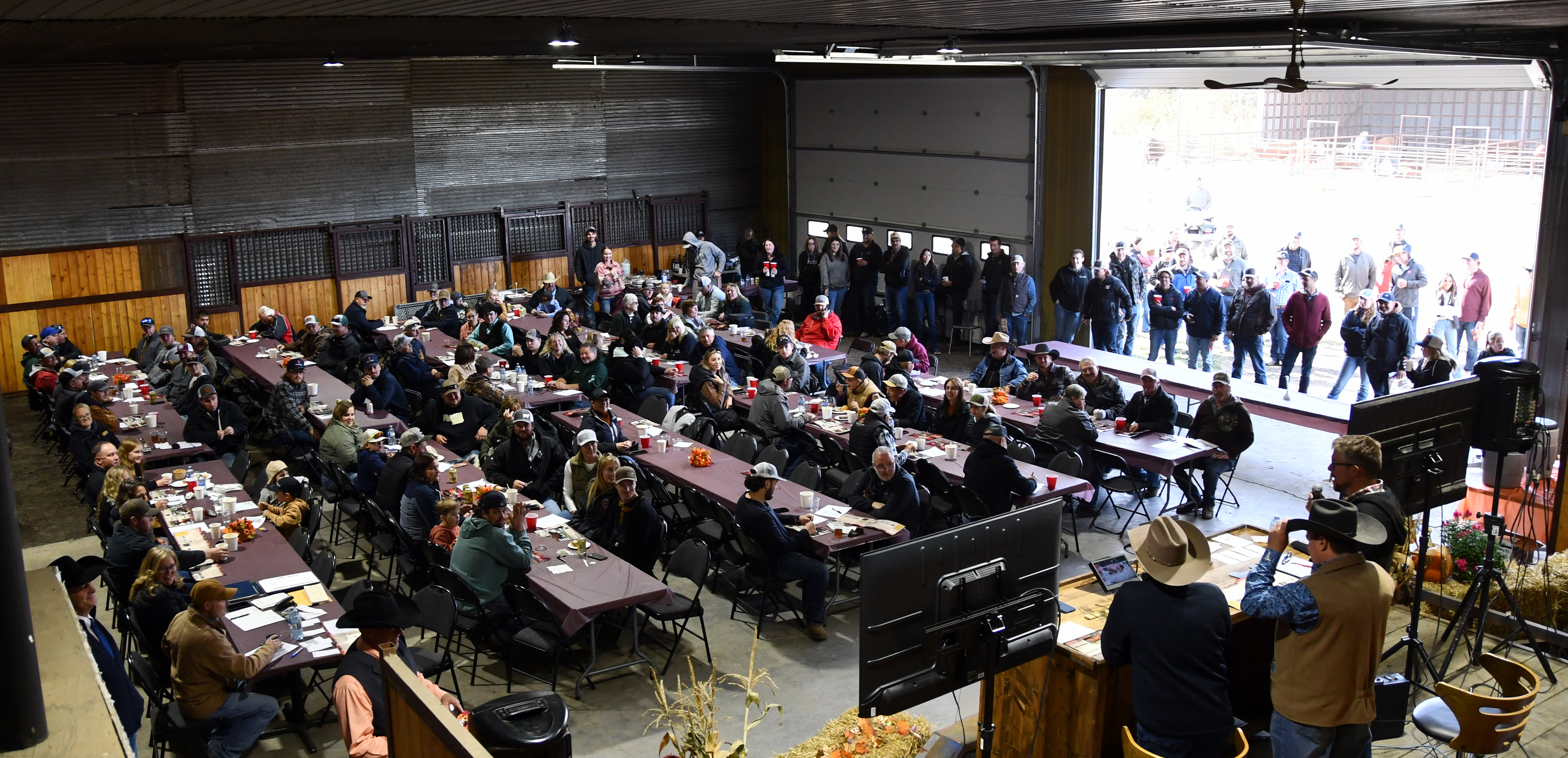
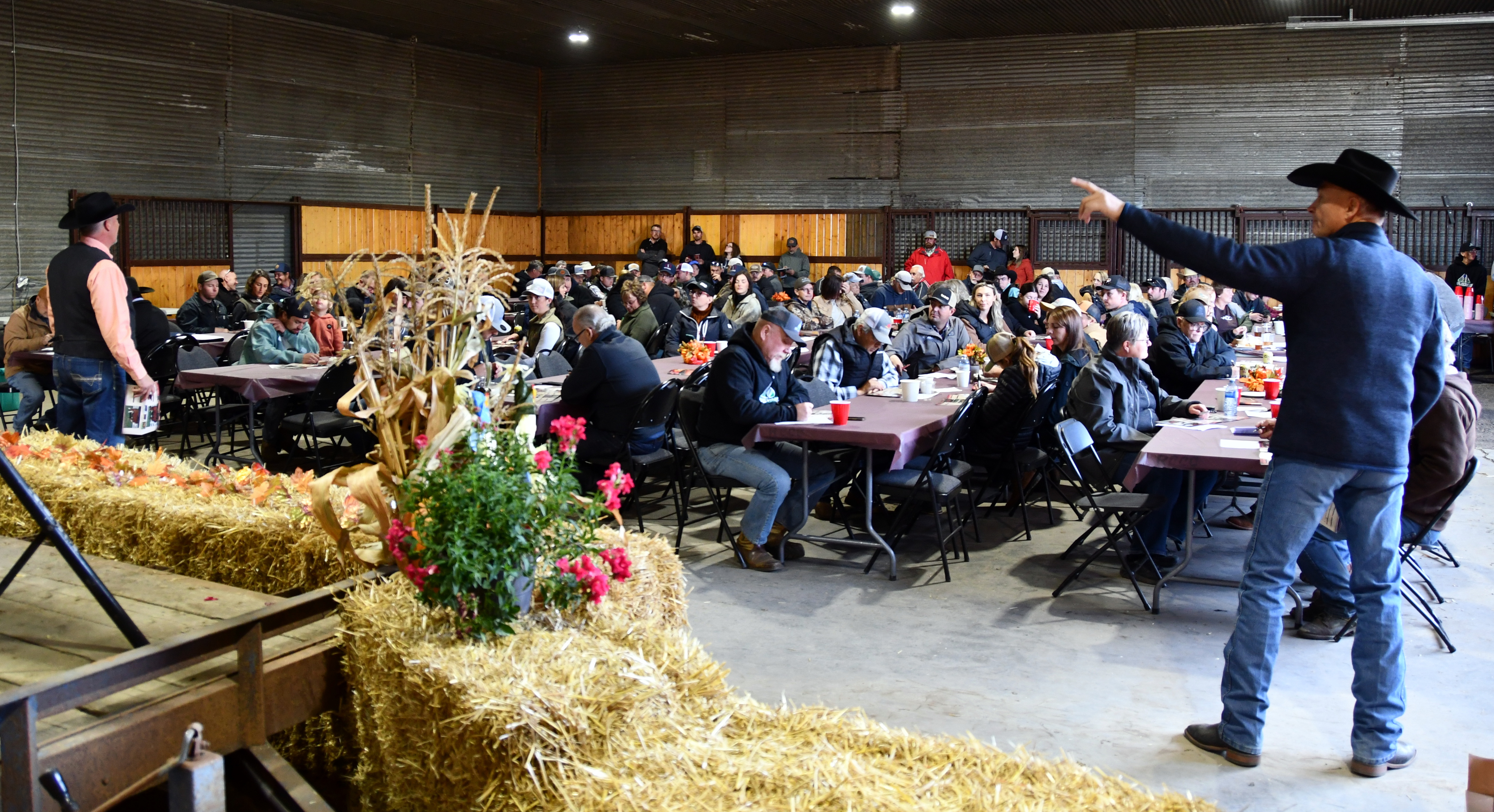
It was another absolutely gorgeous Canadian Thanksgiving week-end to hold the 2nd Annual ‘Shades of Fall’ Simmental Sale at Beechinor Land & Livestock on Saturday, October 11th.  Sunny skies and unseasonably warm weather led up to sale time, with a winter squall moving in to close the doors during the sale itself.  The abrupt change in weather didn’t dampen the enthusiasm of bidders, as 40.5 lots of Fleckvieh and Red Simmental females grossed an impressive  $757,500 for a smashing $18,950 average.

It is perhaps fitting to start the sales write up with a bit of an explanation on the 0.5 lot.  Lot 3 ‘BLL Echo 410M’ was an intriguing opportunity to acquire 50% interest with no possession of a unique top end female.  She was a massively volumed heifer wrapped up in a genetic package that combined performance with the ability to moderate birthweight.  The ‘Unbelievable’ cow family behind ‘Echo’ just happened to be one that we had previously sampled twice.  In 2013, we selected BEE Vendetta 243Z, a direct Unbelievable x Viper daughter from Equation, who continues to leave a lasting legacy here though her daughters.  We tapped this same cow family again in 2023 when we added a maternal brother to Echo in ‘Tombstone’ to our bull battery.  With so much ‘Unbelievable’ influence already in our own herd, it was especially fun to notice all the interest and buzz with the opportunity to acquire an interest in ‘Echo’.   We talked to a number of interested parties leading up to sale day, all of whom were intrigued by the possibility of partnering with BLL on this amazing female.  Some weren’t even Simmental breeders!  At the end of the day, it was Circle E Farm from Lucedale, Mississippi who bid a whopping $50,000 for 50% of Echo.  Wow!  It was great to get to know Genry and Heather Ellison of Circle E over the past couple years as they have toured around Central AB.   They have invested heavily in top end genetics while also showcasing their own at the Magnolia Classic in Mississippi each fall.  It will be exciting to see them be part of future sales closer to home in AB!

Throughout the afternoon, the sale alternated between each consignor and wove the red heifers into a couple of groups between the Flecks.   (Not that I know anything about red cattle, but…) My personal pick of the Red Top string was lot 20 – a really nice Walk the Line daughter that was selected by East Point Cattle Corp for $23,000.  The Century string was also impressive, with their lot 32, Century Lulu 339L, leading off their offering.  This big broody Magnum daughter was backed by Gudas and Crude from the great Virigina Ranch herd, and will be headed State-side as once again Circle E Farm stepped up with the acquisition of another great female.   In all, it was awesome to see our fellow consignors have tremendous days!

All six of our Applecross heifers were very well received, and we couldn’t be happier with the great operations that they will now call home.  Starting in the East, Bovey Family Farms, from Elginburg, ON, were successful in acquiring Lot 26 Applecross Diva.  We met Kevin and Suzanne Bovey during the World Congress tours last summer, and since then they have been on a bit of a whirlwind.  They have become new consignors in the Quebec Simmental Week-end, and have travelled back to Alberta multiple times.  It was really nice to see them offer up some pretty impressive cattle in Quebec only a few weeks prior to Shades 2025, and then get to see them again on sale day.  DJ Farms selected our Lot 31 heifer, Applecross Lexi, so she also enjoyed a long truck ride to southwestern Ontario to join another progressive purebred herd just north of London.  To Manitoba went our high seller – Applecross Tessa – to Blue Zone Livestock; Andre and Danica Mangin at St Alphonse.  Tessa has settled in well, and I am confident she will be treated like the queen she thinks she is!    Logan of Ruszkowski Farms near Prince Albert has been active buying Fleckvieh heifers across the Country this fall and also added Lot 27, Applecross Dior to his collection.  Closer to home,  Mark Mryglod from Calmar selected Lot 30, Applecross Cindy, to start his papered Fleckvieh herd –  having the next generation of Fleckvieh enthusiasts dive into the industry is always a great sign!  And finally, Justin Wagner, Wagner Livestock, added our lot 28, Applecross Flora heifer that perhaps had the most impressive EPDs of our entire group.  It was also really neat to see Justin purchase another heifer from us as 4 years ago he also acquired ‘Applecross Carly’ from Equation 2021.  New buyers or repeat customers, it is always awesome when they find homes with quality purebred and commercial cattle operations. 

In addition to the above noted high-sellers, I thought we would share some additional thoughts on the second edition of Shades of Fall:

  1. I have heard it said that the 2nd sale year is always the toughest.  Year one brings out lots of buyers and interested parties to ‘see what is new’ and to ‘support new ventures’, whereas year two typically needs to stand on its own without the ‘good will’ a new sale may start with.  We can certainly give credit to a record setting live cattle market, as the ‘2nd year dip’ certainly didn’t happen.  I think a lot of that relates back to the quality cattle brought together by our fellow consignors.  Stefon, Ben & Jessie all share my passion for digging deep into pedigrees and having a certain eye about what they like in cattle.  It certainly seems to blend together nicely on sale day!
  2. Not to make the sale group sound like a business book, but our group does bring to mind one of my favourite work  maxims: ‘surround yourself with people who make you better’.  There are many different version of this ‘quote’ (and who it is attributed to) but all have the same theme.  There are tremendous advantages to life when you surround yourself with people that want to lift each other up, see mutual success, have similar ambitions, and provide support when things don’t necessarily go right.  We are fortunate to have found that with the sales group!
  3. A sales group that aligns and pitches in together is a wonderful thing for us smaller breeders.  It takes all four consignors in the Shades group to ‘add up the numbers’ to what larger breeders can potentially do on their own.  While in some vein, we could be considered ‘competitors’ with each other, all chasing the same buyers dollars, it is my preference to view each other more as friends and colleagues that are all trying to be successful and move the breed forward.  Seeing our sale partners be successful only strengthens the industry, and by working together on sale prep and hospitality, it allows us to do more than what we could each do on our own.  (This is probably also a topic I should dig into deeper on a future blog post!)
  4. It has been a wild ride in the cattle market.  I am not sure even the biggest optimist would have seen calf and commercial bred heifer prices hit the stratospheric level that they have this fall.  With my off-farm job being an ‘Ag Banker’ I can’t help but shift to a bit of a business outlook on where the market is headed.  If I have learned one thing over my career, it is that ‘good times’ in Agriculture never last.  So there will be a correction coming – and probably sooner than anyone realizes.  Whenever I hear people talking about a ‘new normal’ it makes me nervous.  Agriculture is a commodity driven business, and the beef market can be shaped by many factors – not just the North American cow herd (hello Argentina bail out!)   So I do expect that there will be a market correction at some point.  As to when? If I knew that, I wouldn’t be a banker – I’d be investing all my market winnings in more cattle!
  5. When times are great, everyone has their own priorities, depending on their own individual life stage.  Some people look to expand / refresh the herd; others that may be more mature maybe look to downsize or exit the industry while it is at a high.  Everyone has their own business to run and life to live (and debt levels to be comfortable with!), but I thought for interest sake, I’d share what our priorities were this year, and a little bit of the ‘why’ behind the decisions:
    1. Culled at least the bottom 20% of our herd.
      1. We have been able to achieve this goal for each of the past 5 years.  It has meant some tough decisions, and also impacted cash flow by retaining (or buying) more bred heifers to add to the herd in order to keep our numbers stable.  The good news is that we are much happier with the herd, and that we have been able to move it in a direction that firmly aligns with our vision.  And our vision is to walk a group of 50 amazing cows. Ideally, any of whom who could produce high selling progeny on any given year.  I do look forward to a point – hopefully not too far away – when our annual cull rate is a more sustainable and idealistic 10% annually – but there are always reasons (type, feet, udders, fertility among them) that keep getting in the way of us achieving this goal.  Cull cows are also at market highs, so it has been a great opportunity to keep the herd young while also keeping numbers stable.
    2. Feed Buffer
      1. We are very short moisture.  We have lived here now for (almost) 20 years, and It is the driest we have ever seen it.  For those that haven’t been to our place, we typically have 30 acres of sloughs across our half section – all of which are now dry.  We ended last winters’ feeding cycle with only half a dozen hay bales remaining in our yard.  We were fortunate in 2025 that there were enough timely rains through out the growing season that feed was plentiful in Central AB before the rain stopped again in early August.  As a result, we did invest in additional feed for the current year, and while our herd numbers have held stable, we acquired an extra 20% over our typical feed stocks.  Surplus feed allows me to sleep better in May – and also gives more flexibility in case the 2026 season continues a trend towards drought and grass becomes short.  One thing farmers can’t control is when it rains.  So feed is at the top of our list when it comes to peace of mind. 
    3. Infrastructure
      1. One of the challenges in the cow-calf sector is labour.  It is incredibly tough to scale – you always need people to calve out cows vs the crop sector where they can typically add more acres without more people – so part of our annual process is to ‘improve’ our working conditions and the infrastructure we need to work cattle.  Last year it was the young bull development area – this year it was the heifers that got some love.  Re-investing in the physical premises makes work easier while also improving cow-comfort.  As my dad would have said “If you aren’t fixing it up, it’s falling down”  or “a man can’t work without tools”, and “if you love your work, it’s play”; so every year we prioritize a list of ‘what we can do to make things work better’ and depending on the year (and the budget) we try to complete at least one improvement.
    4. Upcoming herd bull season.
      1. Herd bull season should be interesting.  It looks (maybe) like the North American cow herd is finally expanding.  This means more cows/heifers that should need bulls.  Also, with meat prices high, the market for cull bulls is incredibly strong.  The flip side is that with 8-weight calves bringing $4k+ this fall, a lot of potential bull calves went straight to feedlots.  So it will be very interesting to see what the confluence of supply and demand looks like next spring.  If the last few years are any indication – elite bulls will be priced at a premium – so we will need to be prepared to dig extra deep should we find a new herd bull that fits all of our selection criteria.
      2. Which brings me to a related point.  As difficult as it is sometimes on sale day, I can do without ‘one more heifer’ but I can’t do without ‘one more bull’  next spring.  We are certainly looking to add females this fall.  It just needs to be both something that adds to our herd (while being different in genetic make-up) and fits within our budget.  At the end of the day, saving bullets for a potentially very expensive herd bull in 2026 is the priority. (editors note: we did get a really sweet heifer bought at Lone Stone though! And with our legacy of consigning there, always try to ‘have options’ at Equation!)
  6. With our sale heifers now all in their new homes, our thoughts have drifted toward calving and bull sale season.  Calving 2025 will be dominated by our walking bulls –  our new heifer bull, FSMB Millenium 12M (Gold Trigger x Magnum), BLL Tombstone 223K (Great Guns Wyatt x Titanium) and the last calf crop from Virginia Journey 509K (Synergy x Radison).  We unfortunately lost Journey just after breeding season, and with no frozen in reserve, it will represent his last set of calves.  On the flip side, it is always exciting (if a little nerve-racking) to introduce a new herd bull in Millenium.  He travelled well from Quebec, and was put right to work with both heifers and a good cross section of cows.  It is always fun to see how the genetic possibilities line up – I just always cross my fingers when introducing a new heifer bull!
  7. After a three to one bull to heifer calf ratio, I am really happy how our bull pen is coming together.  With 30-some bull calves to choose from, we whittled that number down to an even dozen for further development.  Calf prices were so high, it simply didn’t make economic sense to keep more – and there still may be one or two that may not make the final cut.  As Jeanne keeps reminding me ‘we wanted to be in a position to have to make tough choices’ and have been rewarded with how they have transitioned since weaning.  We always select for the pen and then complete the genetic testing (to try and offset at least some of my biases), so it is rather neat to have testing back and some cool dudes shaping up well for early March.
  8. Our bull group skews towards ‘heifer bulls’ this year, with roughly half the bulls being candidates for use on either heifers or first calvers.  We are hopeful that the combination of some calving ease while still very much looking the part of ‘herd bulls’ combine to form the right mix come sale day!
  9. I always get asked about Jeanne’s favourite in the bull pen.  This year it is a rotating cast of favourites, as multiple of her ‘veto heifers’ from over the years, gave us awesome bull calves.   So today she’ll go with ‘Bam Bam’. We’ve both been Blue Jay’s fans since the Exhibition Stadium era (yes, we are that old), and one of our early dates was to see the Jays via the 5th deck at Skydome in the early 1990’s.  Their run this fall was sure exciting, and to celebrate we thought we should have a ‘Bam Bam’ (named after ‘Barger’) which narrowly won out over naming him ‘Bichette’! 
  10. While a smaller group again this year, I do like my heifers…they are coming along nicely as well, and we hope to potentially have 8-10 to offer at Shades 2026.  Journey’s, Battleborn’s and Tombstone’s make up the sire groups and they are already a very uniform bunch with style for miles! 
  11. With that, it brings me back full circle to Shades 2025.  We were blessed to have Jeanne’s sister and brother-in-law join us for the sale (and Thanksgiving week-end).  My mom was also able to attend.  With a lifetime spent developing Dora Lee alongside my dad, it may be a surprise to many, but this is the first time my mom has been able to watch Applecross Cattle sell at auction. So it was a treat to have her join us, and reminisce about some of the early ‘Fleckvieh Forum’ sales in Ontario, that coincidently enough, featured the same auctioneer in Dan Skeels – great fun, and absolutely awesome to have her join us!

I can’t close without saying a few words about Transcon, our Sales Management team.  Jay, Cody, Glen and Darren always do a quality, professional job – and spend significant amounts of time on the phone – talking – while walking animals out of their pens to check feet, and allow buyers to select animals with confidence.  Sales Management remains a long term gig – if a prospective buyer on order isn’t happy with their purchase they won’t be back.   It is foundational to have mutual trust in a Sales Management team, and we have that with Transcon. 

It was another great day to present Applecross cattle at auction, and we are honoured by the compliments received on our cattle from all the bidders and buyers that took interest in our program.  You never know with a new sale venture, or what each year may bring – so it was very rewarding to have an absolutely smashing day.  We look forward to trying to  showcase our ongoing efforts to produce high-quality genetics that we can share with the industry.

Until next time,

Dennis
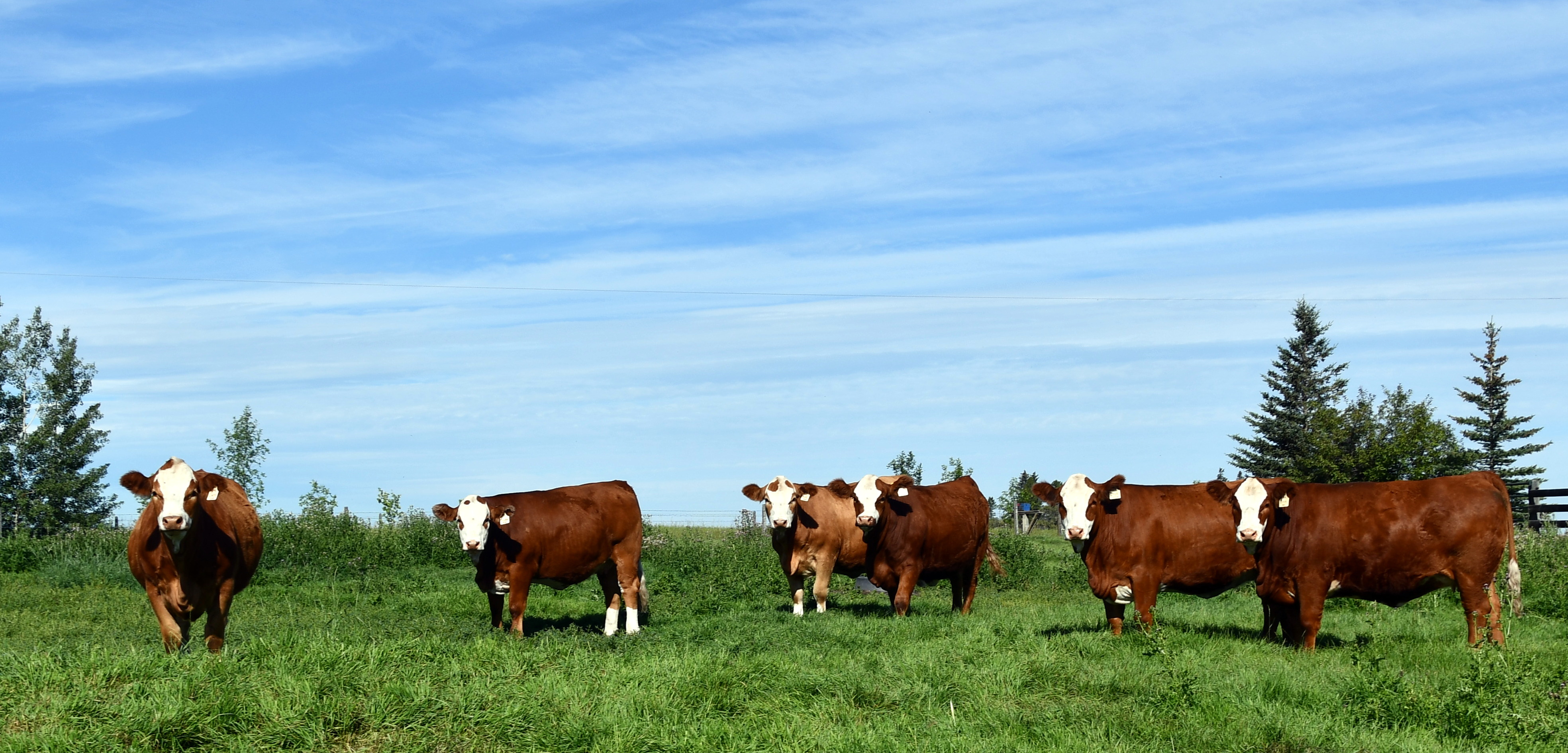
Applecross and the Six: Our 2025 ‘Shades of Fall’ Heifers

Our Six 2025 ‘Shades of Fall’ heifers – From Left: Cindy, Flora, Lexi, Tessa, Dior & Diva

We are delighted to present six bred heifers at the 2nd annual Shades of Fall Simmental Female Sale on October 11th at 1pm a the Beechinor Land & Livestock Sale Facility, located near Bentley Alberta.  Last years’ first event was a smashing success and we look forward to once again joining together with some of our favourite people in the industry to create an awesome sale line up!

This year we are excited to showcase two new sire groups.  As smaller breeders it is rare that we purchase two new walking bulls in the same year, but that is just what happened back in 2023.  That spring, we were successful in acquiring both BLL Tombstone 223K and Virginia Journey 509K only a week apart.  Both are from highly regarded breeding programs that we know very well, and are backed by pedigrees that we have followed for many years.  Multi-generations of strong cow families lead to bulls that produce consistent progeny, and both ‘Unbelievable’ and ‘Willows Jade’ are maternal lines that we have long admired.

As shared in the footnotes, Tombstone is a bull we first saw during a summer pasture tour.  Even as a six month old calf, he caught our eye.  Early maturity, and a very strong ‘presence’, allowed us to track him from across the pasture.  I have always thought that the best purebred cattle have a certain ‘je ne sais quoi’ (I don’t know what) about them, that is hard to describe.  Stage presence.  An “it’ factor.  Eye Appeal.  However you want to describe it, Tombstone certainly caught our attention, and became a target to acquire from the Beechinor bull sale.  Through two calf crops, his calves are easy to pick out and his heifers, showcased by ‘Diva’ and ‘Dior’ also exhibit that incredible eye appeal.

Journey was another easy decision – but one we weren’t sure we’d get done.  A year previous we had circled another Synergy x Radison son,  ‘Full-Tilt’, in our catalogue, only to finish a few bids shy to the astute duo of MAVV Farms & Brian Miller.  So in 2023, it was super cool to find ‘Journey’ who exhibited that same balance of moderate calving with thickness and muscling.  The cherry on top was the cow family deeper in the pedigree, which showcased generations of predictable quality.   The Synergy-Radison combination has also proven to be incredibly popular as a female maker, and we think you’ll find those same traits in ‘Tessa’, ‘Cindy’ and ‘Lexi’.

Journey & Tombstone – Summer 2024

Not to be overlooked, is our youngest heifer ‘Flora’ who was also sired by one of our walking bulls in Black Gold Battleborn 44H.  Battleborn is now deceased, but was a proven curve-bender for us.  We were comfortable using him on heifers (before he got too big), while his calves consistently pushed the scale down at weaning, and have been readily accepted at auction.  Our ask of our herd bulls is simple.  Move our herd forward.  And with Battleborn’s first daughters now weaning off their 2nd set of calves, we are confident that he has done that.  Nice tidy udders and some punch would define our Battleborn cows.

Our breeding philosophy continues to focus on strong maternal lines across the group, with deep extended pedigrees to ensure quality and consistency.  While we try to acquire at least one outcross female each fall, all six of our heifers this year are backed by dams carrying the APLX tattoo, often multi-generations deep.  The heifers have been double vaccinated, and have been pregnancy tested to the dates listed.  Individual pages (short-cut links are on the right – or simply enter their names in the search bar to find them), have been created for each of ‘Diva’, ‘Dior’, ‘Flora’, ‘Tessa’, ‘Cindy’ and ‘Lexi’. On the individual pages, we have also pictured their sires, dams and siblings – hopefully, sharing pictures will provide a better glimpse into the extended pedigree. 

Please join us for some unique ‘Shades Hospitality’  on Saturday, both before and after the sale, when it will be great to visit and view cattle at the newly renovated BLL Sales Facility near Bentley.    Please check out our social media on Facebook and Instagram (@aplxcattle) for more details on each of our sale animals.  If you have any questions about our heifers or our program, please do not hesitate to contact us.  We look forward to visiting with you on Canadian Thanksgiving week-end!

The Return of ‘Blue Sky Thinking’

We are nicely home from our annual spring vacation.  It is something I touched upon back in 2012’s ‘Blue Sky Thinking‘ and, thirteen years later, thought it was a subject worth revisiting and expanding on.  Once a year, we try to do one ‘get away’ vacation that has nothing to do with cattle, banking or dance.  For us, the week that seems to fit our schedule best is one in late April – a time when our 12 week sprint of calving and bull sale season is wrapped up, Jeanne’s annual dance exams have been completed, the herd bulls are out, and the cows are in a state where they can hopefully be left alone for most of a week.

It continues to be incredibly important for us to get away from the farm for a short time every year.  And it is something that I don’t think many farmers/ranchers take seriously enough.  For Canadians, our laws dictate that after 1 year of full time employment, all employees are entitled to a minimum of 2 weeks vacation.  After 5 years employment, this entitlement increases to 3 weeks.  Specifically for those farmers with livestock, I would hazard a guess that it is extraordinarily rare to take a week off, let alone two (or three).  Livestock need constant care and attention – and typically there is also a certain pride and dedication in our profession.   I’ve had clients incredibly proud of the fact that they milked cows the morning after their wedding!  Having chosen to own and operate a farm, many people may have trouble accepting that they still need a break from the life they chose, and thus feel ‘guilty’ for finding vacation coverage, even if it is just for a few days.  We all have neighbours and friends that don’t mind being helpful – it just may seem like a big ask when we are all so used to being self sufficient.  It is not always easy to arrange, but we have been deliberate in trying to ensure we have an annual vacation.

One of the biggest challenges of being a farmer is that 9 times out of 10 (or 99 times out of 100), farmers literally live, work and sleep at their place of business.  Our work is so intertwined with life.  And while there are some tremendous advantages (raising a family in the country, living in a rural area surrounded by space and nature), there is always more ‘work’ that can be done.  Looking out the window, it is often easy to see peeling paint – lawn that needs cut – kids that could use more one on one time – let alone an endless ‘someday’ list of seasonal farm chores that always need to be done.  Even sitting and ‘doing nothing’ can be work for a cattle breeder.  Social media can be personal, but its also the forum for marketing cattle.  Texts and phone calls can be from friends – but they can also be from customers and potential buyers – or from friends that are also customers!  It is very difficult not to respond to a text – and very easy to panic when it is realized a social media platform hasn’t been updated in a month.   The instant gratification era of social media only lengthens the days on the farm, and there simply isn’t much of a break.

For us, the solution has been to ensure we can turn off and disconnect for at least one week (ok, 5 days) of the year.  Its one of the many cool things about living in Canada – we have so many options  across many different price points – and off grid is practically at our doorstep.  Unless you are stuck on the 401 in Ontario – or experiencing the fun traffic that is Montreal – anywhere in Canada is a maximum of only 2 hours from wilderness.  And there are plenty of small, rural places where it doesn’t have to be expensive to enjoy a getaway.  When people are younger, this could also mean camping is an option – but these days my back suggests a comfortable bed is my biggest must have.  There are so many options – near and far – inexpensive and more higher end – that provide the ability to get away from the farm and relax, no matter the personal preference!

For us, a vacation isn’t just an opportunity to relax, but also time to communicate without interruption.  An opportunity to talk about hopes and dreams as well as the million little things that don’t usually get air time.  And the bigger, heavier things that are often avoided.  To talk about the farm business itself.  In the corporate world, it is a natural, accepted routine to complete annual ‘strategic planning’.  The cliché goes, time dedicated to work ‘on the business’ instead of working ‘in the business’.  For farmers, typically our closest business partner is also family.  When the conversations get serious,  being offsite means an absence of the ready made interruptions so common on the farm.  I can’t tell you how many farm meetings I’ve been on with clients over the years when one principal shows up late, or another has to leave the meeting early.  There are simply always things on the farm that ‘get in the way’ of having great conversation.  Vacation is a great place to have ‘complete’ conversations, without interruptions, where feelings and ideas can all be talked through.

What needs to get talked about?  I would probably suggest moving in an expanding circle, (and will list in point form in order to keep this blog at least a mildly digestible size), and cover 4 different, yet intertwined, ‘buckets’:

  1. Mental Health. 
    • How am I doing? (1 person). 
    • How are we doing? (ask your partner, they may not share otherwise)
  2. Physical Health. 
    • This one is especially important for those in the industry we are in.  It is virtually impossible to work/calve/process cattle on one leg (just ask Jeanne about her 2024!). 
    • Do we enjoy the physical health required to do what needs to be done? (if not, can we afford to hire for it /or does that trigger a potential operational change?)
  3. What does ‘us’ look like?
    • Is our relationship working,
    • Should we expand (kids, more kids? / cows, more cows?  🙂 )
    • Are the personal sacrifices we are making for the farm sustainable?
  4. State of the Farm
    • Is it working,
    • If yes. Is it sustainable?
    • If no, what changes can/should we make? (off farm income, diversify, breed horned?  lol just checking to see who is still reading)
    • Should we expand, if so, how/where/what?
    • If we grow, how do we afford it / what are the trade offs?
    • Is it too much / do we need to downsize?

I wouldn’t be a banker and not mention finances.  A lot of the ‘state of the farm’ conversation relates back to knowing whether the farm is being successful, and having an understanding of profit and losses, which should impact decision making.  Actually having and knowing the numbers are essential!  (Also a future blog post! Or maybe a book!) During a growth phase, farm success can be incredibly difficult to determine, as cash flow seems so ‘tight’  (which was outlined in ‘summer nights/cow tours‘ blog post from 2018).  It is great to have goals and plans, but the math also typically has to work.  If it is a goal to give up off-farm employment, then what changes need to be made on the farm?  Can the farm continue to grow? Or is it ‘worth it’ to shift from growth mode to more of a maintain strategy if it means that one person doesn’t have to work off and be away from the farm and family for extended periods of time?  If the priority is to grow, how does the cashflow work if there is a(nother) large loan payment?  How does that impact some of the other considerations (growing family, quality time), or maybe adding off farm income is a solution if it allows a common growth goal to be pursued! There are always lots of questions and considerations that can be different depending on the state of a farm’s life cycle.   As the saying goes ‘hope isn’t a strategy’, and while farmers are at the mercy of the markets and the weather, it is much better to have these conversations and form a strategy together vs. simply trying to ‘figure it out’.  Two brains are always better than one!

And on that note, it is only fitting to circle back to the mental health part of the conversation, while also getting a little sexist (or at least provide some stereotypical tropes).  Most men, and specifically farm men, feel a deep personal obligation to be a provider and protector for their family.  As a result, men face tremendous stress to be financially successful and carry that as their burden.  And I am guessing everyone out there knows at least one purebred cattle breeding, introverted dude who isn’t a big fan of talking things out!   Most farm women are incredibly capable, and balance the traditional ‘pink’ jobs of family responsibility, household chores, meal prep and kids activities, alongside all the day to day activities required on modern farms to make the ranch run successfully.  Its not like women CAN’T run the farm – just like dudes usually CAN cook – I just think that for both partners, it is easy to get frustrated.  If that frustration causes individuals to turn inward and fixate on completing ‘their’ jobs to support the family, it can also get lonely and lead to a feeling of disconnection.  Both parties need to be mindful that they BOTH contribute to the success of the farm and family – and if partners aren’t talking, it can come down to trying to “keep score”;  both feeling like they are working incredibly hard within their own silo, while their partner is frittering their time away and not contributing, understanding or supporting.  Communication can help share the responsibility, and make a partnership feel more like a team.  There can be crushing pressure to carry burdens by yourself.   When there are feelings of being overwhelmed, a little help can go a long way.   Great conversation and a willingness to communicate struggles or feelings can really assist in creating a better understanding of where each person is at in the relationship and in turn with the farm.  And to ensure there is communication, there needs to be time and space – where better than on vacation!

At Applecross, I work off farm full time so Jeanne runs a lot of the day to day farm activities, the household and also owns and operates her own dance studio which runs 3 nights a week and week-ends (just not as many week-ends during calving!)  Jeanne is often away from the farm for dance and, when she is gone, I naturally inherit all of her jobs.  Can I do that while she is away? Sure!  Do I skip the veggie aisle and purchase more protein and junk food as groceries when she is gone?  You bet!  Would I want to do that on a full time permanent basis?  Heck no! (and we don’t even have kids!).  So I think part of the mental health aspect is also ‘sustainability’.  Absolutely – both partners are more than capable of running all aspects of the farm and household independently – and while things may be ‘doable’ in the short term,  what does viable look like?    Unfortunately, in real life, the hockey cliché of just ‘digging deep and giving 120% (while playing a full 60)’ really just isn’t a plausible answer.  So the solution is to talk.  Sometimes its just a matter of acknowledging challenges and completing some of the farm jobs together, and then working together on the household activities.  But the key is communication.  Discuss what the future looks like, and make decisions accordingly.  Being away from the day to day pressures and interruptions of farm life is the perfect place to do so!

To be clear, I am not suggesting that we have it ‘all figured out’ and that taking a break from the farm will solve all of life’s problems, or that a person can plan for all of life’s curve balls.  Kids don’t always happen (or not happen) based on a plan.  We know!  The proverbial farm next door doesn’t always come up for sale at the right time.    But sometimes it does.  (We know!)   But mental health is something that isn’t talked about enough.  Communication doesn’t happen like it should and on the farm, we have found that there just never really seems to be an extended break without interruptions.   The least we can do is be mindful of the challenges of trying to have great conversation while on the farm, and adapt accordingly. A break ensures there is an opportunity to talk about the important things in life, which only increases the odds that we have thought through our future, and puts ourselves in our best position to succeed.

One additional side note:  It is certainly my preference to travel through life with an absolutely amazing partner.  I want to also recognize that it is very possible to have a completely fulfilling life while remaining single.  I would also suggest that operating solo only underlines the importance of being able to get away.  Operating on an individual basis translates to 100% responsibility for 100% of the jobs, so it becomes essential to get away and recharge.  Preferably with someone you trust.  To talk and to share.  To talk about self care.  And to provide a reminder that it simply isn’t sustainable to run life at 100% all of the time.

If the above process feels daunting, it gets substantially more complex when working within a bigger family farm operation.  The dramatic rise in capital requirements to establish a viable farm continue to grow, and it only ‘makes sense’ to consider staying together as a family unit so that some of those capital costs can be shared.   The offset is that larger family farms have more voices at the table and more complexities to work through – and it becomes even tougher to find time to take a vacation together!  Multi-gen farm operations are certainly worthy of their own blog post (so there will be a ‘blue sky part 3’ in the future), as there are so many additional things to consider.  It is just equally important for the ‘big’ farms to also have time to discuss strategy, logistics and what the future holds.   A lot of this can be worked on with professionals – accountant, lawyer, banker.  Consultants can be hired.  But at the end of the day the wishes of the family need to be determined, pros and cons considered, a direction picked and then professionals engaged to make it happen in as cost effective a manner as possible.  Time away together allows for these conversations to happen with everyone present.

My suggestion is simple.  Please try to find some time to step away from the farm; have a vacation but, most importantly, time to talk.  Time to talk about yourself, your partner and family, and your farm.  Time without interruptions, and time to hopefully be reminded of why we do this in the first place.  (I would also suggest that for any non-farmers reading this – I have been told there are like 5 of you – getaways are equally important – even without the farm).  Reminisce about the past, evaluate the present and make plans for the future.  A break from working, but not a break from the farm.  We do it because we love it.  Lets take the time to remember why, and share our thoughts with the people we love, to make ourselves a better tomorrow.

Until next time,

Dennis

Red Deer County 2025 Bull Sale Report (and other bull sale season thoughts)

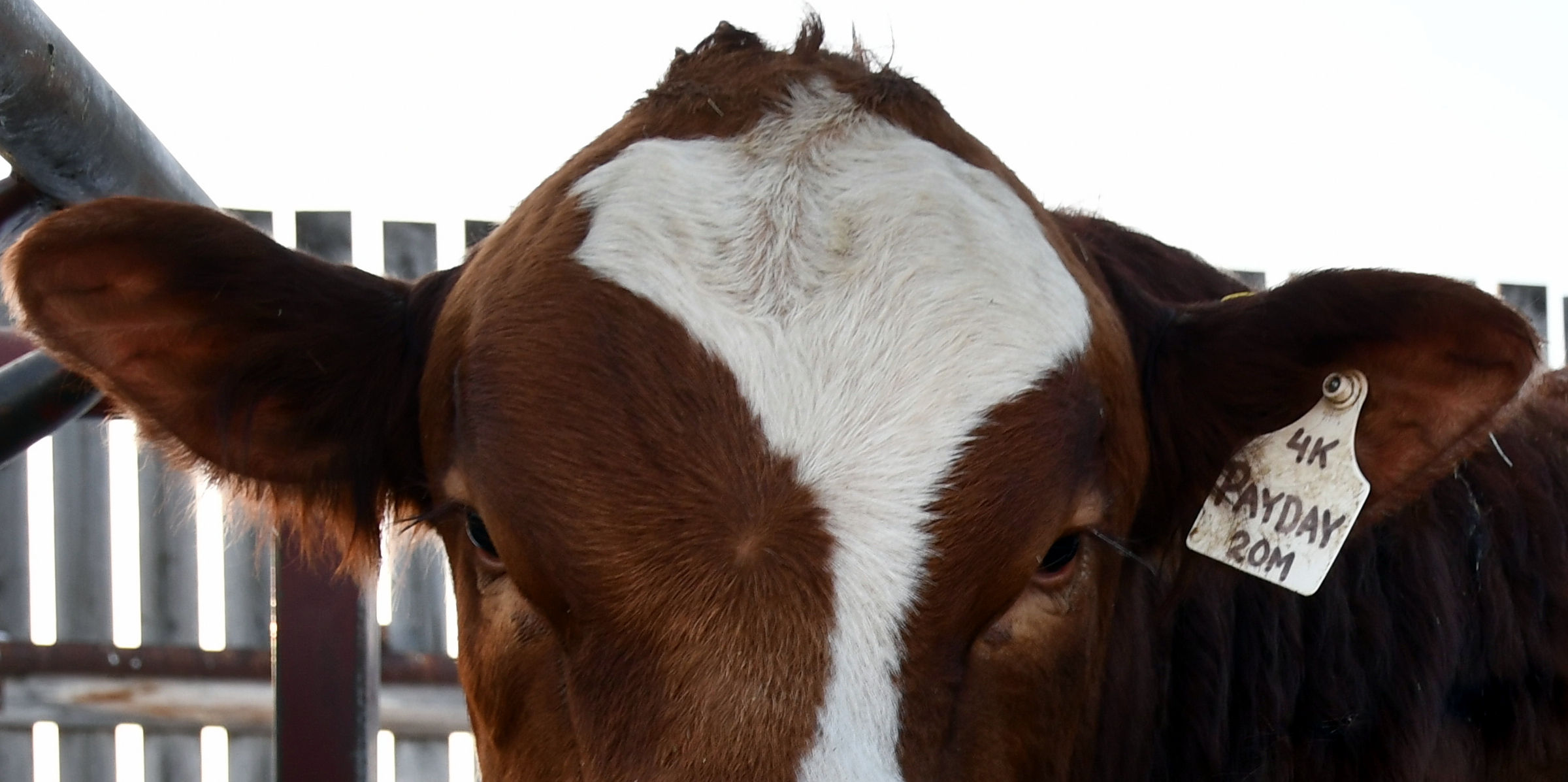
The Overall High Seller on the day; APLX Payday 20M

Red Deer County 2025 Bull Sale Report (and other bull sale season thoughts)

It was a gorgeous spring day, with unseasonably warm temperatures, that brought a capacity crowd to the Innisfail Auction Market to see a diverse, multi-breed Red Deer County Bull sale on Saturday, March 8th.  Now in our 15th year of consigning to this sale, it has steadily evolved and now includes a wide variety of Simmental, Angus, Hereford, and Charolais bulls on offer.  The cattle markets continue to be very robust, and it was great to see some really impressive herd sire prospects.

With the multi-breed component now firmly embedded in the Red Deer County Bull Sale, it was the Red Simmentals turn to lead things off.  Our good friends at Red Top, Ben & Kassandra Farrant brought a really impressive string to town and their lead bulls started off the day to rousing success.  When it was time to present the Flecks,  one of our bulls, Lot 68: APLX Payday 20M made sure that everyone was paying attention.  This dark red, heavily pigmented, homo polled rascal also happened to be our pen heavyweight – not something you usually see in a heifer bull prospect!  Payday’s arrival in the ring led to some very spirited bidding from notable purebred programs from across North America.  When the gavel fell, Payday sold for an incredible $38,000 to Jeff Sorenson of Garretson, South Dakota.  About a month prior to the sale, Jeff came up to walk through our bull pen and Payday quickly caught his eye.  We are pretty excited to have our bull join his elite bull battery south of the border. 

For the balance of the APLX string, we had a very solid day, with all of our bulls on offer finding great homes.  Emilee Oro / Skylark Cattle Company, Clive (Slash),  Valley’s Edge Farm, Eckville (Briggs) and Layden Land & Livestock, Innisfail (Jasper) were all repeat customers of Applecross Genetics, while Rich Simmentals, Calmar (Bono), Moonlite Farm, Fairview (Touchdown) and Keith Pengelly, Caroline (Top Gun) all acquired their first bull from us.  It is always a treat to have new customers alongside repeat buyers continue to support our program.  In all, it was a great day to watch our bulls sell!

Overall 105 bulls sold for a very impressive $9,533 average – a $1,000,000+ sale!  One of the other things we noticed going over the sales report was the that top 5 bulls sold represented 5 different segments of the sale – a Fleck, Charolais, Red Angus, Red Simmental and Hereford were the top five sellers.  Talk about a well balanced multi-breed bull sale!

We would be remiss not to recognize Jay Good, Cody Copeland, Darren Paget, Glen Norton and the Transcon team for doing a tremendous job working the phones and managing the sale.  I can’t imagine the life those 4 gents (and the auctioneers, and their office team) lead for the crazy two months that is bull sale season – travelling across the prairie provinces with often only a day between sales.  Taking calls.  Making calls.  Offering advice.  Dealing with bidders. And buyers.  And sellers.  It is certainly an occupation built only for some!  We really appreciate the work they all put in for us on behalf of Applecross Cattle.

Some additional thoughts on Red Deer 2025 and this years’ bull sale season:

  • 2025 was the 2nd time we have ever had the overall high seller at a bull sale.  The first was back in 2013 when APLX Axel 5Z was selected by MI Simmentals; Mike Imler for $11,200.   Twelve years later, Axel is probably most well know for being the sire of MI Ms Dallas (dam of NAC Battle Cry 4F).  With twelve years between topping sales, it is certainly an honour we don’t take lightly!
  • We have only ever topped a heifer sale once.  That was Fleckvieh Equation 2019 when Applecross Penny 8F was selected by  Virginia Ranch for $14,500.  Along with the bulk of the Viriginia Ranch cow herd, Penny now walks at Skywest and is fresh off producing a $20,000 bred heifer of her own in ‘Virginia Glamor Gal’ who sold at Western Harvest 2024.
  • It is always rather cool, humbling and flattering when a fellow purebred breeder decides to add our genetics to their herd.   High sellers are great – but we also love to see all our genetics find awesome new homes.
  • For the 4th year in a row, a homozygous polled bull has been our high seller.  Similar to when we started selling hetero polled cattle, there is currently a robust demand for homozygous bulls.  At the same token, we feel they have to be quality animals to sell well.  Customers have options – and there are many traits to be reviewed when selecting a bull – so just because a bull is polled or homozygous, doesn’t mean the sale price is automatically higher.
  • I do find it somewhat surprising, but we still hear/see people comment that polled cattle are still somehow  ‘deficient’ compared to their horned counterparts.
  • My short answer to these comments would be as follows:  one of the great things about the purebred cattle business is that every breeder is free to follow their own ideas on breed improvement.  If you don’t like polled cattle.  Perfectly Fine.  Breed horned.  Nothing is stopping you.
  • My longer answer is that people who suggest such must have a different perspective on where they feel the market for cattle genetics is headed.  We see the market for polled cattle continuing to increase, and have been more than adequately compensated for our investment and development of polled cattle.  Everyone can’t be the same – and life would be pretty boring if we all were!  But I would suggest that the dramatic rise in the number and quality of polled genetics would suggest that the polled trait is here to stay.
  • This concept can be extrapolated beyond polled.  It doesn’t matter if it is red, black, 100% fleck, full fleck, high percentage fleck, horned, polled, goggled, or traditional painted up Simmental.  We have an incredibly diverse breed with quality across every segment! Breed the cattle you enjoy, have a focus and become good at it!  The market rewards quality, useful cattle, so follow your own vision (while also ensuring you can make a buck).  That is the fun of being a purebred cattle breeder!
  • One of the great side effects of all the interest in polled, is that there are more options to choose from!   Our own search for genetics led us to Quebec and FSMB Millenium 13M to add as our new walking heifer bull.  With a pedigree that reads: Gold Trigger x Magnum x Dirty Harry, his genetics aren’t necessarily new, but pack a certain consistency that should dovetail well in our heifer pen.  With pretty cool pigmentation and quiet as a kitten, we look forward to his impact on our program as we move forward.
  • One thing I have noticed about people during my off farm career that definitely applies to cattle breeders:  Don’t just listen to what people say.  See how they act as well.  In the context of cattle, this translates into watching what breeders are buying and not just what they are selling.   A purebred breeder has to market and promote what they have on hand (and thus that is what they will focus on talking about), but actions on what genetics are being added to a herd tends to reveal more about their longer term direction.  It takes a long time to incorporate new genetics into a herd.  A bull bought in 2025 will have their first calves on the ground in 2026, with the first sons on offer selling in 2027 – and the first daughters won’t calve until 2028.  And that is the earliest new genetics make their way through a program!  So it takes time for a new bull to make an impact – and prove themselves.  If you admire a program and want to ‘follow’ it, keep a closer eye on their buying decisions vs what they may have on offer. 
  • Closer to home, we continue to make changes and invest in our operation.
    • We spent considerable time and energy making improvements and revamping our bull development facility in 2024 with more tweaks planned for 2025.
    • We have talked openly about our struggles with semen testing our yearling bulls in the past, and while our reno’s appear to have helped in that regard, we still had a few younger bulls that didn’t pass their tests in time.
    • While we do agree with our vet that we ask a tremendous amount of a yearling Simmental bull – that needs to test and measure up at 12 months of age – we do compare to our peers who seem to have more luck.  So there are more changes we can make, and hopefully we can keep increasing the odds of a successful test.
    • (If I can get my thoughts together, I hope to do a deeper dive into the world of bull development and semen testing in a future blog post).
    • The importance of the bull pen will certainly ring true for 2026, as we have an absolutely massive bull calf crop coming up.  We ran 2:1 bulls this year, and we look forward to making some hard decisions at weaning time.  Our bull calf crop is dominated by sons of our ‘Journey’ and ‘Tombstone’ walking bulls, so we expect a very consistent bull string for 2026.
    • We are also keeping an eye on our bred heifer pen.  With ‘Shades of Fall’ being a couple months earlier than December’s Equation, the selection process also starts earlier.  We tentatively have 8 heifers that we are considering, but there are some milestones they still need to achieve.  Every animal we sell carries our prefix, so we need to be happy with every single one of them!

For fifteen years now, it has been great to be part of the Red Deer County Bull Sale.  Public auction is a great forum to get feedback on the program we are building at Applecross.   We strive to produce top quality cattle, and every year provides the opportunity for feedback and ideas on what we could do differently.  Some years we have the euphoria of a super high seller – other years, we don’t  – but not a year goes by that we don’t learn how to do things a little better for next year.  It is simply so important to continue to receive tips and advice on how to make improvements to our program.

With the bull sale now in the rear-view mirror, and breeding season underway, the breeding groups have finally been decided for the year as the excitement to incorporate new genetics competes with genetic combinations that have worked so well in the past.  We look forward to the challenge of developing more, different and better genetics for future years.

Until Next Time,

Dennis

Ten For the Times:  Applecross Cattle Present our 2025 Red Deer Bull Sale String

We are pleased to present ten herd bull prospects at Transcon’s 2025 Red Deer Bull Sale on Saturday, March 8th at 1:00pm at the Innisfail Auction Market, Innisfail, Alberta. This is already our fifteenth year at this event, and we are proud to be included in the strong offering that is always presented by this progressive group of breeders.

After a bumper bull calf crop, our ten bulls on offer will be our most versatile bull string yet – clearly showcasing our breeding philosophy.  We firmly believe that the future will bring an increased herd size on the same amount of available labour.  This means that with less labour available on a per cow basis, birth weights will come down to improve calving ease, and that gradually more and more horns will be bred off the cattle.  We have moved slowly to incorporate the polled gene into our herd, as our goal is to try and accomplish this while maintaining the strong performance and mothering ability the Simmental breed is known for.  While EPD’s have their limitations, we have noticed that most Fleckvieh genetics are typically either Top Percentile for calving and bottom percentile for growth, or vice-versa.  It has been our goal to move more to the middle and produce bulls who will calve out, that are more than just ‘heifer bulls’, and performance bulls that aren’t ‘hard calvers’.  In a word – versatile – bulls that can be utilized in a variety of situations, without representing the extremes of the breed.

Individual pages (short-cut links are located in the right-hand column) have been created for all ten of our bulls on offer, and will provide a deeper look into each individual animal, including multi-generations of the cow families and sires that back them.  Maternal lines are very important to us, and we feel that behind every great bull is an outstanding cow family.

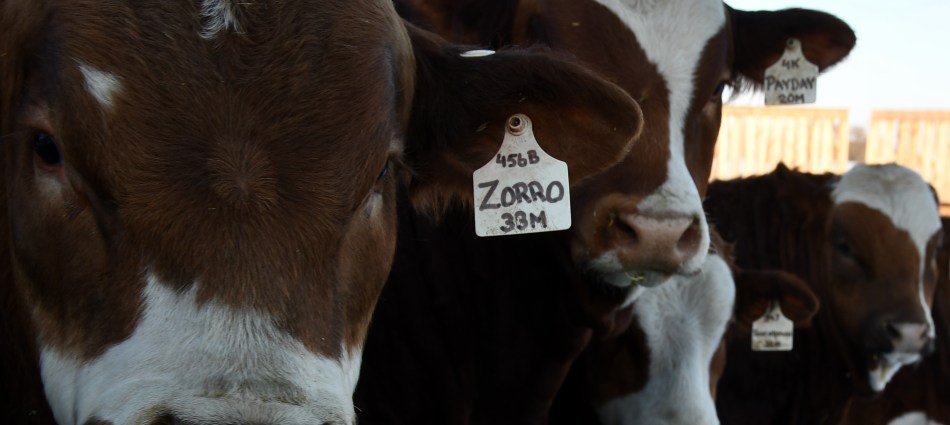
This year we are rather excited to debut our first Virginia Journey 509K and BLL Tombstone 223K sons.  When we set out to add new walking bulls in 2023, our focus was on ‘something proven’ and ‘something different’ and we were successful in adding both!  Under the ‘proven’ category was Journey – a Synergy x Radison son backed by the Willows Jade cow family.  The Synergy-Radison combo has been incredibly popular in the industry.  We have been very impressed with the curve bending calving ease plus performance of his calves – to the point where with his second calf crop on the ground, we are now confident in using Journey on heifers!  Take a close look at both ‘Zorro’ and ‘Jagger’!  In our quest for ‘something different’ we selected Tombstone from our good friends at Beechinor Land & Livestock.  It was during a summer pasture tour that Tombstone caught my eye – he just strutted his stuff with incredible eye appeal that make him really stand out.  A different genetic twist with Great Guns Wyatt, Tombstone is also backed by a cow family we know very well in Eagle Ridge Unbelievable 1U.   Tombstone’s first three sons will sell in Innsifail in ‘Top Gun’, ‘Tundra’ and ‘Touchdown’.   We are confident that both of these young herd bulls will have a tremendous impact on our herd, and consider this just a taste test – as our 2025 bull calf crop is dominated by these two exciting young sires. 

2025 will also represent the last natural born Black Gold Battleborn herd sire prospects.  The Battleborn progeny have led our sales strings the past few years, and have done incredibly well for us averaging $11,000+.  Two Battleborn sons will be on offer in Innisfail – both with really cool dams.  ‘Briggs’ is out of our Skywest Franceca, a really impressive Duramax daughter, and together they made a very impressive pair during our World Congress tours.  ‘Bono’ has a little different genetic twist that combines our two most prominent cow families in Lady Western 48R and Spruceburn Pauline. Bono also comes Homozygous polled.  Thick made, great hair coats, and a unique balance of performance and moderate birthweights have been a hallmark of Battleborn’s progeny.

In addition to our walking bulls, we also have an intriguing mix of bulls from AI sires that range from classic (Jahari – ‘Jasper’), to proven (Elevation – ‘Slash’) and calving ease (Pilot – ‘Payday’).   We continue to try and diversify our genetic base and incorporate some of our favourite horned sires into what is now our predominantly polled cow herd.  We also continue to leverage AI extensively on heifers with ‘Payday’ offering a highly intriguing blend of calving ease and high end maternal genetics all wrapped up in a homozygous polled package!

We want to ensure our bulls will work for many years, so feet, legs and temperament are very important traits for us.  The bulls are housed in a 5 acre paddock to ensure lots of exercise, and have been developed on a ration of free-choice quality first cut hay, combined with a forage based pellet by Country Junction.  All ten bulls are quiet and used to being around people. We like working and walking through docile cattle, and feel the herd bull should be no exception.

We also think it is worth mentioning that in order to provide exclusivity to the new owners, we do not retain a semen interest in our bulls.  We think there is value maintaining exclusivity – and use the same approach when we do our own bull shopping. We want the buyer to have the advantage in every way to succeed with a new bull purchase.

The 2025 Red Deer Bull Sale promises to be another exciting event. We look forward to a great day on March 8th at the Innisfail Auction Mart!

A (very) Little Prayer

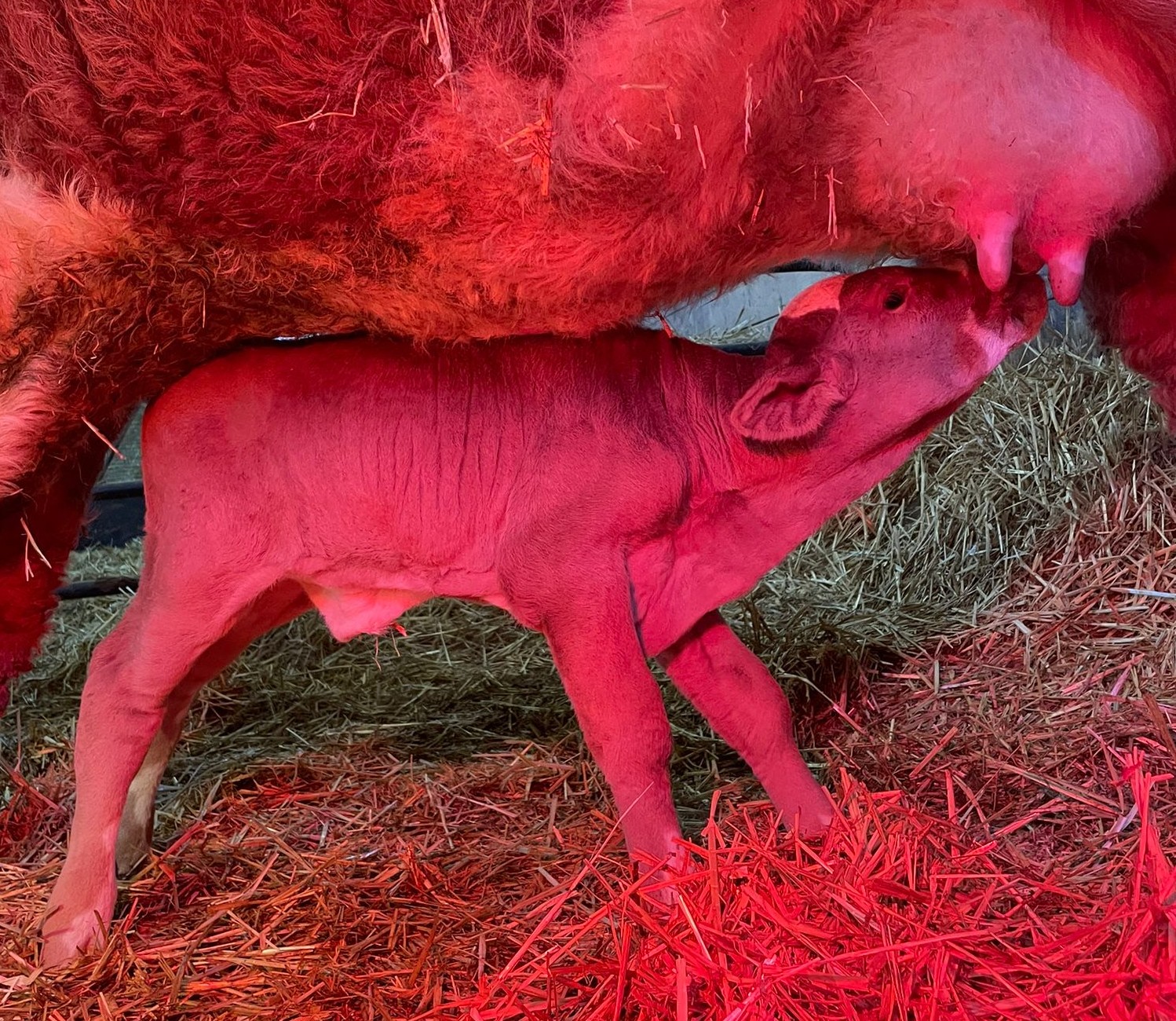
Our little ‘Prayer’ balancing herself on her momma’s belly so she could easily get at all four teats!

It was a miserable, blustery, late November day – the kind of day that makes you feel in your bones that winter was right around the corner.  Our corral cleaners were finally finishing up in the yard – getting the manure spread on our pastures to support another growing season.  Despite all of the planning that we do, there always seems to be a frantic rush to get the fall work done while we could, and prepare our winter ‘calving quarters’ for another year.  The cows had already been moved ‘home’ – not quite to the corrals that were now freshly cleaned, but close enough that we could see them from the house (and close enough that feeding the cows hay wasn’t too much travel).  With calving just over a month away, we liked having our ‘cattle circle’ get tighter, leading to a little closer attention, with daily walkthroughs to see who is progressing to schedule.  In most cases, we just wanted to re-establish a base line for what ‘normal’ looked like so that we could hopefully tell when something didn’t look ‘right’.

It was that morning, November 21st, when Jeanne came in after her walkthrough, to share the news:  “Paprika is looking off – I think she is aborting”.  Paprika was one of our first calf heifers and was a star-headed, big volume beauty that we retained to add to our herd.  From our living room window, Paprika’s unique colour pattern allowed us to keep an eye on her.  As the day progressed, all the (literal) tell ‘tail’ signs starting showing – she was restless – her tail would go up – and she separated herself from the rest of the herd.  Jeanne walked through again at noon and confirmed – Paprika was in the process of aborting.  Early afternoon, her pattern changed.  She was standing still; licking something on the ground.  Figuring that she had passed her fetus, we thought we’d give her some time to ‘grieve’ before getting too involved. 

It was about 4pm when Jeanne went out for a closer inspection.  The calf was all clean and Paprika was standing over it protectively.  Then the calf moved! Much to our surprise. The calf was alive. 

So what do you do with a tiny little calf born 6 weeks early? We do what we think all farmers/ranchers do.  We do the best we can to the extent of our abilities. 

We were fortunate in one sense.  This wasn’t our first experience working with a very premature calf.  The first time it happened, we were successful with a little girl named ‘Hope’ that had the fight and willpower to survive.  And those experiences with Hope made us a little bit ‘hope’-ful, that as things worked out before, maybe they would again! The other side was that, calves born so prematurely tend to be aborted for a reason – so what if we weren’t going to be so lucky with this one?

With thoughts swirling in our heads, we knew we were ‘on the clock’ and needed to get started.  The first priority was to get the calf inside to ensure it was warm enough, which would also allow us to have a closer look to determine next steps.  Our challenge was, of course, that our corrals were completely ripped apart so they could be cleaned.  Virtually our entire yard site at Applecross is modular by design.  The thought process is, that there is simply so much more versatility gained by utilizing portable panels that can be moved, reconfigured and expanded over the years – not to mention be moved right out of the way when it’s clean out time!  New ideas (and more cows!) meant we had a tremendous amount of flexibility.  The downside was, that when ‘stuff’ happens while we have the place apart, it isn’t very conducive to managing a baby calf!   We did have gates that we could close to eliminate road access for the cows, so we decided to get the calf, and hopefully mom would follow.

With the two of us, we headed back out to the field to get down to work.  Her momma wasn’t really sure what was up, but knew that the little brown bundle was ‘hers’ and something she should be protecting.  And if there is one thing I have learned over the years, it was to always be careful around a cow with a newborn.  It can change cows.  And for a first calf heifer, Paprika was all mama.  It took a little back and forth – and both of us – but we managed to get the calf onto the calving sled, and then transfer the sled to the back of the gator.  With the calf secured, we decided to head for the barn and get the calf warm – mom could wait until we had the calf stabilized and comfortable.  

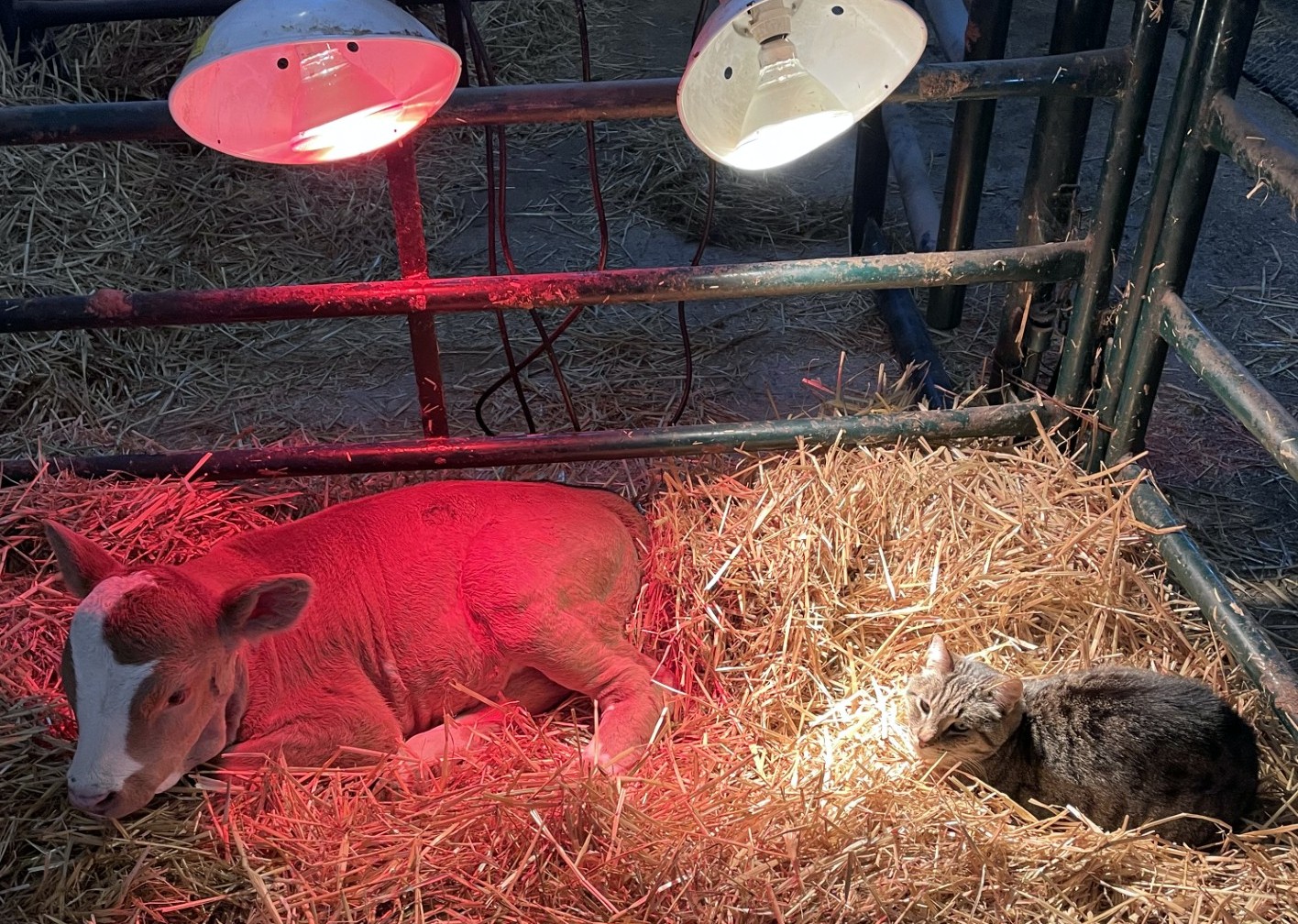
After finding some straw to make the little calf a nest under a couple of heat lamps, we could finally take a temperature.  It was a little low, but not near as cold as we feared.  We took a few minutes to assess overall health.  Certainly not much hair, the hooves were still soft, and we weren’t sure that eyesight was fully functional (yet).  We were happy to determine it was a heifer though.  For whatever reason, we have found heifer calves born of trauma tend to have more ‘fight’ in them (and are typically at the other end of the spectrum of ‘big dumb bulls’)…so seeing that she was lively and a heifer did give us a little more hope.  We have always been told that getting some milk in the calf was also vital.  We weren’t stocked for calving yet, but a frantic call to a neighbour found some colostrum close at hand (thanks Stacey!).  With the calf so small, we only made up a partial dose, as we knew she’d only have a tiny tummy.

With the calf stable and warm, inside and out, next step was re-uniting her with mom.  Paprika was still looking for her calf, but was really uncertain about heading towards the barn.  Thankfully, we have a few cows that we utilize as ‘Judas cows’ (traitors), that know what a grain bucket means and don’t mind following people if they know they’ll get a ‘treat’ at the end of the journey.  Once we got Paprika partnered up with a Judas cow and separated from the rest of the herd, our traitor knew to follow the gator, which meant Paprika also tagged along.  It (again) took a little bit of back and forth, but eventually we got both mom and our Judas cow to the barn.

The next step was getting Paprika – as a first calf heifer –  IN the barn, a place she hadn’t been since she herself was a newborn calf.  In a normal scenario, prior to their due date, we train our first calf heifers to come in the barn a few times so they get comfortable being in over night (bribed with a little treat for their time).  This process typically reduces stress at calving, as they are ‘more’ used to being in the barn and can focus on their new baby (which is a big enough change!)  So again, with the Judas cow (knowing there was a treat involved), eventually we were able to coax the new mom into the barn to be re-united with her baby.  We did ensure they had a fair bit of space. We didn’t want mom panicking and stepping on her calf – alone in a barn she had barely been in, that didn’t even ‘smell’ like cows yet this season.  But we wanted them close enough together that they could start bonding.  Certainly a tricky balance!  And with that step complete, we took a break for a couple of hours (but could still check on them from the house via our cameras).

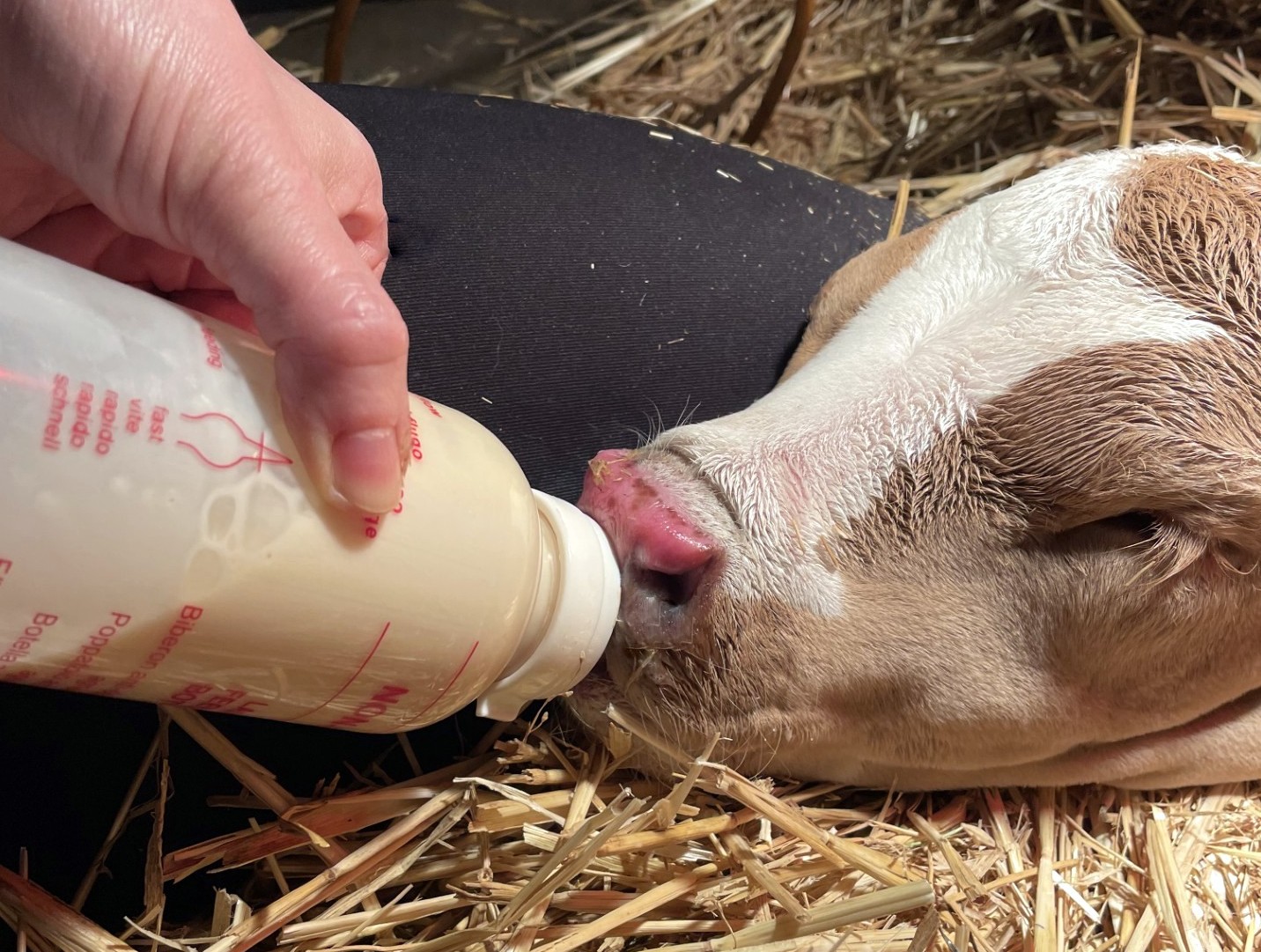
We went back out to the barn just before bed to see if we could make more progress.  While store-bought ‘powdered’ colostrum works for emergencies, it has always been our preference to use ‘mama’s milk’ whenever we could.  Sensing (if we were successful) that Paprika would need to get used to us working with her, we thought it was time to get her in the maternity pen headgate so we could strip some colostrum.  With a foot secured with a rope, mom safely, (but unhappily) allowed us to hand milk her.  Equipped with a small milk bottle meant for sheep, that we had kept on hand since our previous experience with ‘Hope’, Paprika’s baby already had quite the suck reflex.  The milk from the smaller sheep bottle disappeared very quickly.   Sensing progress, tired and exhausted, we went to bed for the night – content that we had done what we could – and hopeful that the next day would bring continued milestones.

This maternity pen routine carried on for the next few days.  Jeanne and I worked together to get Paprika back in the headgate each morning; ensuring we also got enough milk for a lunch time feeding while I was at work.  Evenings after Jeanne’s dance classes wrapped up, led to another trip to the headgate for Paprika and an evening snack before bed.  While the little girl really enjoyed her bottle, we’ve always tried to get calves sucking from their dam as soon as possible, so our next ‘big step’ was to try and get the little one standing so she could start to do more on her own.  After giving her a snack, we would work with her to get her legs going.  Starting at the back end, we assisted her to tri-pod her back legs to put weight on them.   She gradually got steadier and then, with a hand under her chest we helped her stand on all four legs.  It certainly was a project, with lots of falls, and not always linear progress, but on the evening of day 3 she was able to stand on her own.

Prayer and her ‘sheep bottle’. She always had a great suck reflex which helped things.

With mom safely back in the maternity pen headgate, our next step was getting her to drink fresh milk from mama.  Some continued persistence and with help from both of us, she quickly found the natural spigots – and was very happy there were 4 of them!  The next morning brought another trip to the maternity pen headgate for Paprika, and another small drink for her calf.  She seemed a little more steady on her front feet, and had more energy.  So we started thinking bigger picture.  As we had a similar experience (with Hope) a few years ago, we looked back over our notes to see what all we did ‘last time’.  We weighed her and she came in at only 40lbs! We also treated with Dex (which helps to lubricate the lungs which when born premature can be an issue), and gave the calf a broad-based antibiotic, as we knew that her immune system wouldn’t have been developed.  We also consulted our vet (and some trusted cattle friends) for anything we may have missed, but were cautiously optimistic as the calf continued to make progress.  At lunch time, she only needed one of us to help her get a drink, and then 24 hours later she was able to stand and nurse on her own – and could balance herself right underneath her mom!  Milestones and progress certainly brought smiles!

With the baby calf gradually improving, our next step was figuring out a name.  We had been calling her ‘Two-point-oh’ for the first week (as in Hope 2.0), as we consciously made the decision not to name her for a week because we were trying not to get any more attached than we already were.  We always named our calves at birth, and while our numbers have increased over the years, it is a process we still find both manageable and fun.  For heifer calves we typically follow the name of the dam, and in this case, Paprika was the legacy of our popular (and prolific) ‘P’ cow family that started all the way back in 2010 when we acquired Spruceburn Pauline as a bred heifer.  Pauline gave us ‘Poppy’ who gave us ‘Piper’, who gave us ‘Pepper’ who provided us with “Paprika’, so the new calf would be the 6th generation of this cow family to walk here.  After a fair bit of consideration, there was one name that seemed to fit for our premature little baby:  ‘Prayer’.  Certainly a lot of thoughts were sent skyward during the formative hours of Prayer’s young life, so the name stuck.

Prayer (normal sized cat for scale)

With little Prayer now drinking on her own, we were able to settle into more of a routine.  We set up the rest of the barn , and gradually shifted from 3x a day nursing in the maternity pen, to finally having her do things on her own.  In reality, Prayer figured things out very quickly, but those first few days were very intense and time consuming.  In all, it took just over a week before she was able to nurse on her own in the ‘big pen’ of our calving barn – with only a bribe for mom, and the odd bit of assistance.  Paprika never really warmed to the barn – and didn’t appreciate all the extra attention – although she still enjoyed the pellets, she just never seemed content…so after about a week in the barn, mom went outside for most of the day, while young Prayer stayed inside in the warmth.

When the next two calves arrived on Christmas day, we decided we might as well weigh all three.  Prayer was 90lbs!  So she certainly had progressed a long way – more than doubling her body weight in just over a month.  With other calves around to socialize with, and us knowing that our peak calving window was right in front of us, we also started letting Prayer spend some time outside.  Her hair had grown in, and while we were still concerned about an underdeveloped immune system, we knew that fresh air would be good for her.  So she became used to leaving the barn in the morning, and then sneaking back inside at night time when the temperature dropped.  Even in February, we would bring her back in the barn when nights dropped below -20.  It was important for her to meet and bond with other calves, but we wanted to continue to give her, her best chance at success.    

Prayer telling her mother it is time to head inside for the night. Paprika thinks that is a dumb idea.

As winter turned to spring, and spring to summer, Prayer continued to progress.   Despite her early birthdate, she was never one of the ‘big girls’, and we also suspect that her early arrival (and small tummy) impacted the amount of milk her dam produced.  Come summer though, as the pictures will attest, she certainly stood with her group. She has grown A LOT of hair to make up for her early start, and continues to look like she has her genetic potential.  She still has a few hurdles to pass – breeding in the spring – calving out in 2026 – but we remain cautiously optimistic.  She even won the genetic lottery and tested homozygous polled.  So certainly a great combination of determination, perseverance and luck!  We look forward to continuing to work with her and hopefully those milestones will continue to be passed!

Applecross Prayer 50L on grass in June, 2024. She may be missing the end of her tail, but overall certainly no complaints!
Prayer & Paprika – on pasture, June 2024

Ranching is not an easy occupation.  We lose calves.  Sometimes for reasons we aren’t sure of.  An aborted calf can be simply another aborted calf.  And then other times, we have our ‘Hope’ and we have our ‘Prayer’.  Time that we invest.  Willingly. As caretakers of our herd.  It doesn’t always work out, but when it does we wanted to share the story.  There can be so much negative in our chosen profession, and it is a profession that is often undertaken alone, so hopefully sharing our experience can help.  Sometimes, Prayers are answered, and our efforts are rewarded, with a determined little girl that will always be our Prayer.

Until next time,

Dennis

2024 Shades of Fall Sale Report (and a few other thoughts)

It was an amazing day in Bentley, Alberta for Shades 2024

It was an absolutely gorgeous Canadian Thanksgiving week-end to hold the inaugural ‘Shades of Fall’ Simmental Sale at Beechinor Land & Livestock on Saturday October 12th.  Sunny skies and unseasonably warm weather lead to a busy debut for the new sale, with lots of traffic and a palpable buzz in the air.  Our new group of consignors joined together to bring 34 lots of Fleckvieh and Red Simmental females to the party to the tune of a  $551,000 gross for a really cool $16,206 average.

It was very fitting to start the sale with Lot 1, the BLL Couture 663D Flush.  Couture is, of course, the dam of the $355,000 sensation BLL Rumble, as well as the World Sale standout BLL Crimson Tide.  The opportunity to flush this elite female to the bull of the buyers choice led to a rousing start to the day.  In the end, it was Mark Land & Cattle from Irma, AB who invested $33,000 to flush Couture next February .  The Couture flush was backed by the opportunity to acquire her daughter – Lot 2 – BLL Elegance 317L a little later in the sale.  This deep and broody powerhouse bred heifer had a tremendous number of admirers, and was selected by Circle E Farm, Genry & Heather Ellison, Lucedale Mississippi, for $27,500.  What a way to kick off to the sale – it will be very interesting to see the Couture influence flourish across the continent!

Our very own lot 24, ‘Applecross Rachel 60K,’ had the honour of being the third lot sold.  ‘Rachel’ has long been a favourite of ours and she was difficult for us to sell, but at the same time, we knew she would be the perfect representative to showcase our program.  With the World Congress in Calgary this summer, we started to get used to the idea that maybe we should market her – and when we decided to join in a new sales group, Rachel became a natural fit to showcase exactly the progress we’ve made with polled Fleckvieh cattle.  She was certainly the most talked about female that we have ever produced, so it was truly rewarding to see her sell to the BBBG Group in Quebec for $32,000.  We are stunned by the result and look forward to seeing what she does (and how she’ll be bred), in la belle province.

Throughout the afternoon, the sale alternated between each consignor and wove the red heifers into a couple of groups between the Flecks.  These were the first Red Top breds to sell at auction, and they were a very consistent group from top to bottom.  (Not that I know anything about red cattle, but…) My personal pick of the Red Top string was lot 20 – a really nice Bootlegger daughter that was selected by Crossroads Farms for $21,000.  The Century string was also impressive, with their lot 36, Century Liz 333L leading off their string.  This big broody female with a little different pedigree dropped the gavel at $22,000 and is headed north to Polar Farms in the Peace Country.  It is cool to see Polar Farms join the consignors at the early December, Western Harvest Sale in Innisfail, so maybe we will see Liz’s progeny there in the future!

All six of our Applecross heifers were very well received, and we couldn’t be happier with the great operations that they will now call home.  Lot 24 Applecross Dana will be staying at our place through calving until March before heading for embryo collection to be exported to Jeff Knox, Knox Farms, NSW Australia.  Jeff also selected Dana’s maternal sister Deirdre from our 2023 Equation string (as well as lot 11 BLL Linnea 343L from Shades), and has been active in a couple other sales this fall, so it is rather neat to see the pen of donors he is assembling.  Jonny Kline of JEM Simmentals at Barrhead was the successful bidder on our lot 26 ‘Viola’ heifer, and we look forward to seeing what he does with that big volume female.   Our Lot 27, ‘Sonya’ heifer also got to take a long truck ride – as she headed to Norwood Family Farm in Westport, Ontario.  Charlie Norwood has known my parents for quite a number of years,  and we have enjoyed the chance to visit on a few occasions here in Alberta, so it was wonderful to have him select ‘Sonya’!     ‘Charlene’ and ‘Danica’ headed in opposite directions, with Charlene heading north to Vanderhoof in the BC interior, after being selected by Brock Young/Red Iron Simmentals, and Danica heading to Stavely in Southern Alberta to join the Browns at MCG Simmentals.  MCG has joined the Southern Round-Up Group, so we look forward to seeing their cattle in mid December at that long running sale.   In all, a great day for new homes for Applecross Cattle!

In addition to the above noted high-sellers, I thought we would share some additional thoughts on the first edition of Shades of Fall:

  1. I can’t say enough about our hosts, Stefon & Rebecca Beechinor.  It takes some ‘gumption’ to follow your dreams, and step out and start your own sale.  I can only imagine that first conversation with Transcon….’you want to do what?? With who?? And how many head??’.  And from top to bottom it was a really cool day, with everything coming together fabulously well. The results certainly speak for themselves! 
  2. Shades did line up very well with Black Gold and Anchor D / Pasture Treasure Sales immediately preceding our new event.  Following September Simmental Week-ends in both Quebec and Ontario, we had the first of several ‘Alberta Simmental week-ends’ of the fall, and I think travellers from out of province really appreciated having the opportunity for sales back to back in the same geographic proximity.  
  3. We are also super thankful to have Dan Skeels as our auctioneer; specifically since it was only the day after his own sale – so we really appreciate him taking the time to work with us.  Having known Dan since the early 1990’s when he auctioned the ‘Fleckvieh Forum’ sale in Ontario for my parents, it was a treat to have him auction his first Applecross females almost 30 years later.
  4. This was our first ‘video’ sale, and it is something I would highly recommend.  There was a little more cost involved for professional videos, but the benefit of having 1) a quality video available in advance, and 2) the animals not being stressed by having to walk through the ring, more than offset any perceived ‘loss of bids’ from those in attendance who may have otherwise ‘acted on impulse’ with a live animal in front of them.   Not that it was a material issue (with only 34 lots), but it also meant a much ‘shorter’ sale, so we could get back to visiting!
  5. We are clearly incredibly happy with how our first ‘Shades’ sale went.  But we will miss (parts) of Fleckvieh Equation.  We don’t make change lightly, and Equation was a very good sale for us over the years – a lot of ‘what to do’ and ‘when to do it’ regarding sale prep and presentation we learned from that sale.  Jay / Transcon’s continued focus on having an avenue where ‘new breeders’ (or at least new to the sales barn), can get their start is a testament to his vision of helping breeders of all shapes and sizes get a lift, while creating networking and bonding opportunities to connect to others that may also just be starting out.  It is a great sale concept, and I am sure they will have another bang up year in 2024
  6. We won’t miss the wash racks or the late December concerns of heavy in calf breds on a truck to their new homes though! 
  7. It is a bit of a weird feeling to have our heifers sold, with (most) of our buying options still in front of us.  I have shared previously that we always try to ‘add’ each fall and re-invest in building our cow herd.  There are a number of criteria (the six/seven P’s from a previous blog post still explain them well).  But the condensed version is that we are interested in adding females that we feel have the potential to improve our herd, while also representing outcross genetics.  With a smaller herd, every female matters – so they need to bring something to the table.  It is very nice having our own sold so I am not just ‘guessing’ at a budget (says the banker).  I look forward to the hunt for better and different!
  8. In the lead up to sales, we often get asked ‘what do you think they’ll sell for?’.  And the short answer to that question is that I have no idea.   I have a personal opinion of our cattle, and readily acknowledge we are both ‘barn blind’ and often REALLY like our cattle on offer.   Other than knowing how much interest we have, and potentially giving some guidance on what our bulls or heifers have averaged in past years crossed against the current commercial cattle market, we can’t really provide much guidance.
  9. And that is the fun (and challenge) of selling all our cattle via auction.  It always takes at least two potential buyers to move the price higher.  We have had years where we have sold animals for less than what we had hoped for.  We have had years where we have bought animals for less than what our budget was.  And still other years where we may have missed on our ‘favourites’ from the season.  The common thread is that you have to be ready/willing to bid.  And you need to know your limit (and stay within it – mostly!).  Because you just never know.  Its an auction.
  10. With our sale heifers now all in their new homes, our thoughts have drifted toward calving and bull sale season.  Calving 2025 will be dominated by our two, two-year old walking bulls – Virginia Journey 509K (Synergy x Radison) and BLL Tombstone 223K (Great Guns Wyatt x Titanium).  Both had very successful first calf crops, and due to the unfortunate (and unplanned) early departure of Black Gold Battleborn, they  bred the bulk of our herd.  Each has its own positives (we felt comfortable using Journey on some heifers; Tombstone offers a little different pedigree than most), so it will be fun to see how the genetic possibilities line up.
  11. It is also the first time ever that I think I like our bull calf group better than our heifer calf group in development.  As Jeanne said at weaning ‘you wanted this!’, so while it meant some tough decisions, we whittled 25 bull calves down to 11 really cool individuals, and have been super happy with how they have transitioned since weaning.  With genetic testing freshly in hand, I can only smile. I think early March in Red Deer could be fun!
  12. I can already share that Jeanne’s favourite is ‘Payday’.  And yes, he’ll do.  The footnotes will also just write themselves ‘make every day. Payday.’  hey-o! 
  13. Our summer project was to revamp our bull development area and add more wind breaks.  We didn’t want to take away from exercise space, as it is important for young bulls to move and keep their feet under them, so we added a number of portable panels while still allowing them space to roam.  Our winters can be brutal, so hopefully a little more protection will certainly be of value come semen test day!
  14. I don’t want to imply that I don’t like my heifers…they are coming along nicely as well, and we hope to potentially have 8-10 to offer at Shades 2025.  There just may not be a ‘Rachel’ in the group.  I don’t think it is realistic to have a ‘Rachel’ every year.  But it is both a lot of fun trying, and a lot of fun when it happens! 
  15. With that, it brings me back full circle to Shades 2024.  Not only were Stefon & Becca great hosts, it was really cool to work with Ben & Kassandra and Jesse & Kirsten.  Everybody pitched in to help out before/during/after the sale, and us four couples all have a similar ‘vibe’.  We look forward to next year and many more years of the same!
  16. We were also blessed to have Jeanne’s two sisters and their husbands join us for the sale (and Thanksgiving week-end). Many hands make light work, and they meshed seamlessly with our sales crew – Jackie, Julie, Larry & Andrew were all a great help that we really appreciated!  Andrew’s pictures will form great memories of the day!

I can’t close without saying a few words about Transcon, our Sales Management team.  Jay, Darren, Glen and Cody always do a quality, professional job – and spend significant amounts of time on the phone – talking – while walking animals out of their pens to check feet,  and allow buyers to select animals with confidence.  Sales Management remains a long term gig – if a prospective buyer on order isn’t happy with their purchase they won’t be back.   It is foundational to have mutual trust in a Sales Management team, and we have that with Transcon. 

It was another great day to present Applecross cattle at auction, and we are honoured by the compliments received on our cattle from all the bidders and buyers that took interest in our program.  You never know with a new sale venture, or what each year may bring – so it was very rewarding to have an absolutely smashing day.  We look forward to trying to  showcase our ongoing efforts to produce high-quality genetics that we can share with the industry.

Until next time,

Dennis
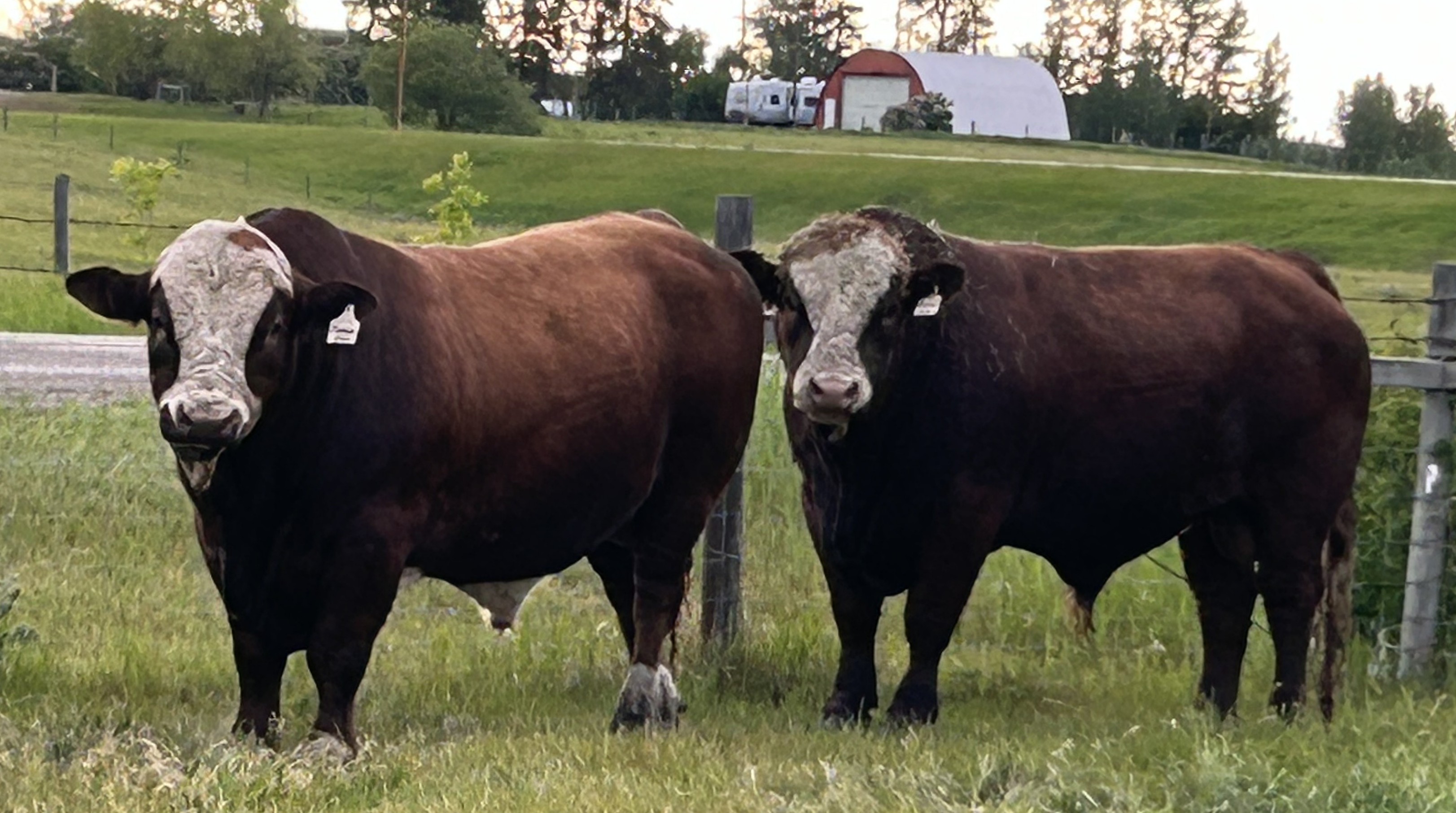
Applecross  Cattle Presents: Our 2024 ‘Shades of Fall’ Heifers

We are delighted to present six bred heifers at the inaugural Shades of Fall Simmental Female Sale on October 12th at 1pm a the Beechinor Land & Livestock Sale Facility, located near Bentley, Alberta.  We were very excited to be asked to join this prestigious event, and we are proud to be teaming up with these three fellow breeders!

When thinking about our selections this year, they could simply be summed up in one word: progress.  It has been a long road weaving the polled gene into Fleckvieh cattle, and we can say without a doubt that these ladies on offer are our strongest, deepest line up yet.   This is the result of more than 25 years of slowly incorporating polled genetics and striving for quality, predictable matrons that are the type a herd can be built around.  From Lot 24 (Rachel) to Lot 29 (Danica), we are excited to see what these ladies are capable of – and what better place to showcase it then at a new sale!

Our breeding philosophy continues to focus on strong maternal lines across the group, with deep extended pedigrees to ensure quality and consistency.  The heifers have been double vaccinated, and have been pregnancy tested to the dates listed.  2024 was another year of drought in Central Alberta, and what little rain there was always seemed to split and go around Applecross.  Our pastures were materially weaker, but we feel our Fleckviehs continue to showcase that easy doing ability the breed is known for.  Our sale heifers have certainly needed only a little TLC to prep for sale day.

Individual pages (short-cut links are on the right), have been created for each of ‘Rachel’, ‘Dana’, ‘Viola’, ‘Sonya’, ‘Charlene’ and ‘Danica’.  On the individual pages, we have also pictured their sires, dams and siblings – hopefully, sharing pictures will provide a better glimpse into the extended pedigree. 

Please join us for some unique ‘Shades Hospitality’  on Saturday, both before and after the sale, when it will be great to visit and view cattle at the newly renovated BLL Sales Facility near Bentley.  Please check out our social media on Facebook and Instagram (@aplxcattle) for more details on each of our sale animals, as well as videos that will follow over the next few days.  If you have any questions about our heifers or our program, please do not hesitate to contact us.  We look forward to visiting with you on Canadian Thanksgiving week-end!

Our Red Deer County 2024 Sale Report (and a Few Other Thoughts)

It was a gorgeous early spring day, with mild temperatures, lots of sunshine, and an absolute capacity crowd on hand to watch 119 lots of pure beef bulls roll through the Innisfail Auction Mart for Transcon’s Red Deer County Bull Sale.  The multi-breed concept expanded again this year, so there was a broad selection of bulls  on offer, representing Simmental, Angus, Hereford and Charolais genetics with an impressive amount of diversity within each breed – horned or polled; red, black or fullblood – there were simply lots of options to choose from!

The lead bulls rotated back to Simmental this year, and the sale started off with some palpable excitement as the first BEE Alpha sons were set to lead off the Red Deer 2024.  We were at Beechinor’s the day that Ben & Kassandra Farrant selected BEE Alpha 915J, and if we recall correctly they paid $120,000 for the privilege.  You wouldn’t think it possible to ever fly under the radar with a $120,000 bull purchase, but with the record setting ‘Rumble’ also selling that day, the ‘Alpha’ acquisition was maybe a little overlooked.   The whole pen of Alpha sons were incredibly impressive; with none more so than Lot 10, Red Top Mr 108L.   After some very spirited bidding, the gavel slammed home at $80,000, with Labatte Simmentals and Circle 7, from Shaunavon, SK emerging as the successful bidders!    An amazing way to kick off the day, and rather cool to have the lead bull selected to work the legendary pastures at Labatte’s!   We have gotten to know Ben & Kassandra over the years as we have been part of the same bull and heifers sales, and it is absolutely incredible to see their passion for elite purebred cattle shine though and be rewarded in the sales ring.  It can be tremendously stressful to step out and invest heavily in purebred genetics, and it takes years to develop a program and weave different genetic lines together, so it was so awesome to see their success!

It was also a record day for Applecross Cattle.  In the lead up to the sale, we received a lot of interest in this years’ bull string, specifically in our two homozygous polled bulls.  We were really happy in the condition all our sale bulls were in and thought they were a pretty neat group that each had their own merits (and personalities!).  The challenge with auctions is that you always need at least two bidders to be interested in the same bull for the price to move higher, and we certainly did more than alright in that regard in 2024!  APLX Conway 23L, our lot 103 bull, was selected by Forden Fairview Farm / Lyle & Leanne Forden of Punnichy SK for $30,000, and has already made the trip to Saskatchewan, where he got off the truck and went straight to work!  Meanwhile, lot 98, APLX Bastion 17L was selected for $23,000 by Jensen Simmentals in Osawatomie, Kansas, and will be leaving this week for his new home in the sunny south.  Steve Jensen also selected a bred heifer (Applecross Abigail) from us at Equation 2023, so we certainly appreciate all his interest and support over the past few months!   Lot 104, APLX Convoy 12L, also gets a lengthy truck-ride as he’ll be headed for Big Hills Simmentals, Sandy Lake, MB,  while  lot 99 APLX Biggio 30L, gets to stay close to home after being acquired by Ryan Layden / Layden Land & Livestock Ltd, from Red Deer County. Ryan was a repeat buyer for us, after selecting ‘Dillon’ from us back in 2021.  It is always special to see customers return for more bulls. We were incredibly happy with our sales results, and its rather cool that three of our bulls will be working for fellow purebred breeders!

Overall, the sale averaged a very impressive $9,710, with 55 Simmentals averaging $10,486.  8 Charolais averaged $9,938, with 8 Black Angus  averaging $10,688, 17 Herefords averaging $6,882 and 6 Red Angus averaging 9,000.  It was great to have success throughout the auction across so many of the consignors!

Once again we need to recognize the team at Transcon for doing a tremendous job working the phones and managing the sale.  The Red Deer County Bull Sale is part of an extremely busy stretch of events, and we appreciate the time and energy Jay Good, Glen Norton, Darren Paget, and Cody Coupland invest to ensure we have a successful sale.  We are confident in referring inquiries we receive to the Transcon Team, for an unbiased and independent opinion of our cattle.  They were constantly on the phone and in our pens, taking pictures of feet, watching the bulls walk out and passing their findings back to prospective buyers.  With our three lead bulls all being selected by ‘Transcon on Order’ they were certainly busy!  Every year has different bulls and different buyers (looking for different things), and their efforts may not always be as tangible as they were this year, but we always appreciate all of their hard work! We look forward to working with them again later in the year at Fleckvieh Equation!

A few additional thoughts on Red Deer 2024:

  • A common theme on our two high sellers were certainly the homo-polled heads, but I also think that the non-dilutor status also made a difference in their sale price.  We have tested for the dilutor gene for a number of years now, and it is another trait on our list that we check for.  We have walked several dilutor carrier bulls over the years, so it isn’t a ‘deal breaker’, but we wouldn’t be doing our job of we weren’t noticing traits our customers also select for.
  • We had another tough year on the semen testing front, with 5 of our 10 bulls making it to sale day.  While the reasons did vary a bit, we have certainly done a lot of reflecting on our program and how we can improve things going forward.  (It is said that the definition of insanity is doing the same thing over and over again, but expecting different results).  We are looking to our wintering area as a spot that may need an upgrade.
  • One of the downsides of wintering our sale bulls in a 5 acre paddock is that they don’t always have protection from the elements when it is -50 or when there is a -20 degree windchill…so maybe we can create a balance – where they have access to a larger space (to exercise and travel to keep their feet under them), but then also have the ability to confine them to a smaller, protected area once ‘hard winter’ hits.  Things to think about; changes to make; as it simply doesn’t make economic sense to raise bulls that just end up in the meat ring.  We can never be perfect, (and certainly we can’t expect every bull to always pass their semen test), but we can certainly learn and get better!
  • One of the largest changes for Red Deer 2024 was the size of the sale.  With the addition of several new consignors and different breeds, there were a total of 130 bulls catalogued, which was almost double the 68 bulls that sold in this sale only two years ago in 2022.  There are a number of good things – the capacity crowd on hand meant Innisfail Auction Mart had as many people in attendance as I had ever seen, and more bulls translates into lower costs for consignors.  But there are also some downsides – with some awesome BBQ on site, despite cutting steaks in half, we still ran out of food (and water) for all our guests.  And, with such a large crowd, we know some people that left early (hopefully to go home to watch/bid online!).
  • I also wonder if the Fullblood Simmentals ‘got lost’ a bit within the sale.  With so many breeds on offer, and a lengthy sale, there wasn’t a separate ‘fullblood’ carve out – with 3-5 selling in one spot, 5 in another, and then a couple here and there throughout the day.  Part of that is on us – if our entire bull string had passed semen testing, the fullblood numbers would have been a fair bit higher, but I do think that bidders and buyers interested in Fullblood bulls, had to be very diligent throughout the afternoon, not to ‘miss’ bulls.  We have attended several large dispersals over the years, and found that often the best opportunities for upside were found later in the day, so there are always pro’s and con’s to larger events – perspective that also depends on whether a person is buying or selling!
  • In regards to our own breeding program in 2024, we will be staying fairly ‘status quo’ after splurging last year on two new herd sires.  Both BLL Tombstone 223K and Virginia Journey 509K now have their first calf crops on the ground, and we are pretty pumped about each bull’s potential based on the early returns from their respective calf crops.  Black Gold Battleborn 44H is now the ‘proven seasoned veteran’ of the group and, while he has outgrown the heifer pen, he has proven himself to be very versatile, allowing us to have three fairly even breeding groups.

Over the past fourteen years, it has been great to be part of the Red Deer Bull Sale and 2024 was certainly no exception.  Public auction is a great forum to get feedback on the program we are building at Applecross Cattle, and we were both humbled and honored with the number of compliments our pen of bulls received throughout the week-end, from both peers in the purebred industry and commercial cattlemen alike.  We strive to produce top quality cattle, and can at times be our own worst critics, so it is wonderful to hear all the kind words. Not a year goes by that we don’t learn how to do things a little better for next year, and it is equally important to continue to receive tips and advice on how to make improvements to our program.   With the bull sale now in the rear-view mirror, and breeding season underway, we look forward to the challenge of developing more and different genetics for future years.

Until next time,

Dennis
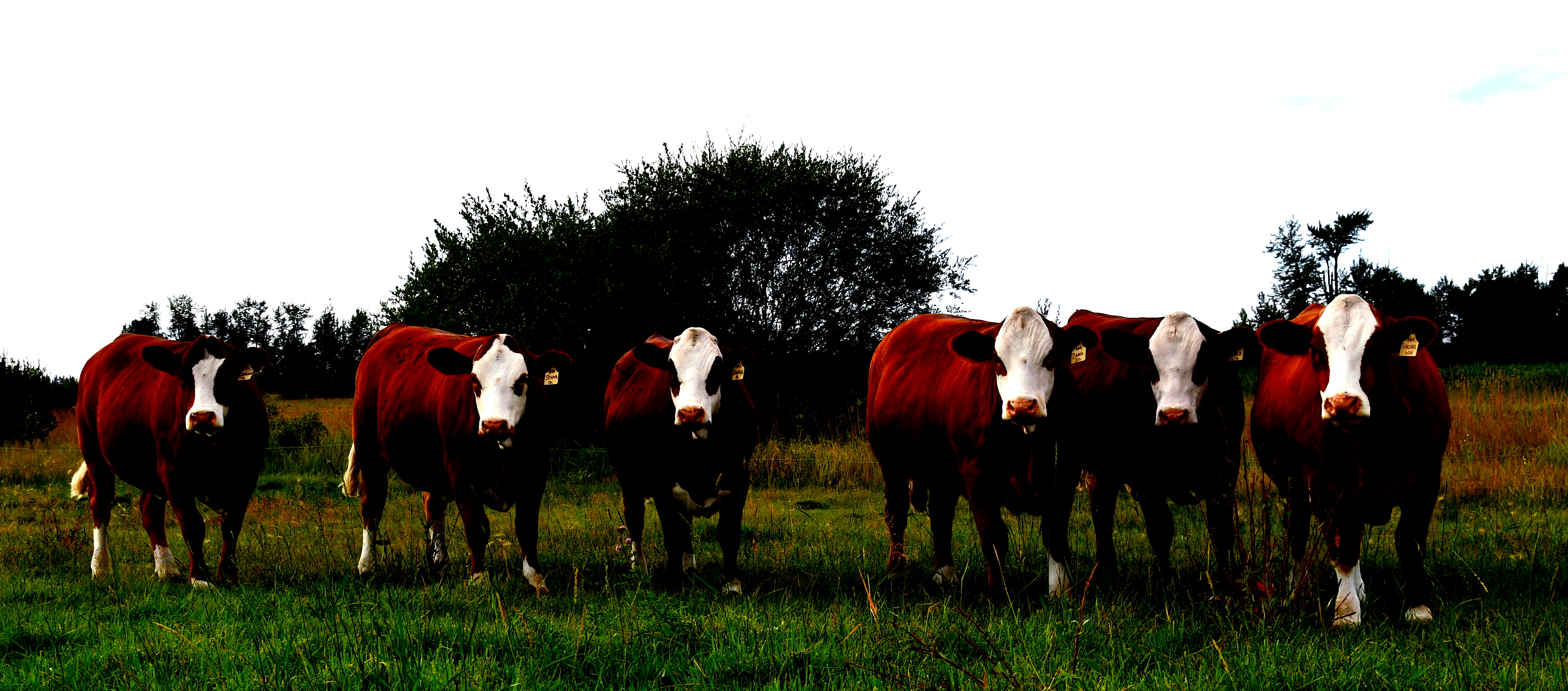
Applecross @ Transcon’s Red Deer Bull Sale 2024 – Our Most Consistent String Yet

We are pleased to present ten herd bull prospects at Transcon’s 2024 Red Deer County Bull Sale on Saturday, March 9th at 1:00pm at the Innisfail Auction Market, Innisfail, Alberta. This is our fourteenth year at this event, and while the sale numbers always seem to fluctuate we continue to be joined by a diverse group of breeders that always join together to bring a strong offering to what is now a multi-breed event.  Our 2024 offering is our most consistent yet, and the ten bulls on offer all continue to showcase our philosophy of highlighting the maternal strengths of the Fleckvieh Simmental breed.  We firmly believe that the future will bring an increased herd size on the same amount of available labour.  This means that with less labour available on a per cow basis, birth weights will come down to improve calving ease, and that gradually more and more horns will be bred off the cattle.  We have moved slowly to incorporate the polled gene into our herd, as our goal is to try and accomplish this while maintaining the strong performance and mothering ability the Simmental breed is known for.  In a market that suggests continued strong demand for beef, we think our bulls on offer all provide the maternal characteristics that will produce tremendous replacement females.

Dominating this years’ offering are progeny from two of our walking bulls in Black Gold Battleborn 44H and Double Bar D Confidence 179D.  While AI is still a very important tool for us (specifically on heifers and in incorporating outcross genetics), we continue to invest in walking bulls from some of the top breeders in Canada.  This mix allows us more flexibility during breeding season, increased consistency in their respective calf crops, and a chance to tap what otherwise could be fairly exclusive genetics.  From FGAF WowEffect 016A, to NUG Delmonte 81D, Confidence, Battleborn, and last years’ acquisitions of BLL Tombstone 223K and Virginia Journey 509K, we feel we’ve been able to combine ‘something proven’ with ‘something different’ to form a unique APLX blend of highly maternal, moderate birthweight genetics.  

The Battleborn progeny get the chance to lead the way this year.  With three calf crops on the ground, and his first daughters now in production, Battleborn has developed into a very impressive individual, walking on extremely good feet, with his daughters now showcasing nice tight, square udders.  With an eye-popping EPD profile, it is somewhat ironic that his weakest numbers are for calving; as he is a bull we have comfortably used in the heifer pen for the past 3 years.  Of his four sons on offer, ‘Bastion’ represents a really intriguing homo-polled rascal (and is Jeanne’s favourite), while both ‘Brando’ and ‘Blizzard’ showcase exactly the type of progeny he produces out of first calf heifers.  The final bull in ‘Biggio’ represents the last calf from one of our cornerstone cows, Applecross Poppy.  It is no surprise that three of these sons all come from our foundation ‘Spruceburn Pauline’ cow family who left a tremendous legacy for us at Applecross.  All four of these Battleborn sons are consistent in type, and offer the opportunity to step into genetics that combine a high maternal focus with explosive growth.

Not to be overlooked, there are also four sons of Double Bar D Confidence 179D on offer in Red Deer.  Confidence is a bull that really moved our program forward, producing very balanced offspring on both sides of the ledger.  The daughters from his first calf group are now high productive 2nd calvers that have tidy, even udders.  His sons include APLX Coach 37J who highlighted our 2022 Bull Sale, and now has progeny across North America.  Confidence also provided us with a highly attractive homo-polled son  in ‘Conway’, while also giving us the powerhouse of this years’ offering in ‘Convoy’ (and he is a ‘great big convoy’; he’s a beautiful sight!).  ‘Compass’ and ‘Country’ round out this highly impressive group of four – all of whom are very stylish and have nicely shaped polled heads. These Confidence sons are all very consistent (check out their birthweights!), and can suit a variety of needs.

As mentioned above, in addition to our walking bulls, we always try to breed our heifers, and at least a few early cows, AI in order to incorporate some outcross calving ease and top end genetics to our core herd.  One of the benefits of living in Central Alberta, is the proximity to a number of great programs.  After noticing the Black Gold Elevation progeny consistently stand out in the Beechinor sale strings, we were successful in acquiring a semen pack a couple of years ago.  ‘Encore’ certainly shows that Elevation stamp, and may just be the most eye-appealing bull in our 2024 string.  ‘Cabot’ is also a really cool dude, being sired by Rugged R Cavill; a bull we have successfully used on heifers for several years.  From our experience, Cavill appears pretty much bullet proof as a heifer bull, so we expect to continue to utilize him to AI our heifers.  ‘Cabot’ has a fair bit of size and growth to him so while he could be a potential for the heifer pen, he shouldn’t be just a one trick pony.  We are always looking to offer something a little different, while adding a little extra style and maternal, and this year that means ‘Encore’ and ‘Cabot’!

We want to ensure our bulls will work for many years, so feet, legs and temperament are very important traits for us.  The bulls are housed in a 5 acre paddock to ensure lots of exercise, and have been developed on a ration of free-choice quality first cut hay, combined with a forage based pellet by Country Junction.  We pail feed our bulls twice a day, to ensure the bulls are quiet and used to being around people. We like working and walking through docile cattle, and feel the herd bull should be no exception.    Please also note that we obtained Yearling weights in early January; prior to the bulk of the bulls being a year of age, which has resulted in Adjusted weights being higher than actual – specifically on our three bulls from first calf dams.  We hope our bulls work for many, many breeding seasons, and feel our development program evolving over the years allows them to do just that.

Individual pages (short-cut links are on the right), have been created for each of the bulls.  (For those reading this on phones, the bulls name or lot number can also be entered into the search bar, to locate their individual page). On each of the pages, we have also pictured their sires, dams and siblings – hopefully, sharing pictures will provide a better glimpse into the extended pedigree.  It is also not unusual for us to have walked 4 or 5 generations of each respective cow family.  We also plan to have videos of each of our sale bulls available approx. 2 weeks prior to sale day.   Please check our Applecross Cattle Facebook page for up to date info on our sales offering.  

Transcon’s 2024 Red Deer County Bull Sale promises to be another exciting event. We look forward to a great day on March 9th at the Innisfail Auction Market!