Our Journey as Producers of Fleckvieh Simmental Cattle.

Latest

How We Select Cattle: Our Five (Six) P’s

6-8

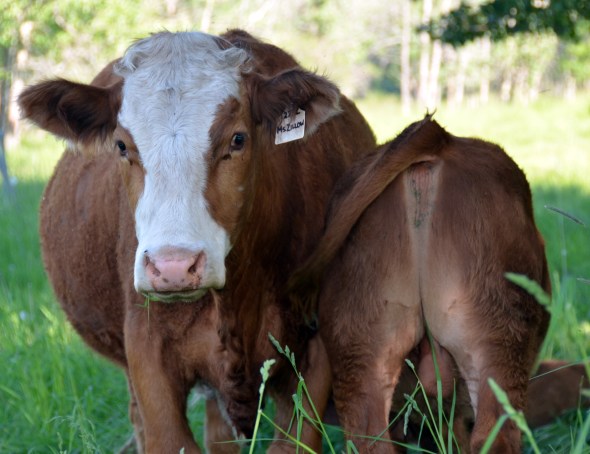
Virgina Ms Zillow – Our selection from the 2013 Cow-A-Rama sale pictured in 2014 with APLX Clancy at side. 

How We Select Cattle: Our Five Six P’s

Fall sales season is in full swing and there has been a steady diet of catalogs released online and arriving in the mail.  Perhaps it is because we aren’t marketing our own females this fall, but it does seem like I am spending a lot of time looking at catalogues and figuring out a schedule that can get me to as many cattle sales as possible, prior to the onset of calving season.  Taking a step back today, I started thinking about my own selection process and the criteria we use when selecting an animal to join our herd.  I think the following ‘5 P’s’ (and in our case 6 P’s) can be utilized to determine our interest in an animal available at auction.

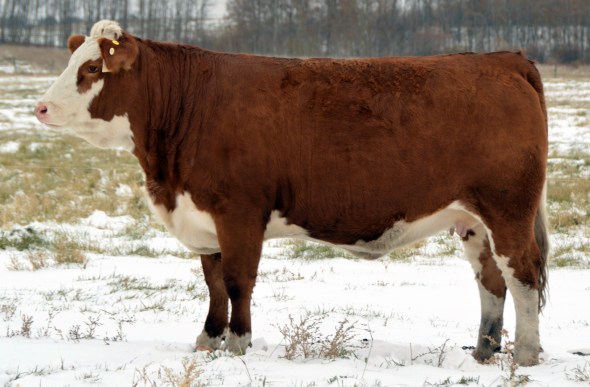
The first “P” is picture.  Thumbing (or these days clicking/scrolling) through a fresh new catalogue, it is usually the pictures that jump out first.  A good picture may not make you buy an animal – but a bad or mediocre picture can sure make you pass over one without spending any time on them.  This is an area we really focus on when selling our own cattle.  A few years ago, we were told by both a fellow breeder and a cattle marketing rep that our cattle were a better quality than what they showed in the pictures – and that it was something we needed to improve on. We really appreciated the honest feedback, and ever since then we have tried to focus on how to get better pictures.  We schedule time for ‘re-shoots’ into our pre-catalog deadline calendar, and hire a 4-H kid, who the cows are unfamiliar with, to assist with pictures. We love walking our cattle, so since they ‘know’ us they tend to keep their heads down – which isn’t very ideal for pictures.  A new person in the pen (that still knows cattle), tends to be just enough to help get their attention, and often leads to a quicker, better picture.  Hopefully, we take a picture that makes our animals worth a longer look in the catalog.

With a good picture at the top, our gaze tends to shift to the Pedigree below.  I think every breeder has genetic lines that they follow; often either new genetics they wish to incorporate or genetics that they know just work in their herd.  As we have been around the Simmental breed for a long time, there are also quite a number of cow families I recognize (and while most people have either a good/bad/indifferent opinion of a sire, when you recognize a cow family it is usually a good thing).  So if I can find desirable outcross or proven genetics stacked across a pedigree it certainly piques my interest.  Thanks to the CSA database, I also spend a fair bit of time tracking some of the animals I was interested in but wasn’t successful in acquiring in the past.   Sometimes if you watch closely, there is the opportunity to acquire descendants in the future.  Back at the 2010 National Trust sale, I was really drawn to an awesome lighter coloured open heifer from the Big Sky string.  We didn’t end up getting her, as she landed at Virginia Ranch, but just last December we were able to acquire a grand-daughter – this time from the fine folks at Parview (who had purchased a daughter from Virginia Ranch at National Trust in the interim).  It doesn’t always work that way – but keeping an eye on genetics I really like can certainly help trigger interest.  EPD’s also get a glance – but I’ll delve into them in a future post.  Overall though, the pedigree plays an important role when we consider an animal.

The next step is validating Phenotype – most often in the form of a visual inspection in the time leading up to the sale itself (and ideally in the form of a summer tour when we can take a peek at the cow family behind them).  We have had good fortune in utilizing order buying ‘sight unseen’ in the past, but we are much more comfortable and confident (and have a willingness to bid higher) when we get a chance to view the cattle in person.  What are we looking for?  Generally, we mostly look at temperament and feet (getting them out to walk away from that straw pack if possible), and then look at the udder development or scrotal area.  The fact is, for most consignment auction sales, the conditioning/fitting can hide a lot of potential faults in an animal – so it is no surprise that I did have a fellow breeder tell me that they ‘trust pedigree almost more than visual inspection’ when selecting animals.   I think there is a lot of validity in this statement – but I still need to really ‘like’ an animals’ physical appearance/style in order to bid. (Jeanne also always asks if the heifer in question is ‘Pretty’ so maybe that is the 7th ‘P’).

Probably the most complex ‘P’ to accurately articulate is the prefix or people behind the cattle.  Let’s face it:  Breeders develop reputations – good and bad – for customer service and the quality of their cow herds. Your own personal experiences (and past purchases) shape that reputation, and it certainly can contribute to interest in adding genetics from a herd.  I also think that it is important to recognize breeders that have supported your program in the past, which is something distinctly different from simply ‘trading cattle’ back in forth with another breeder.  If an excellent customer of yours has a really strong animal on offer, it only makes sense to take an extra hard look to see if there is an opportunity to add another piece to your program.

Polled (our 6th P).  We are gradually taking the horns off of our cattle.  I don’t think that statement is a surprise to anyone who follows our program or blog.  I think that in 10 years there will be substantially more polled cattle, so that is the direction we are taking our operation.  It is absolutely something we look for when evaluating animals.  But just because an animal is polled, it doesn’t mean it is better than the horned one on the page beside it – and improving the overall quality of our herd is our absolute goal.  In 2015, we were successful in purchasing 3 heifers – 2 of which were horned.  We absolutely bred horned cows back horned this spring.  It is important to us to keep our focus on quality, and the polled will happen over time.  Not everyone will agree with selecting with this ‘P’ (and that is perfectly cool), but polled is certainly an aspect we include when assessing cattle.

Price is obviously the final determining factor when purchasing an animal.  How much is that animal worth to you?  What is your budget?  I am very fortunate that Jeanne is supportive of my cattle habit – but the trade-off is that I try to be very clear on what our budget is, so that there aren’t any surprises (and I don’t have to find a couch to sleep on) when the gavel falls and I am the high bidder.  The other component with price is in being ‘ready to bid’ – something I have learned (much to my chagrin) over the years.    Earlier in my career I would ‘give up’ on an animal (or even worse a prefix) thinking they’d be too expensive to bring home and move my attention on to the next one on my list – only to see on sale day that the original animal I had picked out did indeed fit within our budgeted price range.  As a result, now I try to take a hard look at every animal I am interested in and be ready should an opportunity arise.  We priority rank all the animals we are attracted to; and as long as the sales order co-operates, pick away starting at the top of our list.  At an auction sale you just don’t know how it will unfold – so being ready, and being clear on budgets has paid dividends.

While we are fortunate to be in a position where we aren’t really looking to expand our herd numbers, I think our fellow purebred breeders would agree that there is always room for ‘one more’ (and then ‘one more’, and then one more after that).  So after all my P’s have been evaluated, the final question before deciding whether to bid or not, is one of my dad’s favourites: “Does she make your herd better?”  I think that this a great question – as if she doesn’t either improve your herd or diversify your genetics – what value does she add?  If she doesn’t pass the ‘make herd better’ test, I am simply better off re-allocating or saving those funds for a future sale.

So I think that is the list.  Picture. Pedigree. Phenotype. Prefix/People. Price. (and then, in our case, Polled).  And ‘Pretty’ (Jeanne checks my grammar before I post these, so I CAN’T forget ‘Pretty’).  Lots of P’s in the process to possibly pick potential purebred purchases!

See you at the sales (I’ll be minding my P’s)

Dennis

2016 Fall Update

emily-2016

Applecross Emily 11C – One of our top bred heifers we will be retaining

2016 Fall Update

Two weeks of warm weather with only nominal rainfall is just what we needed to start off November.  It has been the wettest harvest in our 11 autumns at Applecross, and there is still water lying in the fields.  The two week break has allowed us to at least get the bulk of the fall work done – the paddocks are clean, the manure is out, and most of the feed is in the yard, just in time to bring the cattle home to their pre-calving winter quarters.  It is always a great feeling to have ‘the necessities’ of fall work done before winter arrives in force.

It will be a different December for us this year – after selecting from our calf crop and evaluating the cow herd, we have decided not to sell bred heifers this year.   A 75% bull calf ratio in 2015, meant we only retained 6 heifers of our own and, while we did augment that number with a few purchases last fall, we felt like we would only weaken our herd if selections were made for Fleckvieh Equation.  The good news is that a year off with no prep-work will allow us to relax and take in the fall sales as buyers only, as we continue to look to diversify and augment the quality of our cow herd.

We are quite happy with the group of heifer calves we have retained (in sufficient numbers that it appears certain we will only have a one year hiatus from Equation).  After a really strong FGAF WowEffect bull calf group in 2015, he turned his attention to a really neat heifer group for this year, leaving us with multiple stand-out daughters.  We liked the ‘Wow’ offspring so much that we successfully acquired the walking rights to him for 2016 – you will see plenty more of the ‘WowEffect’ in the future.  The bull calf group is also steadily putting on the pounds.  We are only wintering 4 bulls for the Red Deer Bull Sale this year, but they continue to showcase our herd philosophy – moderate framed, maternally focused bulls that show a balance of calving ease and strong performance.  It is early yet, but we are quite happy with the overall quality of our 2016 calf crop.

With fall sale season upon us, we look forward to a steady diet of fabulous discussions with fellow breeders, and the inspection of plenty of top quality genetics, which are sure to make for some difficult decisions (and hopefully a fair bit of luck that the chosen animals are available at the right price point).

We look forward to visiting at the sales,

Dennis

2016 Red Deer Simmental Bull Sale Report

Waylon 2

APLX Waylon 8C- our co-high seller selected by Eagle Ridge / Danny & Loretta Blain

2016 Red Deer Simmental Bull Sale Report

A gorgeous week-end with sunny skies formed an appropriate prelude to the 2016 Edition of Transcon’s Red Deer Simmental Bull Sale on Monday March 21st, where a very strong set of Simmental Genetics were presented to an enthusiastic group of commercial and purebred cattlemen.

The excellent selection of quality bulls from both purebred and traditional Simmental breeders led the sale to maintain the strong results achieved in 2015.  62 bulls sold with an average of $6 859, an increase of $100 over last year.

Sale highlights included another great lead-off string from Starwest Farms, who provided the high seller with lot 31 Starwest Pol Combine, an impressive heavyweight that combined their top Fleckvieh and purebred genetics.   For the second consecutive year, the renowned JNR program brought 4 of the top bulls to town – averaging a very consistent $12,625.  On the purebred side, new consigners Red Top Livestock also had a very exciting debut – their top two bulls averaged $16,000, and they had a very impressive overall line-up.

The Applecross bulls continued to be well received.  Some highlights are as follows:

  • Our high-sellers on the day were two WowEffect sons, as both APLX Warner 5C and APLX Waylon 8C were selected for $8,000. Waylon is now at work in the legendary Eagle Ridge herd, under the close eye of Danny and Loretta Blain.  Warner is headed north to Kaitlyn Matters and 4 Matt Simmentals at Vermillion
  • Gordon Leslie ‘swept the page’ and purchased all three of our more moderate calving ease bulls that were lots 68-70. APLX Phoenix, APLX Reno and APLX Cairo will all be making their home near Leslieville, AB.
  • In total, 7 of our bulls found homes within 30 minutes of Applecross, so we look forward to being able to keep a close eye on their progeny.

We would like to thank all the bidders and cattlemen who took the time to inquire and inspect the bulls we had on offer.    With our larger numbers this year, we experienced a tremendous amount of interest – both in visiting with us on-farm prior to the sale and then through the pens on sale week-end itself.   We felt our bull string really showcased our breeding philosophy, so it is very gratifying to see their acceptance in the industry.

Once again we also thank Transcon for all of the work that they do working the phones and managing the sale.  Jay Good and his team always put on a first class, professional event that we are proud to take part in.

With bull sale season wrapped up, our attention turns to breeding season, and our never-ending quest to provide new, better and different genetics to share with the industry.

2016 Red Deer Simmental Bull Sale: Our Deepest and Most Diverse Bull String Yet

Eastwood

2016 Red Deer Simmental Bull Sale: Our Deepest and Most Diverse Bull String Yet

We are pleased to present nine herd bull prospects at Transcon’s 2016 Red Deer Simmental Bull Sale on Monday, March 21st at 1:00pm at Westerner Park, Red Deer, Alberta. This is our sixth year at this event, and we are proud to be included in the strong offering that is always presented by this progressive group of breeders.

We are proud to say that our 2016 offering will be our deepest and most diverse bull string yet – clearly showcasing our breeding philosophy.  We firmly believe that the future will bring an increased herd size on the same amount of available labour.  This means that with less labour available on a per cow basis, birth weights will come down to improve calving ease, and that gradually more and more horns will be bred off the cattle.  We have moved slowly to incorporate the polled gene into our herd, as our goal is to try and accomplish this while maintaining the strong performance and mothering ability the Simmental breed is known for.  In a market that suggests the North American cow-herd is (at long last) expanding, we think our bulls on offer all provide the maternal characteristics that will produce tremendous replacement females.

Individual pages (short-cut links are located in the right-hand column) have been created for all nine of our bulls on offer.

At the top of the pen are the first sons to be offered at auction from FGAF WowEffect, an exciting young sire selected by (my father) Ross Small of Dora Lee Genetics as his pick of the Gagnon 2013 bull calves at their September production sale that year.  We were successful in obtaining an exclusive interest in the bull, and these first WowEffect calves are really impressive.  ‘Warner’, ‘Waylon’, ‘Windsor’ and ‘Watson’ all come loaded with hair and are heavily pigmented.  The bulls showcase plenty of power while maintaining moderate birth weights and we are very excited to see what they will bring to the industry.

The ‘Wow’ sons are joined by 5 other polled herd sire prospects, out of some of our foundation cow families.  The youngest bulls in our offering, ‘Sawyer’ and ‘Eastwood’ are sired by APLX Sampson and APLX Escalade respectively, whose daughters were very well received at the recent 2015 Fleckvieh Equation sale.  ‘Phoenix’ is a really intriguing son by Dora Lee’s Platinum – another exclusive pedigreed sire developed in Ontario.  Rounding out our bull pen are two bulls that bring highly maternal packages to the table; both are out of first calf heifers.  ‘Reno’ is a Radium son by a Bronson/Arnold’s Image dam, while ‘Cairo’ combines the calving ease of Sanmar Pol Pharao with Gidsco Appollo and Sunny Valley Sargeant.

We want to ensure our bulls will work for many years, so feet, legs and temperament are very important traits for us.  The bulls are housed in a 5 acre paddock to ensure lots of exercise, and have been developed on a ration of free-choice quality first cut hay, combined with a forage based pellet by Country Junction.  All nice bulls are quiet and used to being around people. We like working and walking through docile cattle, and feel the herd bull should be no exception.

On the individual pages, we have also pictured the sires, dams and grand dams. Maternal lines are very important to us, and we feel that behind every great bull is an outstanding cow family.  As some people prefer paper copies, we also have individual bull profiles available in PDF format that can be e-mailed and printed, or sent by regular mail. Please let us know if you would like any additional information on any of our animals.

The 2016 Red Deer Simmental Bull Sale promises to be another exciting event. We look forward to a great day on March 21th at Westerner Park

2015 Fleckvieh Equation Sale Report

Applecross Candice - Our High-Selling Female, selected by Sunville Simmentals, McCreary MB.

Applecross Candice – Our High-Selling Female, selected by Sunville Simmentals, McCreary MB.

2015 Fleckvieh Equation Sale Report

Transcon’s Fleckvieh Equation Fullblood Simmental Sale wrapped up the Alberta Simmental Week-end with a bang on Sunday, December 20th. Sunny skies and a standing room only crowd watched as 70 lots of Fleckvieh genetics rolled through the ring to average just shy of $9,200.

In what is becoming a sale tradition, 6 heifers from the impressively deep Beechinor Brothers string led off the sale with 4 of the first 6 heifers topping the $20,000 threshold. The highseller was Lot 4, a massively volumed daughter out of the outcross Great Guns TX Mac bull.

After a very successful 2014, the number of herd bulls on offer at Equation continued to expand, with no decline in quality. The lead bull was once again from the renowned JNR program, who presented TITANIUM to the industry, and who in turn sold for $54,000 to Black Gold Simmental and Beechinor Brothers.

Not to be outdone, the selection of heifer calves on offer was the strongest it has been in years. The high seller was Lot 45, an impressive open from Jayshaw Simmentals, that was acquired by Anchor D Ranch / Dan & Karen Skeels for $10,500.

Our six Applecross heifers were very well received, with our high seller, Applecross Candice, being selected by Sunville Simmentals, McCreary MB for $11,750. Applecross Tessanne ($10,000) is also changing provinces, joining Brett Keet’s polled program in Dalmeny SK, and we are quite excited to have Applecross Pearl ($9,000) join the highly regarded Eagle Ridge operation here in Alberta. ‘Carly’, ‘Gabrielle’ and ‘Emerald’ also found great homes in Central Alberta, and it is great that they will be close by for us to keep an eye on.

In addition to the above noted high-sellers, I thought we would share some additional thoughts on the 2015 Edition of Fleckvieh Equation:
– we cannot say enough about how impressive the Beechinor bred heifer string was. 8 lots representing 7 different sire groups averaged an awesome $17,280; which amazingly topped their $15,780 average on 8 breds a year ago. Sustained fantastic results for a great family, which only showcases the depth of their program.
– The Big Sky offering was also quite notable. Ever since they started bringing cattle from Manitoba to the first National Trust event, we have kept a close eye on their program, and it was great to see their very deep string have a great day – their 5 Fleckvieh bred heifers averaged just shy of $13,000. We were fortunate enough to bring one (lot 38) home to Applecross, and are quite happy to now have the ‘Big Sky’ prefix walking here.
– Bring back the Bulls! After re-introducing a couple of herd bulls at Equation in 2014, the prices on the 6 Fleckvieh bulls offered in 2015 were very impressive. Even after excluding the $54,000 high seller, the remaining 5 bulls averaged $11,400 – outstanding results for a number of great breeders, and hopefully just a hint of good things to come as we move deeper into bull sale season.
– We were also successful in acquiring lot 63, Parview Ms Rayen to add to our open heifer pen. We have always been impressed with the Bar None Bernadette cow family, and had followed the genetics from Big Sky to Virginia Ranch and then jumped at the opportunity to select this female from Brad Parker. An outcross pedigree for us, with the intriguing JB CDN Windwalker as a sire, gives us plenty of options for this fine little lady.

We would be remiss not to recognize the team at Transcon for doing a tremendous job working the phones and managing the sale – They are always a quality, professional sales management team. I don’t think I have ever seen them as busy as they were this week-end – there was tremendous interest in the cattle, and all of the sales staff were consistently on the phone while inspecting cattle for prospective buyers.

It was another great day to present Applecross cattle at auction, and we are honoured by the compliments received on our cattle from all the bidders and buyers that took interest in our program. With 2016 just starting up, we look forward to calving season and another step in that ongoing effort to produce high-quality genetics that we can share with the industry.

Applecross Cattle Present our 2015 Fleckvieh Equation Females

Two of our Feature bred Heifers: Candice (left) and Pearl (right)

Two of our Feature bred Heifers: Candice (left) and Pearl (right)

Applecross Presents our 2015 Fleckvieh Equation Females

We are pleased to present six bred heifers at Transcon’s 2015 Fleckvieh Equation Sale on December 20th, at 1pm at Westerner Park, Red Deer, Alberta. This will be our third year selling females at this prestigious event, and we are proud to be part of this progressive group of breeders.

All six of this year’s bred heifers are sired by our two senior walking bulls, APLX Escalade and APLX Samson.   Although, it can be a challenge in maintaining genetic diversity when utilizing bulls that carry your own prefix, advantages can be found in having detailed knowledge of the respective cow families.  As mentioned many times in the past, cow families are important to us and, for both of these herd sires, we have almost 25 years of experience working with their genetic lines.  We feel this approach adds a lot of consistency to our program.

The three Escalade heifers – ‘Tessanne’, ‘Emerald’, and ‘Pearl’- represent three very different cow families that have blended together to form an intriguing group.  ‘Emerald’ is from the Dora Lee Elexis cow family and looks very similar to Applecross Emma that was our high seller in last year’s Equation Sale – not a surprise when they are closely related on both sides of their pedigrees!  ‘Pearl’ is a direct daughter of Spruceburn Pauline, a powerful Painter cow that has a little more frame than her pen mates.  And finally, ‘Tessanne’ is the only polled heifer we have in our offering, going back to the HEMR Tasha cow family that has been very successful for us.   Together, these 3 Escalade daughters provide great examples of the kind of offspring he is creating for us.

As you would expect from a star-headed sire, Samson’s three daughters are all dark red and heavily pigmented.   From a cow-family perspective, it is now Dora Lee Christina’s turn to shine in the spotlight.  Having sired two sons (and a grandson) working in purebred herds, it great to finally be able to showcase her cow-making ability in daughter ‘Candice’ and grand-daughter ‘Carly’.  The third Samson daughter, ‘Gabrielle,’ is also out of a Dora Lee dam – and yields an intriguing combination of Arnold’s Image and Sim Roc C&B Western.  When you see these three in a pen together on sale day, you will notice the great daughters Samson is leaving us.

Individual pages (short-cut links are on the right), have been created for each of ‘Tessanne’, ‘Pearl’, ‘Emerald’, ‘Candice’, ‘Carly’ and ‘Gabrielle’.  On the individual pages, we have also pictured their sires, dams and siblings – hopefully, sharing pictures will provide a better glimpse into the extended pedigree.

The heifers have all been tie-broke and have quiet temperaments. We preg-checked in mid-October, and the vet feels that all six are safe to early breeding dates – if not AI, then only 3 weeks later.

The Heifers are also vaccinated with ViraShield and Covexin Plus. They will be treated with Dectomax and given Scourguard prior to sale day.

The 2015 Fleckvieh Equation promises to be another exciting event. We look forward to a great day on December 20th at Westerner Park.

2015 September Update

Two of our Cow-Calf pairs with our heifer calves sporting their quiet-wean bling.

Two of our Cow-Calf pairs with our heifer calves sporting their quiet-wean bling.

2015 September Update

This past week-end it was time to process cattle.  We pulled hair for genetic testing, took weaning weights, tattooed and started the quiet wean processing for all of our 2015 calves, and then vaccinated every animal on the farm.  We had noticed that our weaning weights had declined the past couple of years – so we consciously made some changes to our management program this year.   Considering the challenging year for pasture conditions, we were quite pleased with the weaning weights, as the bull calf group all weaned off between 720lbs and 920lbs – right where I think they should be – especially after the weights for the younger bulls get adjusted for age.  As I think about what made this year ‘successful’, I took time to reflect on some of the management changes we made for 2015 and tried to determine which decisions made the difference.

One of the thoughts I had on our declining performance, was that maybe our stocking rates had got too high, leading to the decrease in weights both at weaning and on sale day.  As our cow herd had been in growth mode since its inception 9 years ago, I thought that maybe our numbers had outgrown our pasture.  So last fall, we took advantage of strong cattle prices and culled hard – we sent 1/3 of our cow herd to market.   While this will be partially offset by a large group of bred heifers coming in to replace them this fall, we thought the overall reduction in numbers would significantly help our pastures while also strengthen the quality of our cow herd.

I also made sure we had sufficient feed so that we could delay turnout an extra week this spring.  Growing up in Ontario, we always turned cows out May long week-end, but our later start to spring in Alberta has made an adjustment in this area a necessity.  We had traditionally pushed it back a bit, but this year we ensured we gave it that extra week – which turned to a no-brainer when faced with the combination of lack of moisture with sufficient feed on hand.  While I hated to see the cows stuck in paddocks another week (and based on the vocal audience I had when fixing fence this spring, I know they did, too), I think delaying the start of grazing until the pasture was more established was the right decision.

As I have blogged before, we actively rotationally graze, and in 2014 we ‘finished’ (fencing is never done) creating the final paddocks on our home quarter.  We now have separate rotations for each of our three groups – bred heifers, cows with bull calves, and cows with heifer calves.  The groups are moved every 5 or 6 days and the research suggests that the grass quality and quantity will gradually improve over time.  As we have installed and implemented our grazing program on a gradual basis over the past six years, it is difficult to ‘see’ immediate improvement, but from a long term perspective, we should have healthier, more productive grass.  And it is nice to be ‘done’ stringing wire creating paddocks at home.

It has been well documented that growing conditions have been a challenge in Alberta this year. We had virtually no moisture from mid-May to mid July, which led pastures to suffer and provided limited re-growth. August, in what is usually a dry month, has been wet, with our soil often becoming saturated.  As harvest starts around us, the grass we do have is still green, and (despite an early frost) we hope it will stay that way deep into September.

Notwithstanding of this year’s drought, we have been fortunate on the pasture front – as we were successful in purchasing the adjoining grass quarter in July.  While we didn’t get a full year of usage, being able to add it to our rotation certainly eased the pressure on our home quarter, and should allow us to pasture the cows (dependant on snowfall) right through to December.  There has been a lot more wire to string as we try to implement a rotational grazing program ‘on the fly’, and I am cognizant to keep future stocking rates in my mind as we determine how best to utilize the additional grass, but it has truly been a blessing to be able to acquire the land next door for years to come.  The purchase wasn’t exactly planned for, but was one we were prepared for, which create a great outlet valve to release grazing pressure the weather had otherwise produced on our home quarter.

Another management decision we made was to gradually introduce a transition creep ration to the bull calf group.  We have historically been hesitant to creep feed, both from a desire to ensure the dams are measured on their individual milking ability, but also from a logistical perspective in trying to control their intake while the cattle are managed within a rotational grazing system.  When touring around a number of herds, we had discussed the pros/cons of feeding creep with fellow breeders, with it being unanimous that getting bull calves on at least partial feed prior to the start of weaning substantially eased the transition.  The logistics came together at our place thanks to one thing: water. We are firm believers in the importance of maintaining water quality for each of the cow groups, and have gradually fenced the cows out of all the slough areas on the farm.  The well water source for the bull calf group is in the yard,  so no matter what paddock they are in, they need to come up to the yard for water and mineral.  Recognizing this, we were able to create a creep area that allowed for controlled feeding.  Starting mid-July, the group were pail fed roughly 1 lb of formulated pellet per day, increasing to 2 lbs Aug 1, and 3 lbs for the past 2 weeks.  While the big calves in the group can boss their way around and eat a little more, we did ensure there was enough bunk space for all of them.  It isn’t much supplement, as we still wanted them to do as much ‘work’ as possible on their respective dams, but we are hopeful that the new transition strategy will pay off.  This test is still to come, as hopefully with the quiet weans in, the switch to a diet of pellets and hay will be substantially easier, and they will continue to gain weight as they adapt to the different diet.

The final thing that changed in 2015 was the use of some different genetics.  From a breeding philosophy perspective, our program is focused on moderating birth weights while trying to maintain the legendary performance Fleckvieh is known for.  We are also gradually introducing the polled gene to our herd.    We have used various combinations and permutations of genetics we like over the last number of years, without significant variance, but are always looking to incorporate different genetics that meet those breeding objectives.  2015 saw the first calves born from FGAF WowEffect, the exciting new sire that Dad selected for Dora Lee as his choice of the Gagnon bull calves back in 2013.  We were drawn to the JB Kananaskis cow family when we saw her at the Hiemstra dispersal, so it was exciting for us to obtain an exclusive semen interest on a son.  ‘Wow’s’ EPDs were certainly impressive, and while backed by a power dam, his 92lb birth weight, made him an ideal fit for our herd (at least on paper).  In order to get an idea of what he could produce, we took the opportunity to utilize him on a cross section of different (but all proven) cow families. We have not been disappointed.  The ‘Wow’ calves weaned off at the top of their respective groups, and are easily identifiable in the pasture.  While their BWs do vary (as they should) along with the size of their dam, their performance has been consistent across the board.  The early look suggested we breed a larger group back to him this year, so we are anticipating a bigger, even more diverse group of calves in 2016.

So with processing done, and the results of the summer now measured and down on paper, the question I posed at the top remains – we are happy with our results – but which management decisions made the difference?  I think the answer is twofold:  planning/preparing and balancing short/long term decisions.  We knew our pastures were getting abused, so we proactively cut numbers and extended our feeding season before turnout.  We didn’t plan on acquiring more land or to suffer through 2 months of drought, but we were prepared if it happened, and could adapt accordingly.  And finally – improving rotational grazing or introducing new genetics aren’t a one year fix, but hopefully will provide extended benefits over time.  Given our industry’s reliance on weather, I think having a lot of different levers that can be utilized to adjust on the fly, that can be shifted based on what nature gives you each year, may be the solution.  And as far as what next year might bring, I don’t think purebred breeders are ever satisfied (our whole reason for being revolves around improvement), so I am sure our management program will continue to evolve and adapt dependant on what each year brings.

Before closing, I did want to provide an update on our upcoming marketing plans. With an almost 3:1 bull to heifer calf ratio in 2015, we currently have our largest, deepest and most diverse group of herd bull prospects in development.  We are wintering 9 bull calves (8 polled), that include some really neat individuals (including 4 WowEffect sons) that we are really excited about.  More information and pictures will be provided as they develop this winter. On the female front, we have a bumper bred heifer group, from which we plan on selecting 6 for Fleckvieh Equation in December.  The downside of 3:1 bull calves is that our heifer calves are down in numbers – but this also presents an opportunity to potentially acquire some outcross genetics via purebred sales over the next year.

You deal with the hand nature deals you, but hopefully we have enough management levers we can utilize to give us the results we are after.

Until next time,

Dennis
2015 Red Deer Simmental Bull Sale Report

A picture from last September of our two feature bulls - left: APLX Clancy and right:  APLX Encore

A picture from last September of our two feature bulls – left: APLX Clancy and right: APLX Encore

2015 Red Deer Simmental Bull Sale Report

After a snowy week-end, sunny skies and mild weather welcomed the 2015 Edition of Transcon’s Red Deer Simmental Bull Sale on Monday, March 23rd, where a very strong group of Simmental Genetics were presented to an enthusiastic group of commercial and purebred cattlemen.

The record cattle prices were reflected in both an increased number of bulls in the sale, as well as much stronger prices. Almost 70 bulls sold averaging $6,753, which was a substantial increase over the 50 and $4,800 from a year previous.

Sale highlights included a very strong lead-off string from Starwest Farms, which included the high-selling Lot 31 “Starwest Bryck” for $33,000 to Black Gold Simmentals. The renowned JNR program also brought a great set of 4 bulls to Red Deer this year – that averaged more than $10,000 each.

Applecross bulls continued to be well received:

The legendary Virginia Ranch program selected APLX Clancy for $9,500. Harry and Michelle Satchwell are no stranger to Clancy’s genetics, and we are honoured to have a bull working in their program. We look forward to seeing Clancy’s progeny in future Western Harvest and Bull Spectrum Sales; not too far from home

Bruce and Marie Eisenbarth from Lacombe selected APLX Encore for $9,000. Bruce looks forward to crossing the tremendous length of Encore on his commercial herd.

We would like to thank all the bidders and the cattlemen who took the time to inspect the bulls we had on offer. Pen traffic has never been brisker. It is our goal to bring a set of bulls to town every year that showcase what our breeding philosophy is all about. We feel we accomplished this objective in 2015, and it is reassuring for us as producers when long time purebred and commercial cattlemen express interest (and are successful) in acquiring our genetics

We would be remiss if we didn’t also recognize the job that Transcon does in working the phones for bids, and managing the Red Deer Bull Sale. Jay Good and his team always put on a first-class event that we are proud to take part in.

With calving done, and our bull sale now behind us, our attention switches to breeding season and our never-ending goal of developing new, better and different genetics to share with the industry.

Our Entries to Transcon’s 2015 Red Deer Simmental Bull Sale

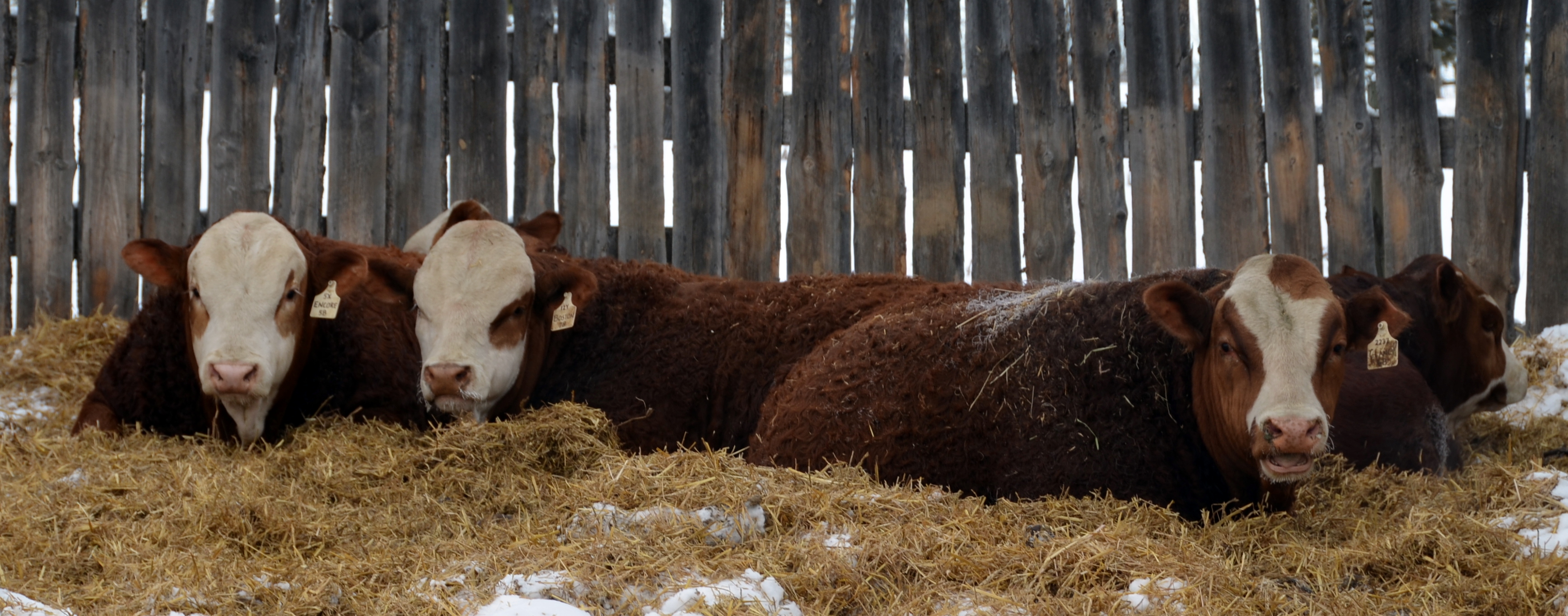
Relaxing on the Straw Pack - our Bulls will be ready to strut their stuff on March 23rd.

Relaxing on the Straw Pack – our Bulls will be ready to strut their stuff on March 23rd.

Our Entries to Transcon’s 2015 Red Deer Simmental Bull Sale

We are pleased to present four herd bull prospects at Transcon’s 2015 Red Deer Simmental Bull Sale on Monday, March 23rd at 1:00pm at Westerner Park, Red Deer, Alberta. This is our fifth year at this event, and we are proud to be included in the strong offering that is always presented by this progressive group of breeders.

Our 2015 offering continues to showcase our breeding philosophy. We firmly believe that the future will bring an increased herd size on the same amount of available labour. This means that with less labour available on a per cow basis, birth weights will come down to improve calving ease, and that gradually more and more horns will be bred off the cattle. Our goal is to try and accomplish this while maintaining the strong performance and mothering ability the Simmental breed is known for. In a market that suggests the North American cow-herd is (at long last) expanding, we think our bulls on offer all provide the maternal characteristics that will produce awesome replacement females.

Individual pages (short-cut links are located in the right-hand column) have been created for our four bulls on offer: ‘Clancy’, ‘Encore’, ‘Boston’ and ‘Stirling’.

At the top of the pen is Clancy – a well-made Canyon son from Virgina Ms Zillow, the high selling Fullblood at the 2013 Cow-A-Rama Sale. Heavily pigmented and cherry red to his hooves, Clancy packs a punch while also strutting out with style. With two generations of calving ease stacked in his pedigree, we have been very impressed with the thickness and depth Clancy has developed.

Our second bull, ‘Encore,’ is this years’ standout Dora Lee’s Equinox son. This is the fifth year in a row that an Equinox son has topped our performance tables. We may be biased, but we believe Equinox to be the best homozygous Fleckvieh bull available. Like his sire, Encore showcases the tremendous volume and length of spine that Equinox is known for.

‘Boston’ has the most frame of our bulls on offer, and has developed a massive square hip that extends well down his leg. A direct Bronson son, Boston is out of a very moderate dam who puts everything into her calves – she also produced our high-selling heifer at the 2014 Fleckvieh Equation sale. Boston will be fully filled out at sale day, and we expect him to be very impressive.

The last bull in our offering is ‘Stirling’ who, while almost a month younger than his pen-mates, has kept up with the big boys all winter. A unique, double polled package comes together in this cherry-red, heavily pigmented bull.

We want to ensure our bulls will work for many years, so feet, legs and temperament are very important traits for us. The bulls are housed in a 5 acre paddock to ensure lots of exercise, and have been developed on a ration of free-choice quality first cut hay, combined with a forage based pellet by Country Junction. All four bulls are quiet and have been tie-broke. We like working and walking through docile cattle, and feel the herd bull should be no exception. All four bulls have also been tested free of the diluter gene via Igenity.

On the individual pages, we have also pictured the sires, dams and grand dams (Boston’s page in particular has 6 generations of the cow-family pictured). Maternal lines are very important to us, and we feel that behind every great bull is an outstanding cow family. As some people prefer paper copies, we also have individual bull profiles available in PDF format that can be e-mailed and printed, or sent by regular mail. Please let us know if you would like any additional information on any of our animals.

The 2015 Red Deer Simmental Bull Sale promises to be another exciting event. We look forward to a great day on March 23th at Westerner Park

2014 Fleckvieh Equation Sale Report

Our High-Selling Bred Heifer - Applecross Emma - selected by Beechinor Brothers.

Our High-Selling Bred Heifer – Applecross Emma – selected by Beechinor Brothers.

2014 Fleckvieh Equation Sale Report

The 2014 Alberta Simmental Week-end wrapped up with a bang on Sunday December 22nd, with Transcon’s Fleckvieh Equation Sale placing the exclamation point on an amazing week-end for the Simmental industry.

Unseasonably mild temperatures, combined with a record cattle market and very deep set of cattle, led to the largest crowd in attendance for quite a number of years. The sale was led off by the first four lots (lots 2-5) from the high-end Beechinor Brothers string, which averaged an incredible $19,000.  Their group was highlighted by Lot 5, a Radium x Viper bred heifer carrying a BRINKS BULLETPROOF pregnancy, that sold for $31,000 to Starwest Farms of BC.    Overall, the first string of 13 bred heifers showcased the incredible depth to the sale, averaging just under $14,000.

For the first time in a few years, two elite herd sire prospects were put on offer.  JNR brought two burly rascals to town; JNR’s Philosophy sold to Crossroad Farms for $40,000 and JNR’s Warrior sold to Ricochet Stock Farms for $11,500.

Our five Applecross Females were all in the second group of bred heifers to move through the ring.   Dora Lee Eclipse continues to get it done for us, as his two daughters led off our string, with Applecross Emma being selected for $9,000 (our high seller) by the Beechinor Brothers of Bentley, and her running mate, Applecross Alicia ($6,100) is slated to join the polled program of Brooks Simmentals from Turtleford, SK.  O Double E Simmentals from Grande Prairie purchased Applecross Whitney for $6,750; Applecross Rhianna was acquired by Riley Edwards, Skywest Simmentals, from Didsbury for $6,700.  We were especially pleased to see repeat customer, Barney Beechinor (who is currently walking APLX Edge in the renowned 400-cow-strong Beechinor commercial herd), select Applecross Glory for $6,000.  Overall, it was a tremendous day in Red Deer on December 21st.  Once again Transcon put on a tremendous event – working the phones and showcasing the cattle to ensure a top quality, well managed sale.

It was a great day to present Applecross genetics for auction, and we were humbled and honoured by the amount of interest we had in our program.  With 2015 just around the corner, we look forward to the start to calving season, and another step in that ongoing effort to produce high-quality genetics that we can share with the industry