Our Journey as Producers of Fleckvieh Simmental Cattle.

Latest

Applecross Cattle Present our 2014 Equation Females

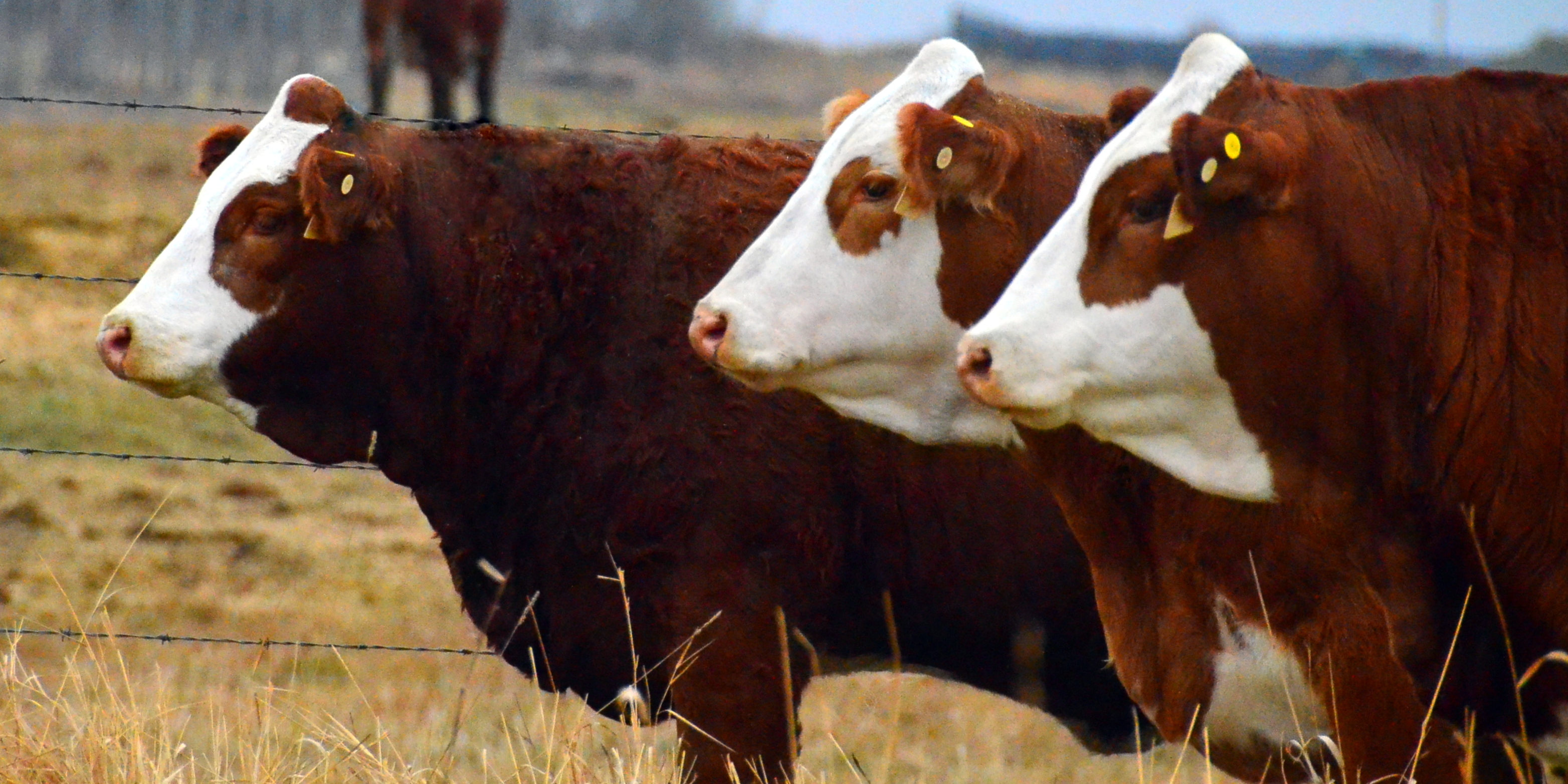
3 of our sale bred heifers - Rhianna, Whitney and Emma

3 of our sale bred heifers – Rhianna, Whitney and Emma

Applecross Cattle Present our 2014 Equation Females

We are pleased to present five bred heifers at Transcon’s 2014 Fleckvieh Equation Sale on December 21th, at 1pm at Westerner Park, Red Deer, Alberta.  After an exciting debut in 2013, we are proud to once again be part of this prestigious event.

Our 2014 sale string really showcases the genetics that form the core of our walking group.   Cow families are very important to us, and as such we have taken a slow approach to building our herd.  This way, the maternal lines can develop, and we can watch and compare as the younger generations work alongside their matriarchs.

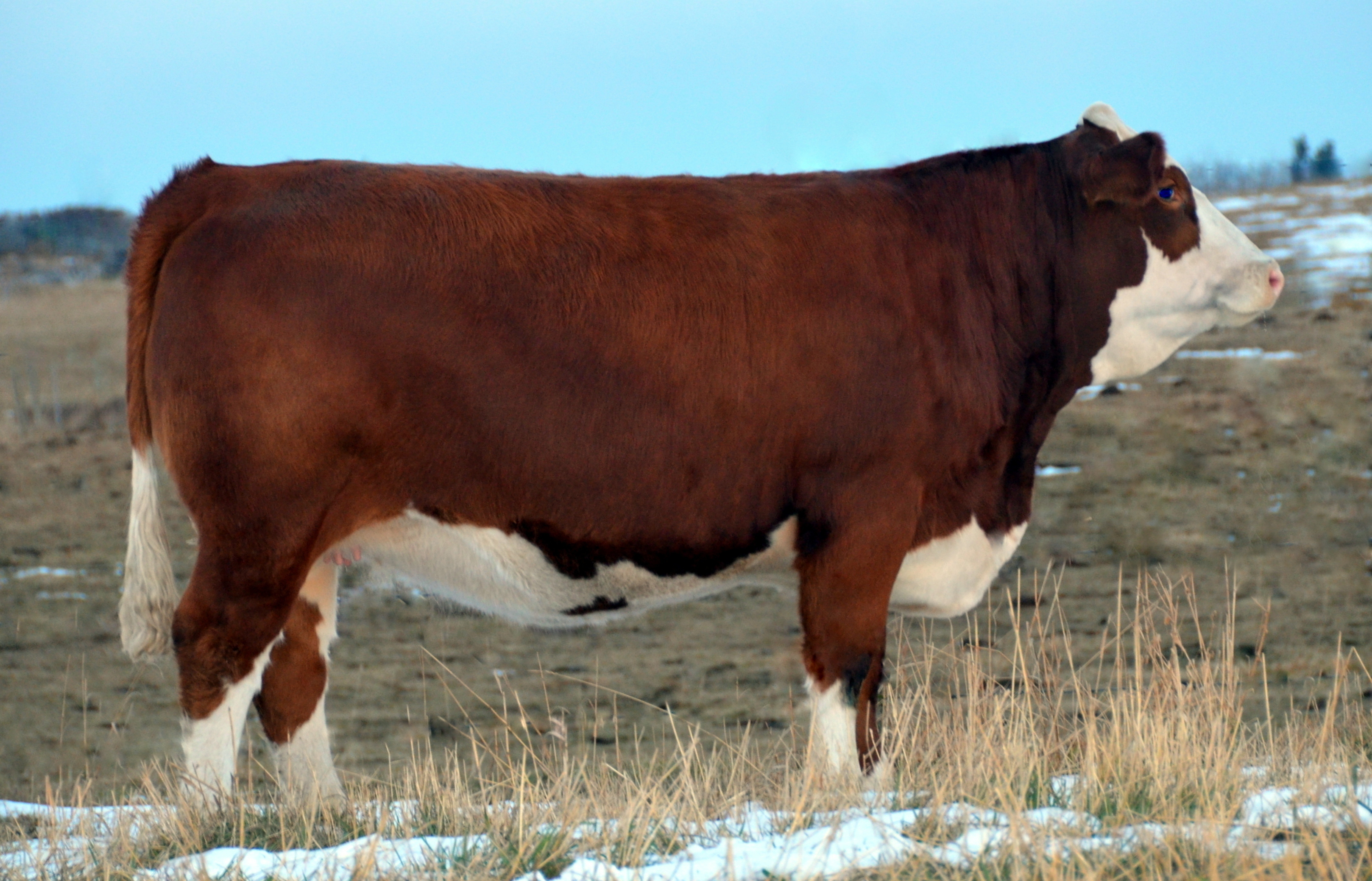
Progeny from three of our founding cow families will be represented for the first time – Applecross Emma is a barrel of an Eclipse daughter tracing back to the Dora Lee Evangaline (Sim Roc C&B Western) cow family; Applecross Glory is a very feminine Anchor T Ikon daughter going back to the Dora Lee Gretchen (Arnold’s Image) cow family; Applecross Rhianna is a dark red, heavily pigmented Bronson daughter, out of our Dora Lee Jewel (Rangemore Carrousel) cow family.  Not to be outshone by their running mates, we are also offering Applecross Alicia who represents progeny from the JB CDN Amethyst cow family, as well as Applecross Whitney, who is descended from the master breeders at Brock Ranches.    All five heifers are solid coloured with moderate frames, yet tons of volume – exactly the types of females we think will turn into awesome cows.

Individual pages (short-cut links are on the right), have been created for each of ‘Rhianna’, ‘Emma’, ‘Alicia’, ‘Glory’ and ‘Whitney’.  The heifers have all been tie-broke and have quiet temperaments.  We preg-checked in late October, and the vet feels that all five are safe to their AI breeding.   With a later sale date this year, we do expect all five to be very heavy in calf, and should any purchasers be from out-of-province, we would be happy to bring them back to Applecross and calve them out.  The Heifers are also vaccinated with ViraShield Gold and Covexin Plus. They will be treated with Scour-Guard prior to sale day.  On the individual pages, we have also pictured their sires, dams and siblings.  Maternal lies are very important to us, and we feel that behind each outstanding female, is an outstanding cow family.  As some people prefer paper copies, we also have individual heifer profiles that can be e-mailed and printed or sent by regular mail.  Please let us know if you would like any additional information on any of our animals.

The 2014 Fleckvieh Equation promises to be another exciting event.  We look forward to a great day on December 21th at Westerner Park.

Applying The 20/60/20 Management Concept to the Cow Herd

030
Applying The 20/60/20 Management Concept to the Cow Herd

One of the perks (or drawbacks, depending on your perspective) of my off farm profession, is that I get to spend a lot of time listening to presentations about new leadership techniques that suggest different approaches to people management. While these presentations can often be a little dry, (and since my mind tends to wander towards our cattle operation anyways), one of the things I like to do is see whether these ‘business management theories’ can relate back to how we operate our farm.

One suggestion that we heard about this spring, was the 20/60/20 Concept. It turned out to be an idea that I thought could be readily applied to the cow herd.

The idea of 20/60/20 is fairly straight forward:
20% of the people you manage (or coach) are self starters, and always do what is needed to be done
60% of the people generally do what need to be done, but need to be reminded, coached or encouraged in order for them to reach their full potential.
20% of the people are consistently poor performers and often become time sinks, with improvement only ever occasionally happening.

The challenge to coaching this diverse group of people is that our tendencies are to spend all of our time coaching and working with the top 20% and bottom 20%, while spending very little time with the middle. The reality is, that from a performance improvement perspective, changing the management focus from the 20’s on either end to that 60% in the middle, is where you will generate the biggest improvement in overall team results. By coaching that 60% in the middle, and ensuring that they are successful, you will provide a much broader base of success for the entire group.

I think it is only human nature that as ranchers, we like to focus on our top end cows or that top 20%. These are the ones that often get flushed, and we spend hours trying to decide the perfect mating to cross. These cows have pictures on our phones. They anchor our program, are highly visible and often produce those high sellers in our bull sale. They get the attention, other breeders follow their cow families, and we often get interest from other parts of the country. They are truly elite individuals. The other perspective about them though, is that they are so strong and such powerful individuals, that at breeding time you could close your eyes, pick a straw out of the tank at random, and she would still have a top-end calf. This brings to mind one of the great lines that dad has always used growing up. When describing some of our top cows, he would often say: “she could be bred to a billy-goat and still have a great calf”. So if these strong individuals are ‘foolproof’, and will have a good calf regardless, despite how much fun they are, maybe we should instead be focusing on other areas of the cow herd.

The 20% at the bottom of the herd also stick out. They are the ones that you always find yourself making excuses for (“we kept her around for a recip, but she bred back to the bull; commercial prices are good, so now we’ll keep her another year…”) or keeping because she has that one good trait (polled, outcross) that you are hoping she’ll pass along to a (better) next generation, while hoping all those traits you don’t like will magically disappear. The challenge is that these bottom end cows also take up a lot of time. Trying to find that awesome bull to make them better, working with them to be a recip, or even just treating cows for bad feet on a regular basis, all tend to use up precious management hours that could better be utilized elsewhere.

Every fall, we also make a list ranking our cow herd; sorted by age and what they have produced – both sold and retained. At the bottom of the ranking is a simple question: If I had to ship 5%, 10% or 20% of the herd tomorrow, who would go?

Perhaps counter-intuitively, I think that with the current cattle market prices, this question of who (and how many) should go to town this fall is more important than ever. It always seems that herds get culled hard during low cattle prices, and then tend to expand while prices are strong. I hope to work this the other way – we were fortunate enough to be able to expand during a period of weak prices, so now that prices are strong, we can do a thorough cull of the cow herd. We should get paid adequately in the meat ring; with stocker prices where they are at, keeping fewer bulls and replacement heifers around this fall should also tighten up the quality of our sales strings. In my mind, strong prices are the perfect time to cull.

That leaves the 60% in the middle, that I think often get overlooked. These are the good, trouble-free cows that tend to float under the radar when fantasizing about the potential of a stud bull calf on the top end, or explaining away the poor performance of a (probably steered) calf at the bottom. These 60% in the middle are the ones who produce the offspring to fill out the bull sale string after the first cut has sold and, in reality, are probably where most of the money can be made. I think that by shifting focus away from the top end cows, focusing on improving the middle of the cow herd, and ensuring they get bred right, may provide greater return over the long run. Don’t get me wrong – high sellers are great – and provide a fair bit of promotion in their own right – but improving the middle 60% of the cow herd should result in a stronger, more consistent sales string from top to bottom. From a consistent profit perspective, I believe it is just as important to get the last animal through the sales ring sold for a fair dollar, as it is the lead lot. The added attention to the middle 60% should pay dividends down the road.

I think the middle 60% of the cow herd can also provide future top end genetics. If we are doing our job with genetic improvement; each generation of cattle should be better than the previous one. A great example of this might be some of the younger cows in the cow herd, that don’t produce quite the same as the older cows in the group simply because they get bossed around and are lower in the pecking order when it comes to feed bunk space. The younger cows are also at a distinct disadvantage when measuring eye appeal while on grass – they just don’t have the volume that cows develop as they hit their prime at ages six or seven, and thus may not stand out during the pasture tour. I think there may be an opportunity to consciously take a closer look at these younger cows, (as well as some of the others that may be overlooked), and focus on trying to move them from ‘good’ to ‘great’; a task that should be substantially easier than trying to move that bottom 20% from ‘ok’ to “awesome’.

So for this past breeding season, I made a determined effort to focus on the ‘middle’ of the cow herd. I will always have my favourites at the top of the herd, and (assuming Jeanne and I both agree on a list) we have a plan in place to clean up the bottom, once weaning is done in September. I am hopeful that the increase in attention to the 60% will lead to an improvement in the quality of our entire program. . . . a larger, more consistent bull string, and potentially more top end genetics down the road.
2014 Red Deer Simmental Bull Sale Report


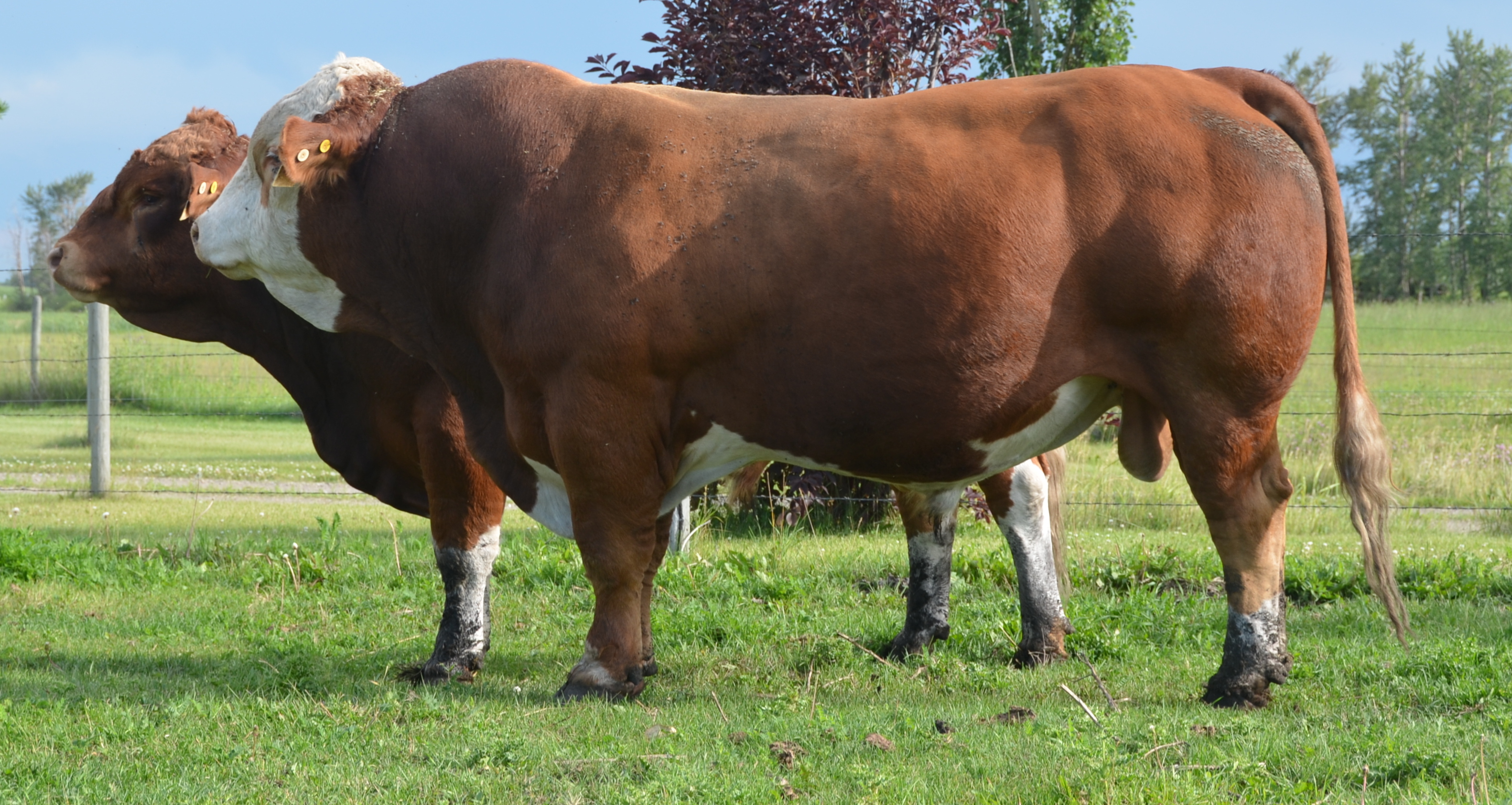
APLX Javar 18A - our high selling bull - selected by Troy Cerny / Diamond T Simmentals

APLX Javar 18A – our high selling bull – selected by Troy Cerny / Diamond T Simmentals

2014 Red Deer Simmental Bull Sale Report

Sunny skies, and mild weather welcomed the 2014 edition of Transcon’s Red Deer Simmental Bull Sale on Monday March 17th, where a very strong group of Simmental genetics were presented to commercial and purebred cattlemen alike.

Almost 50 bulls were on offer, and averaged a very respectable $4,800. Sale highlights included a very impressive string of bulls from Starwest Farms of Chilliwack BC, who led off the sale with the $13,500 high seller going to Eagle Ridge Simmentals of Olds, Alberta, and had several other high sellers through-out the day.

We were quite happy with how our three Applecross bulls were received:
– Our high seller of the day was APLX Javar 18A, who sold for $8,000 to Troy Cerny / Diamond T Simmentals of Barrhead. We think Javar has tremendous potential, so it will be exciting to see what he does on the strong cows at Diamond T.
– APLX Bradshaw 20A was selected by the Letts Family / Bar None of Westlock for $6,200. We are excited to see our genetics go to work at such a legendary breeding program.
– Connie Crouch of Sundre selected APLX Elway 5A for $4,000 – Elway was our ‘heavyweight’ bull of the day, weighing in at 1565lbs.

We would like to thank all of our bidders and buyers for supporting our program. It is our goal to bring a set of bulls to town every year that showcase what our breeding philosophy is all about. We feel we accomplished this objective in 2014, and it is reassuring for us as producers when long time purebred and commercial cattlemen express interest (and are successful) in acquiring our genetics.

We would be remiss if we didn’t also recognize the job that Transcon does in working the phones for bids, and managing the Red Deer Bull Sale. Jay Good and his team always put on a first-class event that we are proud to be a part of.

With our bull sale now in the rear-view mirror, we look forward to the start of breeding season and our ongoing challenge of developing more and different genetics for future years.

Our Entries to Transcon’s 2014 Red Deer Simmental Bull Sale

Javar - one of our three bulls on offer in Red Deer

Javar – one of our three bulls on offer in Red Deer

Our Entries to Transcon’s 2014 Red Deer Simmental Bull Sale

We are pleased to present three herd bull prospects at Transcon’s 2014 Red Deer Simmental Bull Sale on March 17th at 1:00pm at Westerner Park, Red Deer, Alberta. This is our fourth year at this event, and we are proud to be included in the strong offering that is always presented by this progressive group of breeders.

This year’s group features the Dora Lee Christina cow family. Christina was one of the founding females we selected from Dora Lee (with daughter Caitlin at side) to form the core of our herd.  She has two daughters working here, but is probably best known for being the dam of APLX Santana, the $11,000 bull selected by Vaughn Gibbons at Cow-A-Rama in 2011.   Christina sends a Dora Lee Jake son to town this year – ‘Javar’ is a really intriguing dark red, heavily pigmented, moderate frame bull that has developed into a real head turner (and is pictured above).  Her daughter Caitlin also has a neat bull on offer – ‘Bradshaw’ a dark red Bronson son, loaded with volume and style.  We think you will be impressed with what this cow family has to offer.

Our third bull, ‘Elway,’ is this years’ standout smooth polled Dora Lee’s Equinox. Like his sire, Elway showcases the tremendous volume and length of spine that sire Equinox is known for.  We may be biased, but we believe Equinox to be the best homozygous Fleckvieh bull available.  Now with four calf crops on the ground, his daughters are also coming into production, suggesting that Equinox also excels as a cow maker.

Our 2014 offering also showcases a glimpse into our breeding philosophy.  We firmly believe that the future will bring an increased herd size on the same amount of available labour.  This means that with less labour available on a per cow basis, birth weights will come down to improve calving ease, and that gradually more and more horns will be bred off the cattle.  Our goal is to try and accomplish this while maintaining the strong performance and mothering ability the Simmental breed is known for.

We also want to ensure our bulls will work for many years, so feet, legs and temperament are very important traits for us.  The bulls are housed in a 5 acre paddock to ensure lots of exercise, and have been developed on a ration of free-choice quality first cut hay, combined with a forage based pellet by Country Junction.  All three bulls are quiet and have been tie-broke. We like working and walking through docile cattle, and feel the herd bull should be no exception.

Individual pages (short-cut links are located in the right-hand column) have been created for ‘Javar’, ‘Bradshaw’, and ‘Elway’.  Please note that all three of the bulls are later born (Jan 27-Feb 7) so they will be almost a month younger than a lot of their peers at the sale barn.  The tightly grouped birth dates, and moderate birth weights (92-95lbs), should allow for ready appraisal of the different characteristics these three bulls possess.  On the individual pages, we have also pictured the sires, dams and grand dams. Maternal lines are very important to us, and we feel that behind every great bull is an outstanding cow family.  As some people prefer paper copies, we also have individual bull profiles available in PDF format that can be e-mailed and printed, or sent by regular mail. Please let us know if you would like any additional information on any of our animals.

2013 Fleckvieh Equation Sale Report

Applecross Iris - Our High Seller is headed to James Creek Simmentals in North Dakota

Applecross Iris – Our High Seller is headed to James Creek Simmentals in North Dakota

2013 Fleckvieh Equation Sale Report

Transcon’s Fleckvieh Equation Fullblood Simmental Sale wrapped up on Sunday, December 15th, and overall we are quite pleased with how our first ever female sale turned out. Despite a prior-to-event setback, which resulted in Cassie withdrawing from the sale, Iris and Mariah carried the Applecross prefix very well.

A gorgeous, sunny December day meant a capacity crowd was on hand to see this triple header – 44 lots of fullbloods and 44 lots of purebred Simmentals were joined by a massive frozen genetic selection to create a unique genetic opportunity in a one day event. A pair of awesome bred heifers from Langer Fleckvieh of Edson, AB led off the sale with Prospect Hill earning the right to pick for $20,000. The Beechinor Brothers of Bentley followed that up by presenting a pair of donor caliber breds, the choice of which was also selected by Prospect Hill for $19,750. Our very own Applecross Iris was next in the ring, and sold for $7,500 to James Creek Simmentals of Heaton, North Dakota. We are quite pleased with the result, and will be calving out Iris prior to sending her to her new home. We are also quite happy that later on in the sale, Applecross Mariah was selected by Ashley Berkholtz of Berwest Simmentals at Bittern Lake for $4,800. Mariah is already at her new home, and we look forward to hopefully seeing some progeny at future Fleckvieh sales.

In addition to the above noted high-sellers, other Equation highlights include:
– Crossroad Farms selected a powerful bred heifer from Wolfe Fleckvieh for $12,000
– Keato Meadows sold choice of herd bull prospects to Jason Boone for $11,500
– Alliance Simmentals were successful bidders on an excellent bred heifer from BLI Simmentals for $11,000

We found it quite impressive that the nine high-selling lots came from 6 different programs, showcasing the tremendous depth and diversity of this Fleckvieh event. Including semen and embryos, this years’ Fleckvieh Equation Sale grossed just under $350,000 on 68 total lots, for an average of $5,147. We would be remiss not to recognize the team at Transcon for doing a tremendous job working the phones and managing the sale – They are always a quality, professional sales management team.

As this was our first time selling females to the public, we were both humbled and honored with the number of compliments our heifers received throughout the week-end from peers in the purebred industry. We strive to produce top quality cattle, and it is truly wonderful that both heifers landed in top quality programs where, hopefully, we will see their genetic influence down the road. With our first ever females now sold, we are currently enjoying a short break over the Christmas season, which will be followed directly by the onset of calving. Next years’ calf crop is just around the corner!

Applecross Cattle Present our First Three Females to Sell

Our Three Sale Heifers - From Left: Mariah, Iris and Cassie

Our Three Sale Heifers – From Left: Mariah, Iris and Cassie

Applecross Cattle Present our First Three Females to Sell

We are pleased to present three bred heifers at Transcon’s 2013 Fleckvieh Equation Sale on December 15th, at 1pm at Westerner Park, Red Deer, Alberta. This will be our first time selling females to the public, and we are proud to be part of this prestigious event.

For our first year, we thought it important to showcase females with genetics that form the core of our herd. Applecross Mariah is a polled, moderate framed heifer out of a Wellhouse Kestrel dam and sired by Dora Lee Eclipse – A bull that has certainly left his mark on our program. Applecross Iris is a powerful Sanmar Polled Pharao daughter that cranks up the volume in an intriguing double polled package. The youngest heifer, Applecross Cassie, may represent the only opportunity to publicly purchase a Spruceburn Starfire daughter. All three heifers are dark red, heavily pigmented females with moderate frames yet tons of volume – exactly the types of females we think will turn into cow-makers. It is also no surprise that the two females from the Eclipse line are bred Pharao, and the other is a Pharao bred Eclipse. Good bulls that are more than just ‘heifer bulls’ are extremely hard to find, so when we find ones we like, it is no surprise they get crossed back on each other. We like predictability!

Individual pages (short-cut links are on the right), have been created for each of ‘Mariah’, ‘Iris’ and ‘Cassie’. The heifers have all been tie-broke and have quiet temperaments. We preg-checked in mid-October and the vet feels that all three are safe to their AI dates. The Heifers are also vaccinated with ViraShield 6 and Covexin Plus. They will be treated with Dectomax prior to sale day. On the individual pages, we have also pictured their sires, dams and siblings. Maternal lines are very important to us, and we feel that behind each outstanding female, is an outstanding cow family. As some people prefer paper copies, we also have individual heifer profiles that can be e-mailed and printed or sent by regular mail. Please let us know if you would like any additional information on any of our animals.

The 2013 Fleckvieh Equation promises to be another exciting event. We look forward to a great day on December 15th at Westerner Park.

Herdbull Section – Update

Our two walking bulls - Escalade (front) and Samson (back). Both 2yr olds, we have been very pleased with how they have developed over the past year.

Our two walking bulls – Escalade (front) and Samson (back). Both 2yr olds, we have been very pleased with how they have developed over the past year.

Herdbull Section – Update

Over the past month we have managed to get a few updated pictures of APLX Escalade 9Y and APLX Samson 10Y, and have refreshed their individual pages in our Herdbook / Reference Sire section.

While we were very successful with our AI program in 2012, we did receive a few calves from Samson and Escalade.   While limited in numbers, we are quite happy with the calves, and the bulls themselves have continued to develop their own promising characteristics as herd bulls.  As a result, Escalade and Samson will make up our largest sire groups in 2014.

We finished breeding season on June 1st when our walking bulls were pulled and moved to their summer paddock.   June 1st is earlier than usual for us, but we wanted to shorten our calving season up, and reduce the number of March calves.  We were also successful in dividing our herd into three groups (AI and two herd bulls) for breeding season, which should allow for earlier natural service calves to compete directly with the AI group, without such an age discrepancy in future years.

There are both advantages and disadvantages to walking bulls carrying your own prefix.  I think that one of the benefits is that you know the cow families, and their respective backgrounds very well.  The down side of walking your own bulls, of course, is that you can back yourself into a genetic corner a few years down the road, once they have daughters working.  While AI can certainly mitigate part of this, the easiest way to add new genetics is via an outcross walking bull.   With these two herd bulls, and the capacity for three walking groups, we continue to search (365 Days of the Year) for those outcross genetics that will fit our myriad of criteria.  In the interim, we are quite pleased with the job these two young bulls have done.

The Possibilities of Polled

Applecross Isabelle - a 2013 polled Gidsco Appollo daughter - another potential building block.

Applecross Isabelle – a 2013 polled Gidsco Appollo daughter – another potential building block.

The Possibilities of Polled

I think that it is obvious to anyone who follows our program, that the polled gene forms part of our selection criteria. While we don’t breed for exclusively polled cattle, we do think that the future will include more and more polled cattle, both within our own herd and in the entire beef industry. The primary reasons for this are twofold: First, as herds get bigger, being able to genetically remove horns instead of having to physically complete the dehorning task saves considerable time. Secondly, the animal welfare concern about pain management throughout the dehorning process is also eliminated. While this may not seem like a ‘big deal’ impacting Canadian Agriculture at the present, a quick peek to Europe and their transformation towards polled cattle, combined with the precedent currently being set with the ‘farrowing crate’ issue in hog production, would suggest that Animal Welfare concerns do have the ability to change farm production methods.

With these two thoughts in mind, we were very fortunate to be involved with my parents operation and their introduction of the polled gene back in 1998. The rationale for introducing the polled gene was debated at length around the kitchen table, and projecting the future of the breed was discussed many times. The past 15 years have been an invaluable learning experience surrounding the polled gene, so it only made sense to continue to leverage that knowledge and genetic base into our own operation here at Applecross.

For us, having patience is probably the most difficult part of our polled program. A constant theme throughout this blog has been the time it takes to develop new genetics, and introducing the polled gene to a genetic base is certainly no exception. As we think that we are still in the formative years of introducing the polled gene to quality Fleckvieh cattle, we still try to breed the majority of our polled cows to the best horned genetics we can acquire. While there is only a 50% chance of polled offspring, we can be patient waiting for that successful cross. In this fashion, adding proven bloodlines improves the genetic consistency of our polled cattle, and utilizing the best in horned genetics also diversifies our genetic base.

Perhaps that is a larger part of the challenge with polled Fleckvieh – there have been some really awesome horned cattle over the past 20 years. It may sometimes be seen as a step backwards to add the polled gene to a herd, which may not have the depth of pedigree or consistency to the offspring when comparing to the best in horned genetics. When weaning time comes around, it has to be a pretty awesome polled calf to keep up with the best of the horned ones.

In some regards, I feel our work with polled genetics shares a number of similarities with the breeding of Red and Black Simmentals. When I look back at pictures from the Simmental Country magazines from the mid 1990’s and compare them to today’s purebred animals, there is a tremendous difference in phenotype. Red and Black genetics have certainly progressed a long way! In that way, maybe the purebred breeders had it easier – they dealt with removing the horns (and changing the colour) first, and then concentrated on making the quality better. With Fleckvieh cattle, the quality was already established.

One of the other reasons for moving slowly is that by keeping horned cattle beside our polled also ensures that we keep ourselves honest. Is your best polled heifer your best heifer? Is the top bull in your bull pen polled? Or is there work to do? How much work is there to do – is there a significant quality gap? We do try to evaluate and rank each calf crop; at weaning and again as yearlings. The point of the exercise is to not only place the calves, but also to evaluate the dams and sires. Obviously, even with selection criteria, a person can be a little biased, but I think it is very important to continually assess the quality of your cattle. The cattle industry is full of historic examples regarding the dangers of single trait selection, so keeping an ‘open mind’ about which ones are ‘the best’ is very important to ongoing genetic improvement.

I think that it is only once you get these top end animals that you can afford to start breeding polled back to polled, with the goal of developing different strains of Homozygous polled cattle over time. There are always exceptions to our own rules though – the majority of our AI ‘heifer bulls’ tend to be polled and, for the sake of getting that successful first calf, I’m more than happy to breed polled on polled. The challenge is ensuring that your top end animals are your best – not just because you hope them to be – but because they actually are.

In closing, I guess one of my goals is to, over time, change the status quo. The most constant refrain I still hear when breeders are in looking at a group of cattle is ‘pretty good . . . for polled’. Hopefully, if we do a good job of genetic improvement, that ‘polled’ disclaimer will disappear, and the cattle will just be known for their overall quality. That is the challenge of breeding cattle – making animals better – and something we look forward to accomplishing over time.

Circle of Awesome

young cows on grass

Circle of Awesome

One of the greatest perks of my day job as an Agricultural Finance Specialist is the opportunity to work with some really dynamic farm families over the years. I don’t think I have met a customer that I haven’t learned from! However, that being said, there are always those clients that you just ‘click’ with, and over time you develop a strong, trusting relationship. As a relationship grows, it changes from being simply fulfilling financial transactions (how much, how long, how cheap), to becoming a key advisor who is sought out for advice and counsel well before any major operational decision is made.

In this regard, agriculture has evolved. In the past, I think farmers predominantly relied on family to provide a lot of the advice and guidance. As farming has become more complex farmers still engage family, but also involve specialists in order to ensure they have a good understanding of the intricacies of any potential issue. As a result, one of the trends I have noticed among my best clients is that they tend to surround themselves with key advisors that they can talk to whenever they are looking at making a strategic change to their operation. This is where the specialists come in – whether they are professional (accountants and lawyers), production oriented (nutritionists and veterinarians) or personal (family, friends). On a combined basis, these key people form what I like to call a ‘circle of awesome’ around your operation. Why awesome? Simply because, if they weren’t really good at what they did, chances are they wouldn’t be key advisors in your circle

As you can see, Circles of Awesome tend to occur on multiple levels. The professional circle, made up of your lawyer, accountant and banker, are relied on for the ‘business’ side of your operation – managing tax issues, ensuring you are legally protected and arranging financing are all essential (if generally boring) parts of a successful operation. If done right these parts are invisible; if done poorly, they can each create substantial headaches for both the business and the owners. These are the professionals that can cost a fair bit of money in the short term, with the hope that they save you a lot of money in the future.

The operational circle tends to be more hands on – your nutritionist, veterinarian, mechanic and (in the purebred business) sale management team. These are the key people that help make your business tick. One of the biggest changes over the past 20 years is that a lot of industry people who previously only provided a service, are also now sales people. Most nutritionists now work for feed companies; vets make substantially more of their revenue on drugs than on farm calls; accountants have software and succession planning seminars to sell. In order to gain access to your circle of awesome, you need to feel comfortable that they aren’t going to sell you a product or service that doesn’t fit your needs, just to make that sale. That being said, you have to be aware that their time is valuable as well. The best relationships are formed on mutual trust and are mutually beneficial – they are only going to recommend the products and services that fit – you are going to understand that there is value in the services they provide and compensate them for the work they do. These operational experts are essential – and their impact on the day to day management of the operation requires a strong level of trust.

The final circle is one of family, friends and peers. As mentioned above, farmers have always relied on family for advice – and based on the unique dynamics of the industry I don’t think this will ever change – simply because the line between the business of farming and personal life is so blurred. Farmers live on the land, and tend to think about farming 24/7 – there is often very little separation between the ‘business of farming’ and the ‘life of farming’. As a result, friends and industry peers that form part of this circle also tend to think the same way. By surrounding yourself with like-minded people, there is a tremendous wealth of knowledge, a sounding board for ideas, and an understanding of similar challenges facing your farm. It is this circle that is there to help you up when there is a problem, and a steady shoulder to lean on during the challenging times that often face our cyclical industry. While the time and advice from the personal circle is often considered ‘free’, I think it is important to be aware of the implicit two-way street. Don’t ask them for time or input if you cannot return the favour when they ask the same of you. It can be extremely easy to take advantage of friends and family so it is very important to make sure that there is an eventual balancing in the relationship when they may also need a hand up.

Good relationships also have the strength to respectfully disagree, to have differences of opinion, and tactfully get their respective points across. There isn’t much value in having an advisor that is just going to agree with everything you say and tell you how great you are. That is what your spouse is for! But in all seriousness, the people that you want in your circle are people that are going to add value to your operation. While having a ‘yes-man’ around might make you feel good, it certainly doesn’t add any tangible value. The balance to this is that there always needs to be tact involved when disagreeing. Being able to have a constructive and open dialogue without getting argumentative is a tremendous skill. I guess the easiest way to describe it is simple: give the type of advice you would wish to get in return . . . be constructive in your criticism, and be equally generous with your compliments.

One of the challenges of building a ‘circle of awesome’ is that not only is the industry becoming more and more complex, but change is happening at a much quicker pace. In a lot of cases, farmers used to be able to get away with finding a single mentor that could be a go-to person for most of their advice and counsel. Now it is more important than ever to have a group of key advisors – you just never know when someone you rely on for advice decides to retire or relocate. It is always essential to have a back-up plan to ensure that a void doesn’t form in your circle of advisors.

In this regard, I think that Circles of Awesome can also relate back to building a stronger purebred cattle herd. It is often tempting to build a herd around one elite genetic line that has done well. While it is great to have that one foundation cow or herd bull that is renowned for the quality it produces, I think it is beneficial to ensure there continues to be diversity in your herd from a long range planning perspective. In order for commercial customers to become repeat buyers, they require diversity in their selections. Likewise for fellow purebred breeders kicking tires on genetics, they are always on the lookout for something different. From a herd management perspective, it also creates a built in succession plan – if you happen to lose a cow/calf/bull all your eggs aren’t in one basket. This process can be a major challenge for smaller producers like ourselves, where there just isn’t the capacity to run too many cows (or bulls). Our ability to maintain outcross strains is reduced, but diversity remains something that we try to continually focus on. In the long run, having a ‘constellation of stars’ (ideally unrelated) should create a deeper, more flexible herd that doesn’t rely on that one awesome superstar animal.

While it is important to have a group of people that you can count on for advice and counsel, it is equally important to remember that you as an individual are responsible for making that final decision. Advisors do just that: advise. While the issues may vary from being extremely complex (tax or estate planning) to the mundane (such as which AI sire to utilize), it is you as a farmer/business owner that not only gets to make the decision, but will also still be there to manage the consequences – no matter how they turn out. A great example of this is in the current lending environment – just because you can borrow additional funds, it doesn’t mean it represents a good business decision to spend it. Borrowing money is easy – it is paying it back that is the hard part! (And not something your advisors are going to do for you!)

Probably the best thing about forming these networks is that they often happen intuitively on their own – the respective circles develop over time, and contacts naturally grow among people you have a good working relationship with. The key is perhaps to periodically take a step back and ensure that you have all the bases covered before you actually need the guidance – having time and space to consider your options prior to making decisions always helps. And when emergencies arise and the time isn’t there – you already know who to talk to.

So in summary, I think developing all three circles – professional, operational and personal – with people you trust can provide tremendous value to an operation. Together they create a diverse sounding board that creates a combined wealth of ideas and knowledge on everything from big picture items like succession planning to immediate items like how to deal with a calf that refuses to suck. The best relationships are mutually beneficial – and often a lot of fun. Building long term relationships are always more than just business – especially since farming permeates so much of what we do.

Applecross Cattle – Now also on Facebook

Easton - May 11, 2013

Applecross Cattle – Now also on Facebook

We have decided to add an Applecross Cattle page on Facebook to supplement our blog/website.  Our goal is to utilize Facebook for quick updates and as a forum to share a number of the pictures we take through-out the year specifically on our frequent ‘cattle tours’.  To check us out and ‘like’ us on Facebook please head to http://www.facebook.com/ApplecrossCattle

We will continue to use www.applecrosscattle.com for all of our lengthy ramblings, and this will still be home to all of the detailed information on our program.  We expect our Facebook page will contain links back to the website whenever new posts are made.