Our Journey as Producers of Fleckvieh Simmental Cattle.

Latest

Circle of Awesome

young cows on grass

Circle of Awesome

One of the greatest perks of my day job as an Agricultural Finance Specialist is the opportunity to work with some really dynamic farm families over the years. I don’t think I have met a customer that I haven’t learned from! However, that being said, there are always those clients that you just ‘click’ with, and over time you develop a strong, trusting relationship. As a relationship grows, it changes from being simply fulfilling financial transactions (how much, how long, how cheap), to becoming a key advisor who is sought out for advice and counsel well before any major operational decision is made.

In this regard, agriculture has evolved. In the past, I think farmers predominantly relied on family to provide a lot of the advice and guidance. As farming has become more complex farmers still engage family, but also involve specialists in order to ensure they have a good understanding of the intricacies of any potential issue. As a result, one of the trends I have noticed among my best clients is that they tend to surround themselves with key advisors that they can talk to whenever they are looking at making a strategic change to their operation. This is where the specialists come in – whether they are professional (accountants and lawyers), production oriented (nutritionists and veterinarians) or personal (family, friends). On a combined basis, these key people form what I like to call a ‘circle of awesome’ around your operation. Why awesome? Simply because, if they weren’t really good at what they did, chances are they wouldn’t be key advisors in your circle

As you can see, Circles of Awesome tend to occur on multiple levels. The professional circle, made up of your lawyer, accountant and banker, are relied on for the ‘business’ side of your operation – managing tax issues, ensuring you are legally protected and arranging financing are all essential (if generally boring) parts of a successful operation. If done right these parts are invisible; if done poorly, they can each create substantial headaches for both the business and the owners. These are the professionals that can cost a fair bit of money in the short term, with the hope that they save you a lot of money in the future.

The operational circle tends to be more hands on – your nutritionist, veterinarian, mechanic and (in the purebred business) sale management team. These are the key people that help make your business tick. One of the biggest changes over the past 20 years is that a lot of industry people who previously only provided a service, are also now sales people. Most nutritionists now work for feed companies; vets make substantially more of their revenue on drugs than on farm calls; accountants have software and succession planning seminars to sell. In order to gain access to your circle of awesome, you need to feel comfortable that they aren’t going to sell you a product or service that doesn’t fit your needs, just to make that sale. That being said, you have to be aware that their time is valuable as well. The best relationships are formed on mutual trust and are mutually beneficial – they are only going to recommend the products and services that fit – you are going to understand that there is value in the services they provide and compensate them for the work they do. These operational experts are essential – and their impact on the day to day management of the operation requires a strong level of trust.

The final circle is one of family, friends and peers. As mentioned above, farmers have always relied on family for advice – and based on the unique dynamics of the industry I don’t think this will ever change – simply because the line between the business of farming and personal life is so blurred. Farmers live on the land, and tend to think about farming 24/7 – there is often very little separation between the ‘business of farming’ and the ‘life of farming’. As a result, friends and industry peers that form part of this circle also tend to think the same way. By surrounding yourself with like-minded people, there is a tremendous wealth of knowledge, a sounding board for ideas, and an understanding of similar challenges facing your farm. It is this circle that is there to help you up when there is a problem, and a steady shoulder to lean on during the challenging times that often face our cyclical industry. While the time and advice from the personal circle is often considered ‘free’, I think it is important to be aware of the implicit two-way street. Don’t ask them for time or input if you cannot return the favour when they ask the same of you. It can be extremely easy to take advantage of friends and family so it is very important to make sure that there is an eventual balancing in the relationship when they may also need a hand up.

Good relationships also have the strength to respectfully disagree, to have differences of opinion, and tactfully get their respective points across. There isn’t much value in having an advisor that is just going to agree with everything you say and tell you how great you are. That is what your spouse is for! But in all seriousness, the people that you want in your circle are people that are going to add value to your operation. While having a ‘yes-man’ around might make you feel good, it certainly doesn’t add any tangible value. The balance to this is that there always needs to be tact involved when disagreeing. Being able to have a constructive and open dialogue without getting argumentative is a tremendous skill. I guess the easiest way to describe it is simple: give the type of advice you would wish to get in return . . . be constructive in your criticism, and be equally generous with your compliments.

One of the challenges of building a ‘circle of awesome’ is that not only is the industry becoming more and more complex, but change is happening at a much quicker pace. In a lot of cases, farmers used to be able to get away with finding a single mentor that could be a go-to person for most of their advice and counsel. Now it is more important than ever to have a group of key advisors – you just never know when someone you rely on for advice decides to retire or relocate. It is always essential to have a back-up plan to ensure that a void doesn’t form in your circle of advisors.

In this regard, I think that Circles of Awesome can also relate back to building a stronger purebred cattle herd. It is often tempting to build a herd around one elite genetic line that has done well. While it is great to have that one foundation cow or herd bull that is renowned for the quality it produces, I think it is beneficial to ensure there continues to be diversity in your herd from a long range planning perspective. In order for commercial customers to become repeat buyers, they require diversity in their selections. Likewise for fellow purebred breeders kicking tires on genetics, they are always on the lookout for something different. From a herd management perspective, it also creates a built in succession plan – if you happen to lose a cow/calf/bull all your eggs aren’t in one basket. This process can be a major challenge for smaller producers like ourselves, where there just isn’t the capacity to run too many cows (or bulls). Our ability to maintain outcross strains is reduced, but diversity remains something that we try to continually focus on. In the long run, having a ‘constellation of stars’ (ideally unrelated) should create a deeper, more flexible herd that doesn’t rely on that one awesome superstar animal.

While it is important to have a group of people that you can count on for advice and counsel, it is equally important to remember that you as an individual are responsible for making that final decision. Advisors do just that: advise. While the issues may vary from being extremely complex (tax or estate planning) to the mundane (such as which AI sire to utilize), it is you as a farmer/business owner that not only gets to make the decision, but will also still be there to manage the consequences – no matter how they turn out. A great example of this is in the current lending environment – just because you can borrow additional funds, it doesn’t mean it represents a good business decision to spend it. Borrowing money is easy – it is paying it back that is the hard part! (And not something your advisors are going to do for you!)

Probably the best thing about forming these networks is that they often happen intuitively on their own – the respective circles develop over time, and contacts naturally grow among people you have a good working relationship with. The key is perhaps to periodically take a step back and ensure that you have all the bases covered before you actually need the guidance – having time and space to consider your options prior to making decisions always helps. And when emergencies arise and the time isn’t there – you already know who to talk to.

So in summary, I think developing all three circles – professional, operational and personal – with people you trust can provide tremendous value to an operation. Together they create a diverse sounding board that creates a combined wealth of ideas and knowledge on everything from big picture items like succession planning to immediate items like how to deal with a calf that refuses to suck. The best relationships are mutually beneficial – and often a lot of fun. Building long term relationships are always more than just business – especially since farming permeates so much of what we do.

Applecross Cattle – Now also on Facebook

Easton - May 11, 2013

Applecross Cattle – Now also on Facebook

We have decided to add an Applecross Cattle page on Facebook to supplement our blog/website.  Our goal is to utilize Facebook for quick updates and as a forum to share a number of the pictures we take through-out the year specifically on our frequent ‘cattle tours’.  To check us out and ‘like’ us on Facebook please head to http://www.facebook.com/ApplecrossCattle

We will continue to use www.applecrosscattle.com for all of our lengthy ramblings, and this will still be home to all of the detailed information on our program.  We expect our Facebook page will contain links back to the website whenever new posts are made.

The Value of Exclusivity

March Cattle

The Value of Exclusivity

With our AI program wrapping up this week, and spring (finally) in the air, it is always a great feeling to have the bulls go out.  While we still watch for activity to ensure dates on all the cows, the ‘active management’ part of the year has predominantly drawn to a close.   We are walking the same two herd bulls as last year – both APLX Escalade and APLX Samson have continued to develop and have matured well over the past year. With a couple of calves from each on the ground, we look forward to a bigger impact from each bull next calving season.

Selecting a walking bull is perhaps the biggest decision that we purebred breeders make when shaping our herds.  Those bulls are what will impact your herd for at least the next 5 years; not only in siring top replacement females for your own operation, but also in producing highly marketable sons for your customers.  As a result, making a mistake in bull selection can have a dramatically negative impact to your herd – one that can take a long time to fix.    This is one of the reasons that we kept back two of our own bulls in 2012 to utilize – we knew the cow families and their respective backgrounds.  Having the privilege of watching their maternal lines develop and evolve over the past 20 years certainly decreased the risk in utilizing these two bulls.

The challenge with utilizing your own bulls is that, for smaller operations like ourselves, we can back ourselves into a genetic corner very quickly.  We do continue to utilize AI for 4 weeks at the start of breeding season, with the goal of introducing both proven and outcross genetics, while also ensuring the heifers are bred (early) to a bull we know will calve out.  The downside is that anyone can access those genetics – they are far from exclusive.  As a result, I seem to be spending more and more time paging through bull sale catalogues, looking for that perfect outcross herd bull that will fit the myriad of criteria that we try to select for.

One of the questions I try to continually ask myself is simply: why would someone purchase genetics from our operation?  What brings customers to our yard?  I recognize that strong customer service is essential, but setting that aside, customers want to buy something that will both improve their herd, and – especially in the case of bulls – is outcross to their existing genetic base.  I think it is important to recognize that both traits are important; bulls have to be good and different.  This ‘different’ generally comes from your walking bull, which is traditionally exclusive to your operation.  If bull buyers want those genetics, they have to get them from you (not your neighbours or your fellow breeders in the area).  It is this genetic exclusivity that plays an important part in marketing of genetics.

We are very fortunate to have been able to tap the genetics from my parents operation at Dora Lee.  When we started Applecross, we  selected a package of females that contained some older genetics (King Arthur, C&B Western, Carrousel, Antonius) that by virtue of their scarcity, are now essentially outcross to most of the current Fleckvieh breeding lines.  We also have been blessed with the ability to help prove both Dora Lee Eclipse and Dora Lee’s Equinox.  While not necessarily exclusive (Dad sells some semen privately and via their annual Fleckvieh Forum Sale), having a comfort with the genetics has allowed us to incorporate these exciting young sires into our herd quickly, and evaluate them for ourselves.  It is the combination of older outcross genetics with some outcross polled sires that hopefully differentiates our program (not better – just different), from our peers – with the hope that being different will provide additional marketing opportunities.  In this regard, I think geographic location can also aid in exclusivity – with Dad in Ontario and us in Alberta, it is not as if we are competing for the same customers!

The degree of difficulty in trying to produce quality cattle while staying different only seems to increase when looking for that new ‘walking bull’.  I know I am not unusual in this (apparently wives compare horror stories about husbands who talk cattle non-stop).  Hours are spent paging through bull sale catalogues, old female sale catalogues, the CSA database and breeder websites all looking to reduce the guesswork on finding new, good, outcross genetics.  It is tremendously difficult to judge the potential of a 14 month old bull that was developed in various management programs, across several provinces (and climates),  when the proof (of success) will not arrive until 5 years down the road when those daughters are milking.    No wonder finding a good, outcross bull takes so much work!

One of the big challenges to exclusivity that I have noticed recently, is that it seems that more and more sales catalogues include a note at the front indicating that the breeder of the bull retains the right to collect semen on any of the bulls he is selling at sellers cost and buyers convenience.  With the value I place on exclusivity and being different than my peers, this is not a trend or sentiment I agree with.  As a result, I would think twice about purchasing a bull from programs that have adopted this policy.  I guess I can understand the value to retaining semen on that one elite bull in the calf crop that might have a unique set of circumstances behind it, as this also indicates to the potential purchaser that you feel the bull is truly elite and worth retaining use of.  That being said, putting a blanket policy in place to retain and interest in the genetics of the entire bull offering seems a little excessive.  If I am going to invest the years into proving a bull in my program, there is a tremendous amount of value in retaining exclusivity.  There should be sufficient benefit to the breeder in selling that bull for a fair price, and having their prefix on that successful bull.

So as spring (slowly) returns to central Alberta, after successful calving, bull sale and breeding seasons are over, the planning and evaluating stage of the cycle kicks into gear, and the focus on finding different, outcross genetics only seems to intensify.  It is always a challenge and a risk to try to incorporate something both new and different, but even a turtle wouldn’t get anywhere if they never stuck their head out from under their shell!  That search for good genetics that you can make exclusive to your operation just goes on and on.

2013 Red Deer Simmental Bull Sale Report

APLX Axel 5Z - High Selling bull at the 2013 Red Deer Simmental Bull Sale

APLX Axel 5Z – High Selling bull at the 2013 Red Deer Simmental Bull Sale

2013 Red Deer Simmental Bull Sale Report

After stormy weather on the week-end, it was nice to see sunny skies and a good crowd in Red Deer to watch 65 bulls sell on Monday, March 18th. First in the ring was a pair of excellent red Simmental bulls consigned by sale stalwarts, Oh Kay Farms.

The two reds were followed into the ring by our very own APLX Axel 5Z who was the lead off fullblood bull. After strong interest from some fellow purebred breeders, Axel was purchased by MI Simmentals – Mike Imler for $11,200. Axel ended up being the overall high seller of the day and we look forward to delivering him to Okotoks to his new home this week-end. It is great that he is staying here in Alberta, where we will be able to see future progeny in the Southern Alberta Simmental Round-up Sales.

Axel was followed in the sale by APLX Edge 4Z, who sold to Barney Beechinor of Bentley for $3,000 and APLX Ajax 15Z who sold to Conostoga Farms of Oyen for $5,500. We look forward to these two bulls going to work in commercial herds here in Alberta. We have added all three bulls to our ‘Applecross @ Work’ section, and hope to provide updates on their development in the future.

Other sale highlights included:
– Lot 28 ‘Champs Richlar’ – a nicely pigmented LRX Jiro son that sold from Champ Simmentals to Big Sky Simmentals of Treherne MB for $7,100
– Lot 41 ‘Starwest Pol Gravity’ an impressive JNR Gravity son that sold from Starwest Simmentals to Clearwater Simmentals of Olds for $6,000
– Lot 35 ‘Keato Pol Revved Up’ a powerful JNR’s Secret son from Keato Meadows Simmentals that was selected by Eagle Ridge Simmentals for $5,800.

Overall the sale grossed just over $236,000 on 65 lots, for an average of $3,632. We would be remiss not to recognize the team at Transcon for doing a tremendous job working the phones and managing the sale – They are always a quality, professional sales management team.

Over the past three years, it has been great to be a part of the Red Deer Bull Sale and 2013 was certainly no exception. We were both humbled and honored with the number of compliments our pen of bulls received throughout the week-end from peers in the purebred industry and commercial cattlemen alike. We strive to produce top quality cattle, and can at times be our own worst critics, so it is wonderful to hear all the kind words. Not a year goes by that we don’t learn how to do things a little better for next year, and it is equally important to continue to receive tips and advice on how to make improvements to our program. With the bull sale now in the rear-view mirror, we look forward to the start of breeding season, and the challenge of developing more bulls for future years.

Our Entries to the 2013 Red Deer Simmental Bull Sale

Our 2013 Red Deer Simmental Bull Sale Entries - From Left: Ajax, Edge and Axel

Our 2013 Red Deer Simmental Bull Sale Entries – From Left: Ajax, Edge and Axel

Our Entries to the 2013 Red Deer Simmental Bull Sale

We are pleased to present three herd bull prospects at Transcon’s 2013 Red Deer Simmental Bull Sale on March 18th at 1:00pm at Westerner Park, Red Deer, Alberta. This is our third year at this event, and we are proud to be included in the strong offering that is always presented by this progressive group of breeders.

This year’s group consists of two Gidsco Appollo sons (Axel, Ajax), and one from Dora Lee’s Equinox (Edge).   The Appollo sons both combine their sires’ dark red colour and maternal strengths and each are backed by outstanding cow families.  Ajax also has the intriguing twist of being scurred/polled.  As an Equinox son, Edge is also scurred/polled, and showcases the tremendous volume and length of spine that Equinox is becoming known for.  Please note that both Ajax and Edge were registered as polled calves, but since that time they have each developed small scurs, which we have left on and that you will notice in the pictures.  All three bulls show lots of muscling, and have tremendous hair coats.

Individual pages (short-cut links are located in the right-hand column) have been created for ‘Axel’, ‘Ajax’ and ‘Edge’. The bulls have been developed on a ration of free-choice quality first cut hay, combined with a forage based pellet by Country Junction. The bulls are housed in a 5 acre paddock to ensure lots of exercise, have been tie-broke, and have quiet temperaments.  On the individual pages, we have also pictured the sires, dams and grand dams. Maternal lines are very important to us, and we feel that behind every great bull is an outstanding cow family.  As some people prefer paper copies, we also have individual bull profiles available in PDF format that can be e-mailed and printed, or sent by regular mail. Please let us know if you would like any additional information on any of our animals.

The 2013 Red Deer Simmental Bull Sale promises to be another exciting event. We look forward to a great day on March 18th at Westerner Park.

————————————-

Update:  As of February 28th, all three bulls measured up nicely and have passed their semen test.  Scrotal Circumferences have been addded to their respective individual pages.  Next Stop: Red Deer.

Calving Time!

Applecross Giselle 10A - an exciting polled Bronson x Arnold's Image heifer calf.

Applecross Giselle 10A – an exciting polled Bronson x Arnold’s Image heifer calf.

Calving Season!
Calving is in full swing here at Applecross, which means it is a really exciting time of year – and makes all those night checks at 40 below worth it. Months of anticipation have led up to that instant when we first get to see a calf. Bull or heifer, coloured right or not, getting that healthy calf up and going is always a great feeling.

We have been blessed with a solid start to the season, and after a recent run of bull calves, we now have a balanced mix. On the heifer side, we have a couple of exciting Bronson daughters (including Giselle pictured above) that we hope to develop into the awesome cows Bronson is known for. There is also a really neat polled Gidsco Appollo heifer (also a cow maker), and Eclipse has passed along some really nice daughters from our first calvers. It is great to know that a service sire is going to calve out and give consistent calves that are up and going in a hurry. There also looks to be great competition shaping up to make next years’ bull pen. Our ‘Dora Lee’ sired group of Eclipse, Equinox and Jake all have provided us with sons that are already strutting their stuff.

We are about 60% through calving, and should be finished up by the first week of March. There are plenty more interesting calves on the way – both AI and the first calves from our walking bulls – so that sense of anticipation will stay for a while yet. With a nice group of calves already forming, it will be great see the complete crop and to compare each calf as they develop on grass this summer.

The Applecross Year In Review

Applecross Catrina with calf Carly at side

Applecross Catrina with calf Carly at side

The Applecross Year In Review

2012 was an incredible year for Applecross.  We hit a lot of milestones and are very pleased with how our operation continued to grow and evolve during the year.

We had some mild weather to begin the year, and that certainly made calving easier.  It is not every year that calves can be born outside on the straw-pack without losing their tails or freezing their ears!  We were almost three-quarters heifers to bulls in 2012 – which is great when you are trying to increase your herd numbers. While the mild weather created its own set of (health) challenges with the calves, we were quite happy with how they developed.

Bulls sales in 2012 far exceeded our expectations.   Unexpectedly, at the end of 2011, Envoy was selected for the National Trust sale.  As a result, we began the year with a visit to Lonnie & Karen Brown in late February, to deliver him to his new home and tour their operation.  Not long after that, we got the chance to deliver Santana up to Edson, giving us the chance to see both the Wa-Na-La-Pa and Langer herds (and check out APLX Ensign in his home).  Touring herds is one of my favourite things to do, so it doesn’t matter if it is February – seeing good cattle and visiting with great people is always a great way to spend a day.  We were also pleased by how our bulls sold at auction in 2012.  We were both honoured and humbled to see both Jackson (who sold in March at the Red Deer Sale for $12,000 to Westgold Simmentals) and Santana (who Wayne sold in the 2012 Cow-A-Rama sale for $11,000 to Vaughn Gibbons) represent the APLX prefix so well.  It always takes time for bulls to make an impact in a breeders program, but we look forward to visiting all of these operations in 2013 to see how Envoy, Jackson and Santana are doing.

Lots of moisture in June and July led into a warm August and plenty of grass for the cattle.  We didn’t vacation this summer, so there was plenty of time to halter break calves in July and complete farm improvements in August.   We added space to winter mature bulls this year, so that was a major accomplishment for us.  We also spent time improving our rotational grazing program, and making more efficient use of space and labour to help us manage additional cow numbers.

Heading into the fall sale season, it was great to see such excellent results, and see our fellow breeders having the success that they enjoyed.  On the home front, we were successful in aquiring an additional bred heifer privately from my parents operation.  Dora Lee Martina is a big, strong Broadway daughter that I think will fit in nicely with our young herd.  The sale season also brought the opportunity to travel to Brandon to the National Trust sale, and while there I really enjoyed both visiting with fellow breeders and touring some world-class purebred operations.  The sales seemed to get stronger as the year went on, and we weren’t  successful purchasing females closer to home.  The market for quality cattle has become very strong, and it is a great sign for the Simmental breed as the cattle market takes a much needed turn for the better.

I commented last year on the success of our website – and I thought it only fitting to provide an update again this year.  2012 brought additional visitors; with almost 10,000 views from over 87 countries during the year.  We also worked with my parents to launch an updated Dora Lee website (www.doraleegenetics.com) utilizing the WordPress platform.   Mom and Dad are able to manage and post updates to their site themselves, so it is another example of how easy establishing and maintaining a current web presence has become. We look forward to another exciting year in 2013 of providing updates on our operation, and sharing our perspective on topics that interest us.

Looking forward to 2013

For 2013, we are excited about what should be our largest, most uniform calf crop yet.    We start calving about the 10th of January, and thanks to some good luck with our AI program, and having our walking bulls go right to work, we should be done calving in 2 months.   We are expecting calves from 10 different sires, so there should be lots of diversity, but the similar ages of the calves should allow us to effectively compare the genetics.   We have a number of cows bred to sires that have proven to work here in the past (Eclipse, Equinox,  and Pharao to name three), but have also added some new sires, including a group bred to the great Bronson bull, as well as the first calves from our two young walking bulls – APLX Escalade and APLX Samson.  It should be a awesome 2 months.

Early in the new year has also become the time of bull sales, and it appears like several events have moved earlier in the season.  Based on how purebred heifers sold this fall, strong cattle prices, and the gradual rebuilding of cow numbers in the industry, I expect bull sales to be exceptional.  Getting a different catalogue in the mail (seemingly) every day, is an exciting part of our search for new and outcross genetics.  We also look forward to watching our three bulls develop in preparation for the Red Deer Sale in late March.  We think Axel, Edge and Ajax all have something to offer the industry, so it will be great to watch them continue to develop.

Hard on the heels of bull sale season, comes some tough breeding decisions.  While we still plan to AI extensively, we are planning on increasing our use of both of our walking bulls.  With Escalade and Samson wintering here, they have continued to impress, and I think they will be more than up to the challenge of breeding a few more cows each in 2013.

In a lot of ways, the next few months are critical to the success of an operation.  Getting healthy calves on the ground (and off to a good start), followed immediately thereafter by breeding decisions that can shape a program for years to come.  Those night checks might get old after a few weeks, but the excitement that comes with seeing that healthy new-born calf, from a mating that you had such high hopes for, will make it all worthwhile.

As 2012 wraps up, and 2013 is about to begin, we pause during this holidays season to reflect with family and friends on the challenges and successes we have enjoyed over the past year.  We are blessed to live in an amazing country, with fresh air, clean water and the means to put food on the table.  We have a passion for breeding quality Fleckvieh cattle, and we are very fortunate to be able to pursue this dream through our operation here at Applecross.  We look forward to an awesome 2013!

Annual Female Section Update

Applecross Janelle - one of the top bred heifers we have retained.

Applecross Janelle – one of the top bred heifers we have retained.

Annual Female Section Update

We have completed our annual refresh of our female section (Herdbook > Foundation Females) with updated pictures and new pages to showcase some additional females. The pages fall into chronological order, with our oldest cow (Jewel) at the top, and our youngest female (Taylor) at the bottom.  As our herd is made up predominantly of young cows, a year can bring significant change as they grow and develop into more mature animals.   The challenge is, of course, getting updated pictures that reflect the phenotypical change (not to mention to convince the cows that they should stand to get their picture taken!).  Over the years I would like to get a good picture of every quality female we own, but there are always some that can escape the camera.

Featured above is Applecross Janelle.  Janelle is one of our top bred heifers, and was originally selected for this year’s Fleckvieh Equation sale.  An Anchor T Ikon daughter, by a powerful Dora Lee Eclipse dam, Janelle (and her dam Jasmine) have caught the eye of many of our visitors the last couple of years.  After a lot of discussion, we decided it would be best for the long term success of our operation to retain Janelle (and all of our bred heifers), to help grow our numbers here at Applecross.  We look forward to Janelle’s 2013 calf by the polled calving ease bull Sanmar Pol Pharao in mid January.

(Late) Autumn Update

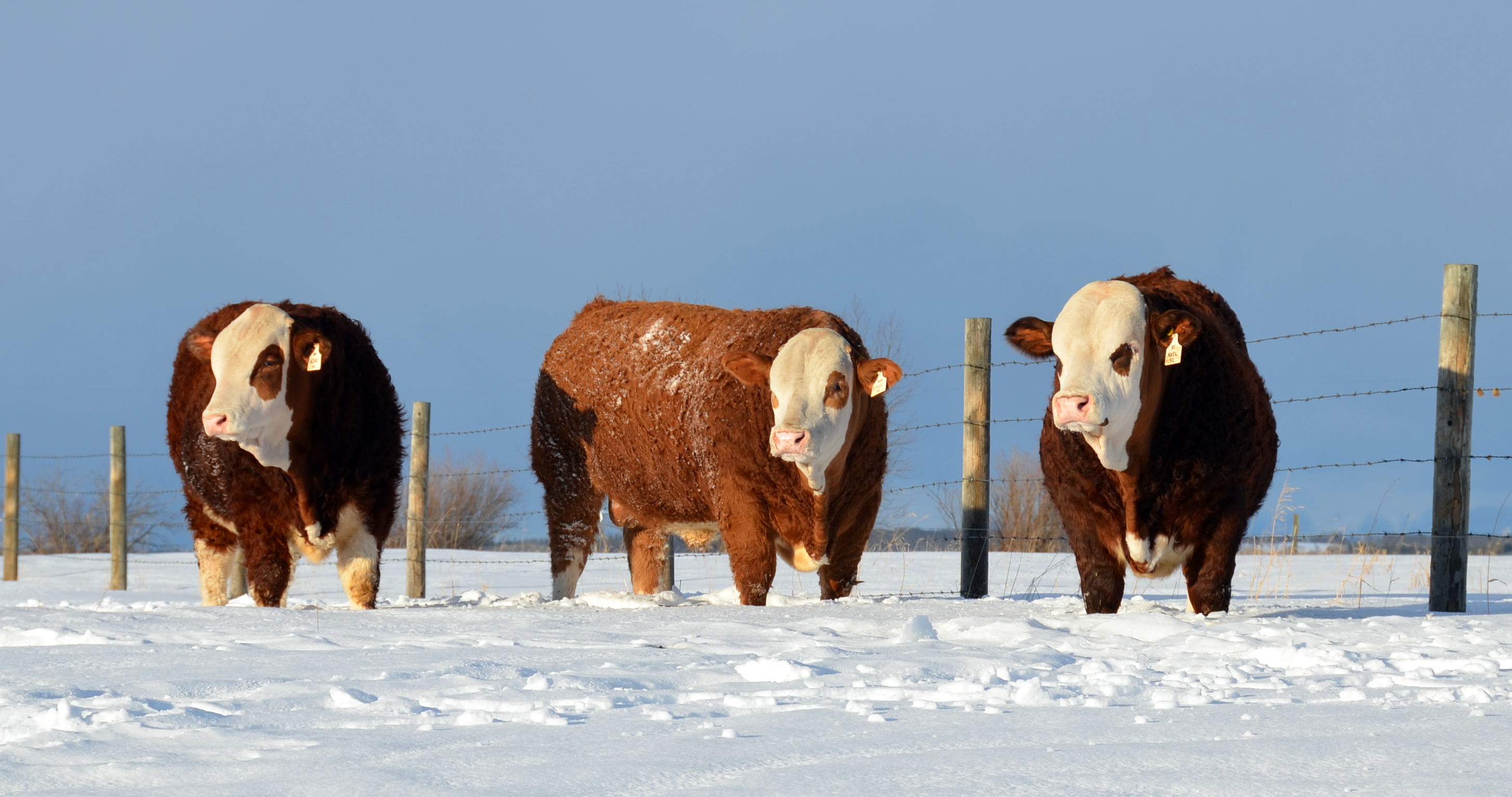
Our three, 2013 herd bull prospects - from left -  Ajax, Edge and Axel.

Our three, 2013 herd bull prospects – from left – Ajax, Edge and Axel.

(Late) Autumn Update

While it seems to feel more like winter with every day (and every snowfall), the calendar insists we are still in autumn.  Thankfully, the ‘fall work’ is done, and there are just a few jobs left to get finished prior to the ‘real’ winter and an early January start to calving season.

This years’ calves continue to develop and mature.  With some time off the farm in November, being away for even just a few days means that you can appreciate the size difference when you get back home.   The bulk of our calves were heifers in 2012, so after a thorough culling, we only have a small group of 3 bull calves to winter, which we think make a nice, consistent group.  Pictured above from left to right are Ajax, Edge and Axel.  APLX Ajax 14Z, the youngest (Feb 17th) bull, is an intriguing polled Gidsco Appollo son.  The middle bull is APLX Edge 4Z, a tremendously long Equinox son, who projects to be the heaviest bull come bull sale time (and is also polled/scurred). The bull on the right is APLX Axel 5Z, who is also an Appollo by our Tasha (Porterhouse Regent) cow.  Dark red with a moderate frame, tremendous depth and thickness,  Axel was picked out by many of our visitors this summer.  We look forward to watching them develop over the next few months, before getting them semen tested and cleaned up for pictures.  Assuming all goes well, the bulls are tentatively set to sell at Transcon’s Red Deer Sale in March.

With all of those heifer calves around, I really look forward to watching them mature, and can’t wait to see them on grass next summer – I think they will be an amazing group.  There are a quite a number of really strong heifers – in addition to the Viper daughters I talked about previously, I also really like how our Eclipse, Broadway and Pharao calves all turned out. I think they will all turn into awesome front end females.  We have more pregnancies from each of those four bulls on the way for next year, so we are really looking forward to what January’s calf crop brings.

With our herd numbers almost to where we want them to be, 2013 is the first year that I will actually be hoping to get bull calves.  There are those certain cows that haven’t given us a daughter yet, and there are some matings that you visualize with a heifer in mind, but for 2013 I am hoping for a real strong set of bull calves to choose from.  While we do plan on marketing females at some point, it is our bulls that head to town annually to showcase our operational and genetic philosophy.   We will have a diverse group of matings coming up, and I think all of them have the potential to be very good, with hopefully some tough selections to be made next summer when whittling down 2014’s keeper pen.

This time of year, while most people start getting excited about Christmas, I start anticipating the start of the new calving season in early January.  Calving never goes exactly as planned, and some of the combinations that seem so exciting now, may not pan out the way we expect, but it will be an exciting time nevertheless.  You never know what you are going to get until that calf arrives safely (and then that is only the start of the journey).

Applecross @ the National Trust.

Anchor D Viper – pictured Fall 2011 / photo courtesy Stephon Beechinor

Applecross @ the National Trust

I spent a few days in Manitoba for Transcon’s National Trust in early November.  The sale had a large number of quality animals, and showcased the breed well under the big lights of the Brandon Livestock Expo.

I have attended all five of the National Trust sales, and really enjoy the concept. The   idea that the best in Simmental genetics can be brought together in one sales event, in a ‘showcase’ type format, has a lot of merit, and over the past 5 years I think it has proven to be a resounding success.  We were fortunate enough to be able to showcase a bull at each of the last two events, and with the success we experienced we thought it important to continue to support the sale in its new location.

While we weren’t successful purchasing any live lots, we did acquire 10 more doses of Anchor D Viper semen.  We watched this bull sell, and originally acquired a semen package in the spring of 2011.  This year Viper sired a couple of our top heifer calves, and we admired how his bull calves looked in the Beechinor string in Red Deer.  With Viper’s passing away this summer, leading to questions around future availability, we thought it made sense to invest now in increasing our semen bank.

We are also impressed by Viper’s genomic profile that the John & Stephon Beechinor were willing to share with us.  He has tested to be very feed efficient (top 1% of the breed), while still remaining above the breed average for ADG.   Our two heifers also tested well, showcasing his ability to pass these genomic indicators to his offspring.  While great genomic markers don’t mean a whole lot if you don’t like the calves, the combination of outstanding physical traits with great genetic potential is something that was worth the additional investment.

I really enjoyed the Brandon facility – having the barns, hotel and restaurants all under one roof was a pleasure – especially considering the 6 inches of snow we received on Friday.  It is a concept that deserves merit at other locations (Agribition in Regina, Westerner Park here in Red Deer).

One of the hidden benefits of  moving the Trust to Manitoba this year, was that it also allowed us Albertans an excuse to go and tour farm operations while we were in the province.  While in Manitoba, we got to see both Kopp Farms and Big Sky Simmentals.

Kopp Farms had a tremendous group of about 100 bull calves; nicely weaned, all tie broke(!), and already strutting their stuff.   I am far from being an expert in red Simmental genetics, but I thought the Crosby and Walker sons really stood out. On the heifer side, I really liked the Virginia Santiago calves.  We really appreciated the time and Edmund and Pauline Kopp spent showing us their program.

Despite all the snow on the ground, I also really enjoyed touring Big Sky (at Amy and Trevor’s).  While it wasn’t the home ranch, there were a lot of impressive bull calves and an awesome group of big, powerful Fleckvieh cows just finishing up on pasture.   I have always admired the performance in the Big Sky cattle, and after seeing some of their cows and bull calves, it is clear that the power is backed up deep on equal sides of the pedigree.

Both of these herds have high quality cattle, from which I could envision acquiring genetics in the future, so it is great to be able to visit and get a closer insight into their operation.  It was certainly a lot easier to get away in early November, than to try and juggle calving with attending their respective Feb-March bull sales.  As both breeders had cattle in the sale itself, it was great that that they were able to take the time to tour us around their farms, despite being so busy.  There are a number of other operations I’d like to visit in Manitoba, so here is hoping that I will be able to make it back to tour some more in the next few years.

While it was a short visit to Manitoba, it was great to see such great cattle and visit with such knowledgeable breeders  – both in Brandon and on our tours in the countryside.  I look forward to seeing what excitement the next edition of the National Trust brings.