2013 Red Deer Simmental Bull Sale Report

APLX Axel 5Z – High Selling bull at the 2013 Red Deer Simmental Bull Sale
2013 Red Deer Simmental Bull Sale Report
After stormy weather on the week-end, it was nice to see sunny skies and a good crowd in Red Deer to watch 65 bulls sell on Monday, March 18th. First in the ring was a pair of excellent red Simmental bulls consigned by sale stalwarts, Oh Kay Farms.
The two reds were followed into the ring by our very own APLX Axel 5Z who was the lead off fullblood bull. After strong interest from some fellow purebred breeders, Axel was purchased by MI Simmentals – Mike Imler for $11,200. Axel ended up being the overall high seller of the day and we look forward to delivering him to Okotoks to his new home this week-end. It is great that he is staying here in Alberta, where we will be able to see future progeny in the Southern Alberta Simmental Round-up Sales.
Axel was followed in the sale by APLX Edge 4Z, who sold to Barney Beechinor of Bentley for $3,000 and APLX Ajax 15Z who sold to Conostoga Farms of Oyen for $5,500. We look forward to these two bulls going to work in commercial herds here in Alberta. We have added all three bulls to our ‘Applecross @ Work’ section, and hope to provide updates on their development in the future.
Other sale highlights included:
– Lot 28 ‘Champs Richlar’ – a nicely pigmented LRX Jiro son that sold from Champ Simmentals to Big Sky Simmentals of Treherne MB for $7,100
– Lot 41 ‘Starwest Pol Gravity’ an impressive JNR Gravity son that sold from Starwest Simmentals to Clearwater Simmentals of Olds for $6,000
– Lot 35 ‘Keato Pol Revved Up’ a powerful JNR’s Secret son from Keato Meadows Simmentals that was selected by Eagle Ridge Simmentals for $5,800.
Overall the sale grossed just over $236,000 on 65 lots, for an average of $3,632. We would be remiss not to recognize the team at Transcon for doing a tremendous job working the phones and managing the sale – They are always a quality, professional sales management team.
Over the past three years, it has been great to be a part of the Red Deer Bull Sale and 2013 was certainly no exception. We were both humbled and honored with the number of compliments our pen of bulls received throughout the week-end from peers in the purebred industry and commercial cattlemen alike. We strive to produce top quality cattle, and can at times be our own worst critics, so it is wonderful to hear all the kind words. Not a year goes by that we don’t learn how to do things a little better for next year, and it is equally important to continue to receive tips and advice on how to make improvements to our program. With the bull sale now in the rear-view mirror, we look forward to the start of breeding season, and the challenge of developing more bulls for future years.
Our Entries to the 2013 Red Deer Simmental Bull Sale
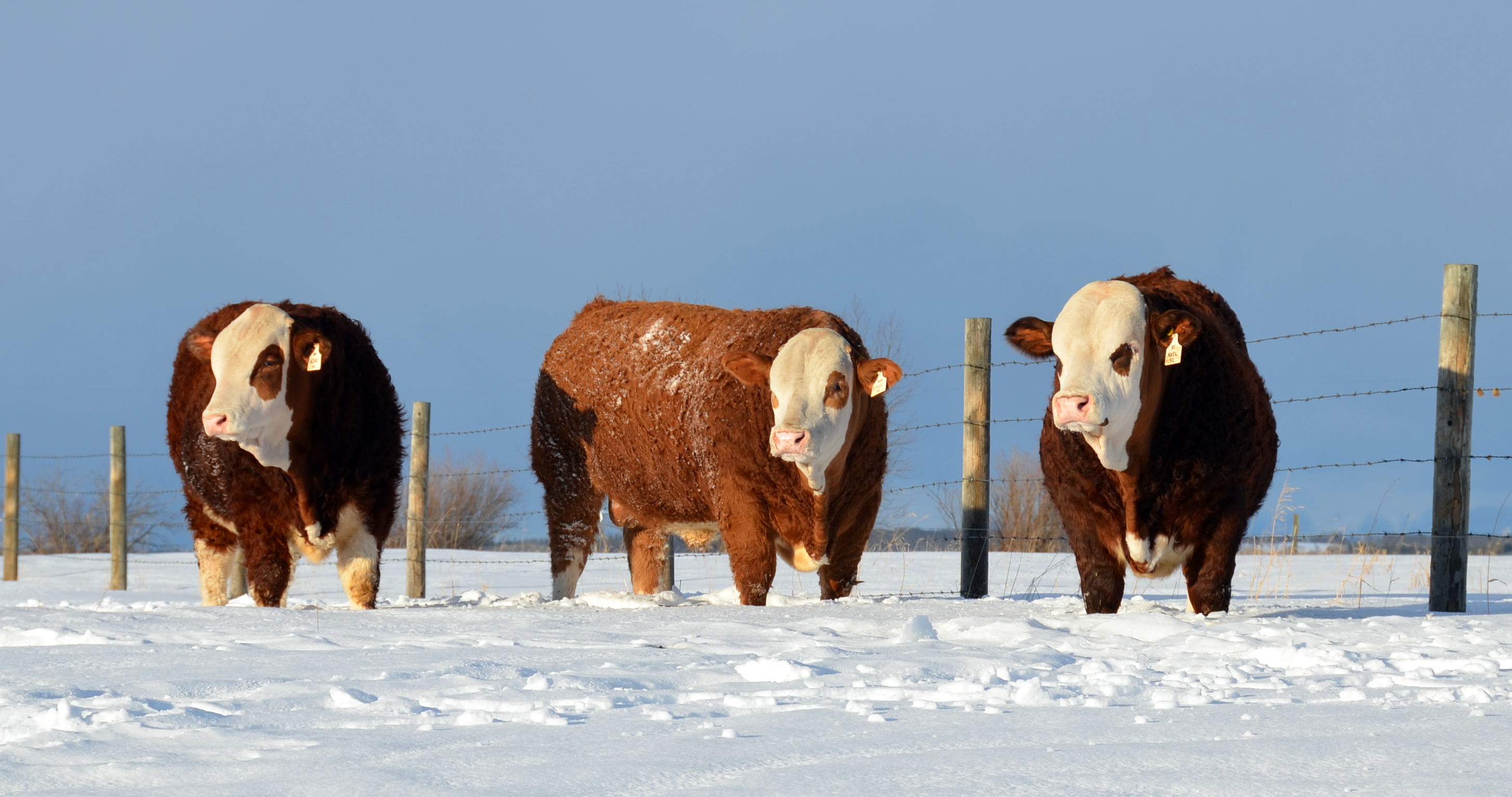
Our 2013 Red Deer Simmental Bull Sale Entries – From Left: Ajax, Edge and Axel
Our Entries to the 2013 Red Deer Simmental Bull Sale
We are pleased to present three herd bull prospects at Transcon’s 2013 Red Deer Simmental Bull Sale on March 18th at 1:00pm at Westerner Park, Red Deer, Alberta. This is our third year at this event, and we are proud to be included in the strong offering that is always presented by this progressive group of breeders.
This year’s group consists of two Gidsco Appollo sons (Axel, Ajax), and one from Dora Lee’s Equinox (Edge). The Appollo sons both combine their sires’ dark red colour and maternal strengths and each are backed by outstanding cow families. Ajax also has the intriguing twist of being scurred/polled. As an Equinox son, Edge is also scurred/polled, and showcases the tremendous volume and length of spine that Equinox is becoming known for. Please note that both Ajax and Edge were registered as polled calves, but since that time they have each developed small scurs, which we have left on and that you will notice in the pictures. All three bulls show lots of muscling, and have tremendous hair coats.
Individual pages (short-cut links are located in the right-hand column) have been created for ‘Axel’, ‘Ajax’ and ‘Edge’. The bulls have been developed on a ration of free-choice quality first cut hay, combined with a forage based pellet by Country Junction. The bulls are housed in a 5 acre paddock to ensure lots of exercise, have been tie-broke, and have quiet temperaments. On the individual pages, we have also pictured the sires, dams and grand dams. Maternal lines are very important to us, and we feel that behind every great bull is an outstanding cow family. As some people prefer paper copies, we also have individual bull profiles available in PDF format that can be e-mailed and printed, or sent by regular mail. Please let us know if you would like any additional information on any of our animals.
The 2013 Red Deer Simmental Bull Sale promises to be another exciting event. We look forward to a great day on March 18th at Westerner Park.
————————————-
Update: As of February 28th, all three bulls measured up nicely and have passed their semen test. Scrotal Circumferences have been addded to their respective individual pages. Next Stop: Red Deer.
Calving Time!

Applecross Giselle 10A – an exciting polled Bronson x Arnold’s Image heifer calf.
Calving Season!
Calving is in full swing here at Applecross, which means it is a really exciting time of year – and makes all those night checks at 40 below worth it. Months of anticipation have led up to that instant when we first get to see a calf. Bull or heifer, coloured right or not, getting that healthy calf up and going is always a great feeling.
We have been blessed with a solid start to the season, and after a recent run of bull calves, we now have a balanced mix. On the heifer side, we have a couple of exciting Bronson daughters (including Giselle pictured above) that we hope to develop into the awesome cows Bronson is known for. There is also a really neat polled Gidsco Appollo heifer (also a cow maker), and Eclipse has passed along some really nice daughters from our first calvers. It is great to know that a service sire is going to calve out and give consistent calves that are up and going in a hurry. There also looks to be great competition shaping up to make next years’ bull pen. Our ‘Dora Lee’ sired group of Eclipse, Equinox and Jake all have provided us with sons that are already strutting their stuff.
We are about 60% through calving, and should be finished up by the first week of March. There are plenty more interesting calves on the way – both AI and the first calves from our walking bulls – so that sense of anticipation will stay for a while yet. With a nice group of calves already forming, it will be great see the complete crop and to compare each calf as they develop on grass this summer.
The Applecross Year In Review


Applecross Catrina with calf Carly at side
The Applecross Year In Review
2012 was an incredible year for Applecross. We hit a lot of milestones and are very pleased with how our operation continued to grow and evolve during the year.
We had some mild weather to begin the year, and that certainly made calving easier. It is not every year that calves can be born outside on the straw-pack without losing their tails or freezing their ears! We were almost three-quarters heifers to bulls in 2012 – which is great when you are trying to increase your herd numbers. While the mild weather created its own set of (health) challenges with the calves, we were quite happy with how they developed.
Bulls sales in 2012 far exceeded our expectations. Unexpectedly, at the end of 2011, Envoy was selected for the National Trust sale. As a result, we began the year with a visit to Lonnie & Karen Brown in late February, to deliver him to his new home and tour their operation. Not long after that, we got the chance to deliver Santana up to Edson, giving us the chance to see both the Wa-Na-La-Pa and Langer herds (and check out APLX Ensign in his home). Touring herds is one of my favourite things to do, so it doesn’t matter if it is February – seeing good cattle and visiting with great people is always a great way to spend a day. We were also pleased by how our bulls sold at auction in 2012. We were both honoured and humbled to see both Jackson (who sold in March at the Red Deer Sale for $12,000 to Westgold Simmentals) and Santana (who Wayne sold in the 2012 Cow-A-Rama sale for $11,000 to Vaughn Gibbons) represent the APLX prefix so well. It always takes time for bulls to make an impact in a breeders program, but we look forward to visiting all of these operations in 2013 to see how Envoy, Jackson and Santana are doing.
Lots of moisture in June and July led into a warm August and plenty of grass for the cattle. We didn’t vacation this summer, so there was plenty of time to halter break calves in July and complete farm improvements in August. We added space to winter mature bulls this year, so that was a major accomplishment for us. We also spent time improving our rotational grazing program, and making more efficient use of space and labour to help us manage additional cow numbers.
Heading into the fall sale season, it was great to see such excellent results, and see our fellow breeders having the success that they enjoyed. On the home front, we were successful in aquiring an additional bred heifer privately from my parents operation. Dora Lee Martina is a big, strong Broadway daughter that I think will fit in nicely with our young herd. The sale season also brought the opportunity to travel to Brandon to the National Trust sale, and while there I really enjoyed both visiting with fellow breeders and touring some world-class purebred operations. The sales seemed to get stronger as the year went on, and we weren’t successful purchasing females closer to home. The market for quality cattle has become very strong, and it is a great sign for the Simmental breed as the cattle market takes a much needed turn for the better.
I commented last year on the success of our website – and I thought it only fitting to provide an update again this year. 2012 brought additional visitors; with almost 10,000 views from over 87 countries during the year. We also worked with my parents to launch an updated Dora Lee website (www.doraleegenetics.com) utilizing the WordPress platform. Mom and Dad are able to manage and post updates to their site themselves, so it is another example of how easy establishing and maintaining a current web presence has become. We look forward to another exciting year in 2013 of providing updates on our operation, and sharing our perspective on topics that interest us.
Looking forward to 2013
For 2013, we are excited about what should be our largest, most uniform calf crop yet. We start calving about the 10th of January, and thanks to some good luck with our AI program, and having our walking bulls go right to work, we should be done calving in 2 months. We are expecting calves from 10 different sires, so there should be lots of diversity, but the similar ages of the calves should allow us to effectively compare the genetics. We have a number of cows bred to sires that have proven to work here in the past (Eclipse, Equinox, and Pharao to name three), but have also added some new sires, including a group bred to the great Bronson bull, as well as the first calves from our two young walking bulls – APLX Escalade and APLX Samson. It should be a awesome 2 months.
Early in the new year has also become the time of bull sales, and it appears like several events have moved earlier in the season. Based on how purebred heifers sold this fall, strong cattle prices, and the gradual rebuilding of cow numbers in the industry, I expect bull sales to be exceptional. Getting a different catalogue in the mail (seemingly) every day, is an exciting part of our search for new and outcross genetics. We also look forward to watching our three bulls develop in preparation for the Red Deer Sale in late March. We think Axel, Edge and Ajax all have something to offer the industry, so it will be great to watch them continue to develop.
Hard on the heels of bull sale season, comes some tough breeding decisions. While we still plan to AI extensively, we are planning on increasing our use of both of our walking bulls. With Escalade and Samson wintering here, they have continued to impress, and I think they will be more than up to the challenge of breeding a few more cows each in 2013.
In a lot of ways, the next few months are critical to the success of an operation. Getting healthy calves on the ground (and off to a good start), followed immediately thereafter by breeding decisions that can shape a program for years to come. Those night checks might get old after a few weeks, but the excitement that comes with seeing that healthy new-born calf, from a mating that you had such high hopes for, will make it all worthwhile.
As 2012 wraps up, and 2013 is about to begin, we pause during this holidays season to reflect with family and friends on the challenges and successes we have enjoyed over the past year. We are blessed to live in an amazing country, with fresh air, clean water and the means to put food on the table. We have a passion for breeding quality Fleckvieh cattle, and we are very fortunate to be able to pursue this dream through our operation here at Applecross. We look forward to an awesome 2013!
Annual Female Section Update
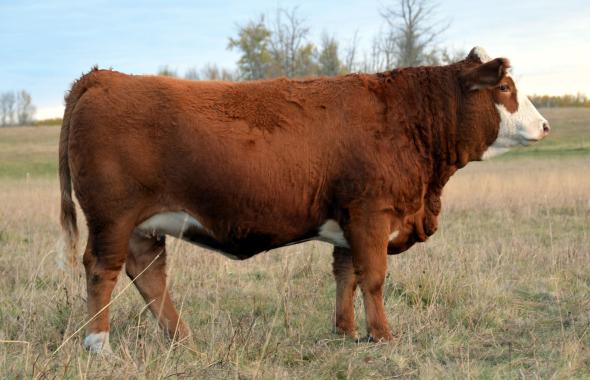
Applecross Janelle – one of the top bred heifers we have retained.
Annual Female Section Update
We have completed our annual refresh of our female section (Herdbook > Foundation Females) with updated pictures and new pages to showcase some additional females. The pages fall into chronological order, with our oldest cow (Jewel) at the top, and our youngest female (Taylor) at the bottom. As our herd is made up predominantly of young cows, a year can bring significant change as they grow and develop into more mature animals. The challenge is, of course, getting updated pictures that reflect the phenotypical change (not to mention to convince the cows that they should stand to get their picture taken!). Over the years I would like to get a good picture of every quality female we own, but there are always some that can escape the camera.
Featured above is Applecross Janelle. Janelle is one of our top bred heifers, and was originally selected for this year’s Fleckvieh Equation sale. An Anchor T Ikon daughter, by a powerful Dora Lee Eclipse dam, Janelle (and her dam Jasmine) have caught the eye of many of our visitors the last couple of years. After a lot of discussion, we decided it would be best for the long term success of our operation to retain Janelle (and all of our bred heifers), to help grow our numbers here at Applecross. We look forward to Janelle’s 2013 calf by the polled calving ease bull Sanmar Pol Pharao in mid January.
(Late) Autumn Update
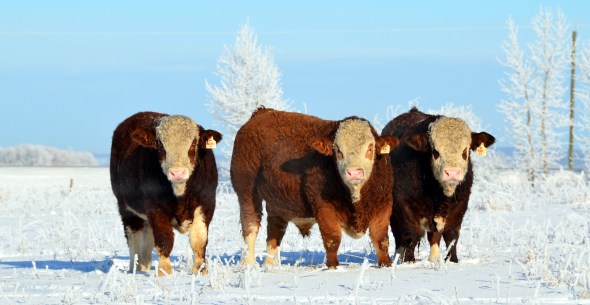
Our three, 2013 herd bull prospects – from left – Ajax, Edge and Axel.
(Late) Autumn Update
While it seems to feel more like winter with every day (and every snowfall), the calendar insists we are still in autumn. Thankfully, the ‘fall work’ is done, and there are just a few jobs left to get finished prior to the ‘real’ winter and an early January start to calving season.
This years’ calves continue to develop and mature. With some time off the farm in November, being away for even just a few days means that you can appreciate the size difference when you get back home. The bulk of our calves were heifers in 2012, so after a thorough culling, we only have a small group of 3 bull calves to winter, which we think make a nice, consistent group. Pictured above from left to right are Ajax, Edge and Axel. APLX Ajax 14Z, the youngest (Feb 17th) bull, is an intriguing polled Gidsco Appollo son. The middle bull is APLX Edge 4Z, a tremendously long Equinox son, who projects to be the heaviest bull come bull sale time (and is also polled/scurred). The bull on the right is APLX Axel 5Z, who is also an Appollo by our Tasha (Porterhouse Regent) cow. Dark red with a moderate frame, tremendous depth and thickness, Axel was picked out by many of our visitors this summer. We look forward to watching them develop over the next few months, before getting them semen tested and cleaned up for pictures. Assuming all goes well, the bulls are tentatively set to sell at Transcon’s Red Deer Sale in March.
With all of those heifer calves around, I really look forward to watching them mature, and can’t wait to see them on grass next summer – I think they will be an amazing group. There are a quite a number of really strong heifers – in addition to the Viper daughters I talked about previously, I also really like how our Eclipse, Broadway and Pharao calves all turned out. I think they will all turn into awesome front end females. We have more pregnancies from each of those four bulls on the way for next year, so we are really looking forward to what January’s calf crop brings.
With our herd numbers almost to where we want them to be, 2013 is the first year that I will actually be hoping to get bull calves. There are those certain cows that haven’t given us a daughter yet, and there are some matings that you visualize with a heifer in mind, but for 2013 I am hoping for a real strong set of bull calves to choose from. While we do plan on marketing females at some point, it is our bulls that head to town annually to showcase our operational and genetic philosophy. We will have a diverse group of matings coming up, and I think all of them have the potential to be very good, with hopefully some tough selections to be made next summer when whittling down 2014’s keeper pen.
This time of year, while most people start getting excited about Christmas, I start anticipating the start of the new calving season in early January. Calving never goes exactly as planned, and some of the combinations that seem so exciting now, may not pan out the way we expect, but it will be an exciting time nevertheless. You never know what you are going to get until that calf arrives safely (and then that is only the start of the journey).
Applecross @ the National Trust.
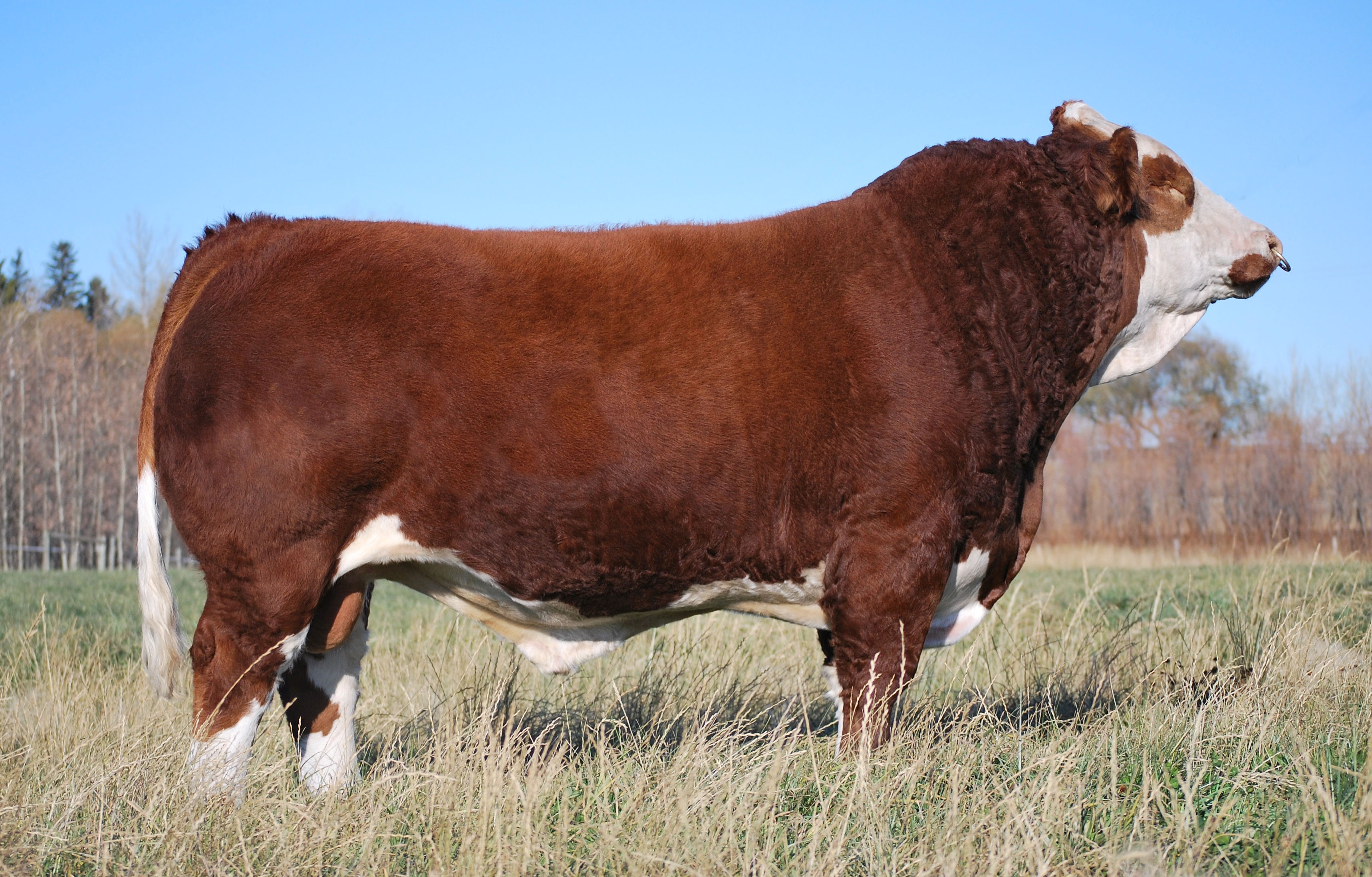
Anchor D Viper – pictured Fall 2011 / photo courtesy Stephon Beechinor
Applecross @ the National Trust
I spent a few days in Manitoba for Transcon’s National Trust in early November. The sale had a large number of quality animals, and showcased the breed well under the big lights of the Brandon Livestock Expo.
I have attended all five of the National Trust sales, and really enjoy the concept. The idea that the best in Simmental genetics can be brought together in one sales event, in a ‘showcase’ type format, has a lot of merit, and over the past 5 years I think it has proven to be a resounding success. We were fortunate enough to be able to showcase a bull at each of the last two events, and with the success we experienced we thought it important to continue to support the sale in its new location.
While we weren’t successful purchasing any live lots, we did acquire 10 more doses of Anchor D Viper semen. We watched this bull sell, and originally acquired a semen package in the spring of 2011. This year Viper sired a couple of our top heifer calves, and we admired how his bull calves looked in the Beechinor string in Red Deer. With Viper’s passing away this summer, leading to questions around future availability, we thought it made sense to invest now in increasing our semen bank.
We are also impressed by Viper’s genomic profile that the John & Stephon Beechinor were willing to share with us. He has tested to be very feed efficient (top 1% of the breed), while still remaining above the breed average for ADG. Our two heifers also tested well, showcasing his ability to pass these genomic indicators to his offspring. While great genomic markers don’t mean a whole lot if you don’t like the calves, the combination of outstanding physical traits with great genetic potential is something that was worth the additional investment.
I really enjoyed the Brandon facility – having the barns, hotel and restaurants all under one roof was a pleasure – especially considering the 6 inches of snow we received on Friday. It is a concept that deserves merit at other locations (Agribition in Regina, Westerner Park here in Red Deer).
One of the hidden benefits of moving the Trust to Manitoba this year, was that it also allowed us Albertans an excuse to go and tour farm operations while we were in the province. While in Manitoba, we got to see both Kopp Farms and Big Sky Simmentals.
Kopp Farms had a tremendous group of about 100 bull calves; nicely weaned, all tie broke(!), and already strutting their stuff. I am far from being an expert in red Simmental genetics, but I thought the Crosby and Walker sons really stood out. On the heifer side, I really liked the Virginia Santiago calves. We really appreciated the time and Edmund and Pauline Kopp spent showing us their program.
Despite all the snow on the ground, I also really enjoyed touring Big Sky (at Amy and Trevor’s). While it wasn’t the home ranch, there were a lot of impressive bull calves and an awesome group of big, powerful Fleckvieh cows just finishing up on pasture. I have always admired the performance in the Big Sky cattle, and after seeing some of their cows and bull calves, it is clear that the power is backed up deep on equal sides of the pedigree.
Both of these herds have high quality cattle, from which I could envision acquiring genetics in the future, so it is great to be able to visit and get a closer insight into their operation. It was certainly a lot easier to get away in early November, than to try and juggle calving with attending their respective Feb-March bull sales. As both breeders had cattle in the sale itself, it was great that that they were able to take the time to tour us around their farms, despite being so busy. There are a number of other operations I’d like to visit in Manitoba, so here is hoping that I will be able to make it back to tour some more in the next few years.
While it was a short visit to Manitoba, it was great to see such great cattle and visit with such knowledgeable breeders – both in Brandon and on our tours in the countryside. I look forward to seeing what excitement the next edition of the National Trust brings.
Blue Sky Thinking
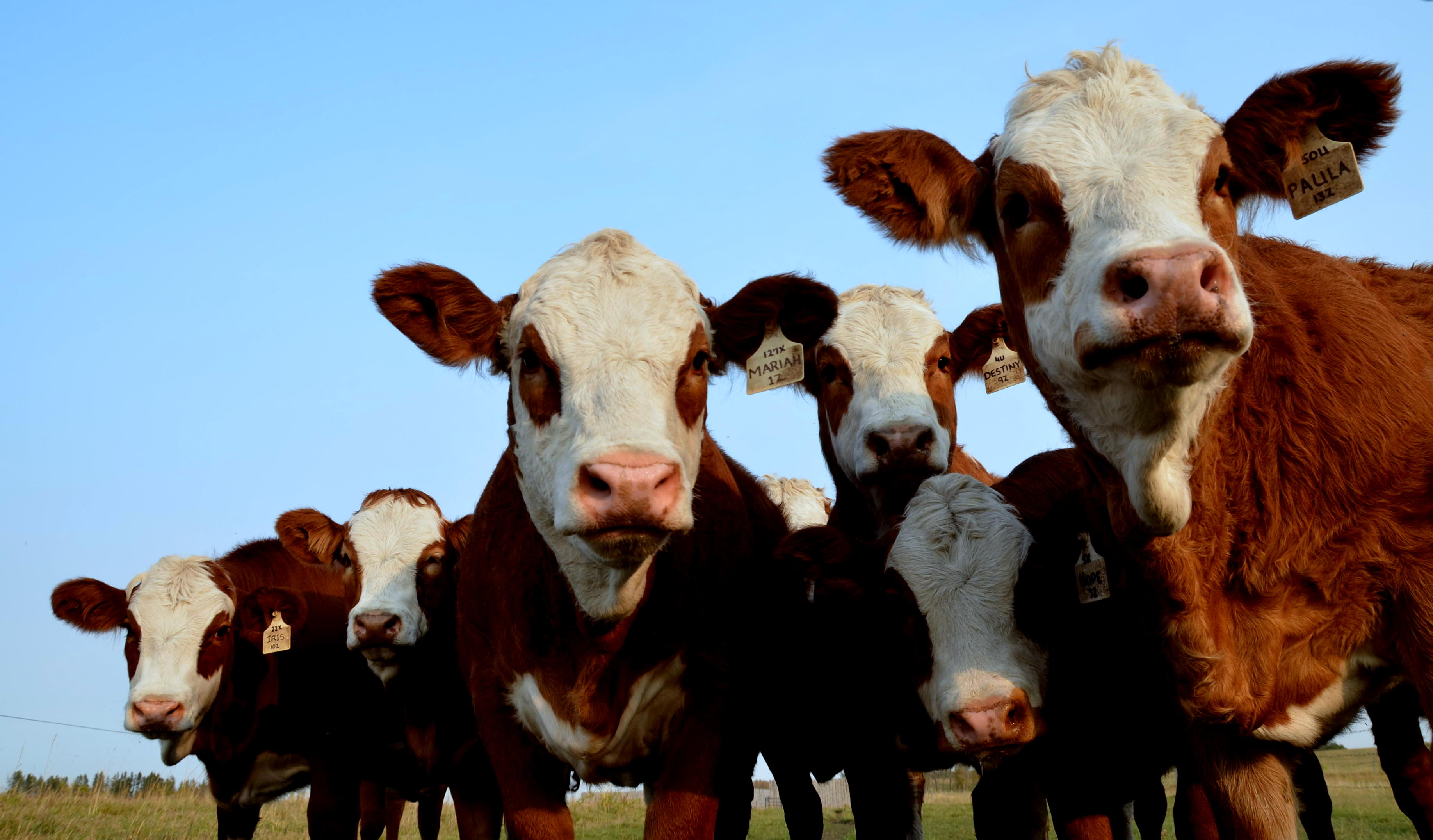
Once a year we try to do one ‘get away’ vacation that has nothing to with cattle. The idea is that, since even my family visits have a cattle focus, spending a few days away from cattle all together can help put things in perspective. This year, we had the opportunity to spend a week-end cruising between Miami and the Bahamas. While Hurricane Sandy, provided a fair bit more wind and surf to our trip than we expected, it did allow for plenty of opportunity to do some ‘blue sky thinking’.
From an operational viewpoint, getting away is one of the management tips that I have picked up. For any small business owner / farmer / entrepreneur, long hours are often spent with the day to day focus and detail work – scheduling in at least one ‘vacation’ away from the operation is essential not only for personal well being (the chance to relax and unwind mentally, reconnect with a significant other that sometimes takes a back seat to the farm), but also from an operational perspective. Time away allows a step back from day to day operational activities, to focus on big picture longer range planning.
I consciously ensure that we to do this long range planning with our cattle operation. While it is essential to have a short term plan to ‘pay the bills’, utilizing time away to ensure that short term thinking doesn’t overwhelm any long term thinking is vital to the overall health of an operation.
Long range planning is a little different than day to day planning. It tends to be more of a process of trying to identify trends, or to anticipate the future state of how the industry will work, and then work backwards to see what short term plans should/could be adjusted within our own operation in order to meet what is projected to be the demands of the future. Of course, the crystal ball is not perfect, so other questions then arise; how quickly to adjust, how many resources to invest in a change, and whether there are any short term negative consequences for your operation.
This process may sound complex, but then, by its very nature, breeding cattle is a complex business – there are so many different genetic and management decisions that can be made to change your operation, that it always seems like there are more options that should be considered. One of the largest challenges we face (with our smaller sized operation), is that due to our size constraints, there are only so many opportunities we can pursue within our farm, while still maintaining our focus on producing top quality cattle. As a result, we have to prioritize our objectives and decide which ones to focus on, while ensuring the consistency of the herd remains strong.
It was great to get away for a week-end, but now that we are back home the more challenging part begins. Planning without action is fruitless, so the next step becomes implementing those ideas, and ensuring that there is a method of quantifying progress built into those day to day routines.
Plan. Implement. Evaluate. Adjust. A big-picture circle that just keeps on turning.
The Fundamentals of RFI
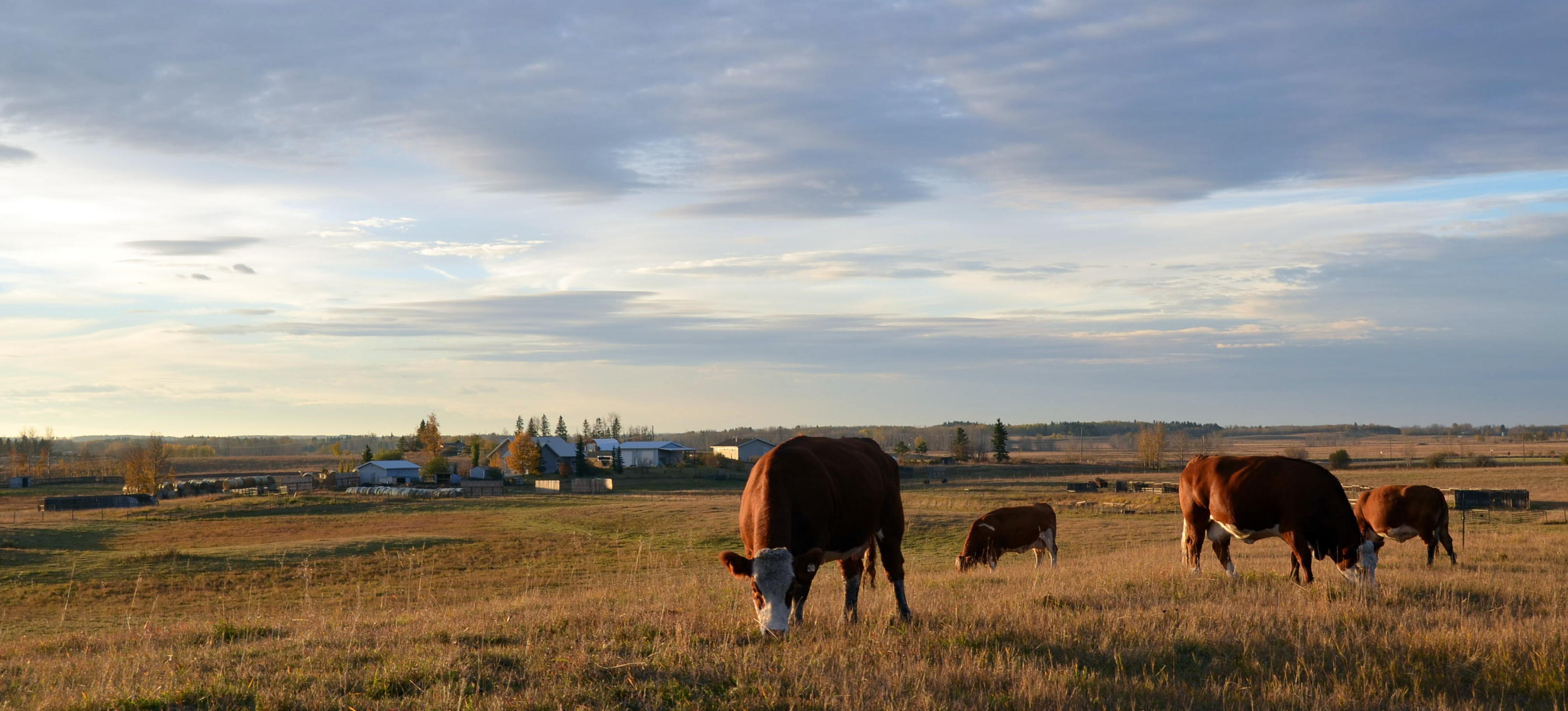
The Fundamentals of RFI
I had the opportunity to attend Livestock Gentec’s 3rd Annual Conference in Edmonton on Tuesday October 16th.
Livestock Gentec was created to carry out, and capitalize on, world-class genomics research, bringing commercial benefits to the Canadian livestock industry. This organization brings together scientists, producers and industry partners to ensure technology and innovation keeps Canada at the forefront of genetic improvement worldwide. It is great to have an organization of this calibre here in Alberta.
Two major factors drew me to this year’s conference – RFI and genomics. As previously discussed in this blog, for the past number of years we have been utilizing the Igenity profile for genomic testing of our walking herd, replacement females and herd bulls. We are very excited about the possibilities of evaluating RFI via genomics, and wanted to learn more about the potential of selecting genetics with this quality. With an entire morning session entitled ‘The Fundamentals of RFI’, it was a great opportunity to hear a number of speakers discuss their perspectives on this very important trait.
First, an explanation: RFI, short for ‘Residual Feed Intake,’ is a measurement of feed efficiency. In essence, it is the difference between what an animal is expected to consume and what that animal actually consumes in order to maintain or to grow. Thus, when calculating RFI, the lower the number (or a negative number) translates into a more feed efficient animal. This is an important distinction, as with all other ‘trait’ measures a higher number is generally preferred. Through-out this post, I will be using RFI and feed efficient interchangeably.
The concept of RFI has been around for decades, but has been difficult to measure. Early studies involved the isolation of individual animals, with feed monitored; but with more advanced technology, it is easier to identify and monitor individual animals in a group setting. The research presented on RFI during the conference was predominantly obtained utilizing the GrowSafe System (www.growsafe.com). This commercially available system measures the amount of food intake over the trial period of 70 days, and then provides an RFI value for each animal. The GrowSafe System is utilized in bull test facilities across North America, including three here in Alberta. Prior to the conference, I was unaware that this system was commercially available.
The financial impact for cow-calf producers in utilizing highly feed efficient animals, assuming all other traits remain equal, are substantial – upwards of $50 per cow per year savings in feed costs. A highly efficient bull has the potential to save $750-$1,125 over 3 calf crops vs. an inefficient bull. Savings come from an 11% reduction in feed required while milking, and a 21% reduction in feed when dry – leading to higher stocking densities on grass, and lower purchased feed costs. Because low RFI cattle are so efficient, they also have the ability to handle stressful weather and harsh conditions better. Death loss is lower, and calves have a lower mortality rate. Because the efficient cattle eat less, methane emissions are also reduced by 15-30%, and manure production is also lowered by 15-20%; decreasing yardage costs. Add up all these possible areas for savings, and it becomes obvious that feed efficiency has the potential to dramatically improve returns while also benefiting the environment.
For me, the most important message that I took away from the RFI session, was that RFI operates independently of ADG (Average Daily Gain). When assessing cattle for both traits, just because an animal was highly feed efficient, did not mean that they had a good rate of gain. In fact, the data presented by Dr. John Basarab (Sr. Research Scientist at Alberta Agriculture) suggested that there was just as many low gain, feed efficient animals as there are high gain, feed efficient animals. As a result, it is essential that these two important traits be selected in tandem in order to make progress. From a genetic selection perspective, Dr. Basarab suggested that the focus should be breeding for low RFI, high ADG cattle while ensuring those animals remained fertile.
This message was reinforced by Stuart Thiessen, who along with his family, operate Namaka Farms Inc, a 34,000 head feedlot in Southern Alberta. In an effort to maximize productivity, Mr Thiessen has extensively examined the applicability of RFI in the feedlot environment. In his presentation, Mr. Thiessen was adamant that RFI cannot correct the cost of a low ADG. In fact, if he had a choice, his return calculations indicate that they would prefer high ADG regardless of RFI, but low RFI provided better returns should ADG be the same. Where Mr Thiessen struggled with RFI was in how it fit within the overall sector: the general cow-calf operation is not interested in adapting to RFI if they are not going to get paid for it. As ‘money’ is the signal for change within the sector, until a methodology such as a ‘Global Biddable Index’ can be created and adopted to make the system transparent to both cow-calf and feed operators, he feels there is a long road ahead before headway is made in the marketplace.
Challenges with RFI
Genomic testing represents genetic potential for high or low RFI vs. actually assessing an individual animal for RFI (which could be done via a system such as GrowSafe). The challenge then becomes linking the DNA to the actual results: can what is present at the genome level be an accurate predictor of what actual results would be in a typical commercial environment? In this regard I thought the conference missed a significant opportunity. While there were a total of 5 speakers on RFI (all of whom were excellent), there was no conversation discussing the link of ongoing research between genomic RFI and actual RFI as measured via a conventional system. It could be that the genomic technology is new enough that the research hasn’t been finalized yet, but with several genomic companies in attendance (and speaking later on other topics), I did think it was a missed opportunity to provide a clearer understanding of the relationship between the genetic potential to be feed efficient and the actual RFI results. It is my hope that this is where the research projects currently being completed by breed associations comes in to play, specifically the Canadian Simmental Association. It is my understanding that the projects they are working on should allow for enhanced EBV/EPD’s in the future that will include RFI as a trait.
Another challenge, and this refers to all cattle, is that genetic improvement is limited by the length of the reproduction cycle. With cattle limited to an annual cycle, the pace of change is very slow. Even if all the data was available and accurate, and a highly efficient, high gain bull could be identified today, it would still take 9 months for a calf to be born and a further 12-15 months for any potential sons to begin breeding. This 2 year generation cycle, combined with the necessity of stacking genetics in order to improve heritability (and avoiding single trait selection), would suggest that the pace of change within the industry will be slow. The other challenge with beef, is that the cow-calf industry is a very low margin business. There is not a lot of extra monies available for research and development compared to our peers in the (supply managed) dairy sector. As a result, unless there is an immediate perceived return, it isn’t going to change producer behavior. The lack of margin combined with a slow reproductive cycle puts cattle at a significant disadvantage when comparing cattle to our competing protein sources in either hogs or poultry.
Where We Are Headed.
The result of attending any successful conference is the ability to come home with knowledge that you can implement in your own operation. The conference certainly provided clarity on the importance of maintaining ADG while selecting for RFI, and I have modified our in-herd assessment index to reflect that change. It is also nice to see the numbers for potential cost savings verified by research as to how much improvement feed efficient animals can make toward the bottom line. As a finance guy, I certainly appreciate numbers to back up intuition!
From an assessment standpoint, we will continue to do our own research on RFI, and learn as much as possible from conferences and organizations such as Livestock Gentec. We are still very early in the process of evaluating RFI, but are also fortunate to be joined in our studies by my parents operation in Ontario, which provides both additional data, and a sounding board to discuss ideas. I think our efforts regarding RFI will echo our experiences over the past 13 years working with adding the polled gene to our cow herd. Progress happens, but it is certainly slower than you’d like, especially when you are trying to avoid single trait selection. (As after 13 years, we certainly don’t have all the horns off our cattle – only about 25% of our walking herd!) Thankfully, due to our ages, and our passion for Fleckvieh Cattle, I do feel we have a long future ahead of us in which to gradually make genetic improvements.
As you can infer from the above, I really enjoyed the Livestock Gentec sessions on RFI. I think RFI remains the biggest challenge in genetic selection of beef cattle, but am encouraged by the research being done as to how we can economically and practically evaluate genetics for this trait in the future. While RFI is an important trait, the sessions once again made clear the dangers of single trait genetic selection. While trying to reduce RFI, while maintaining or improving ADG, will slow the speed of genetic process, I think that in the long run, the cattle will provide improved returns.
Further Reading
For additional information on the ‘GrowSafe’ RFI system: http://www.growsafe.com
For additional information on RFI via Genomic Testing and the Igenity Profile: http://www.igenity.com/beef
For additional information on RFI research completed here in Alberta: http://www1.agric.gov.ab.ca/$department/deptdocs.nsf/all/agdex10861
References:
The data utilized in this post was gathered from notes taken during the ‘Fundamentals of RFI’ session at the 2012 Livestock Gentec Conference. Specific speakers referenced include presentations made by John Basarab (Alberta Agriculture), Monty Kerley (University of Missouri) and Stuart Thiessen (Namaka Farms Ltd). Any mistakes in interpreting the information presented is the writer’s.
New Addition @ Applecross
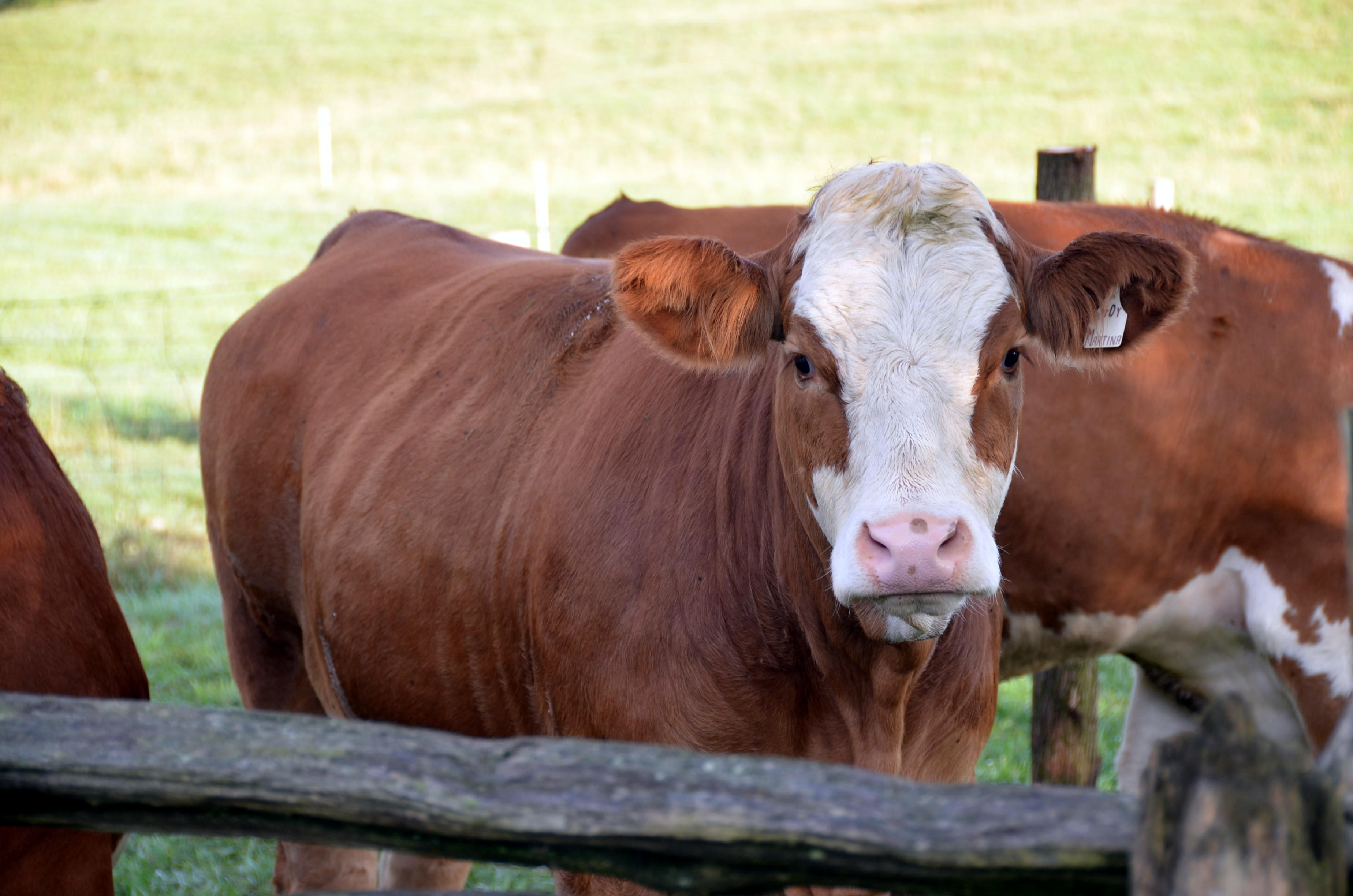
Dora Lee’s Martina – September 8, 2012
New Addition @ Applecross
We have been successful in acquiring ‘Dora Lee’s Martina’ during my recent visit to Ontario. Tremendously long and thick, Martina is a powerful Broadway daughter out of Bar 5 Maria – a South African female that Dad selected as an open heifer back in 2008.
There were a lot of factors that drew us to Martina, not the least of which was her sire, DDD Broadway. During our tours of various breeder’s operations, I have seen a number of Broadway cows that I really like, and he has also shown up in the pedigrees of several sale animals I have been interested in. Vaughn Gibbons has kept Broadway’s semen very exclusive, and while we have been successful in obtaining a couple of doses (and have a heifer calf of our own), we have been impressed with the bloodline, so adding this outstanding heifer made a lot of sense.
We usually prefer to purchase open heifers instead of bred heifers, primarily due to younger animals having more time to get integrated in our program. That extra year, combined with getting to breed them to the bull of our choice, ensures that they are set up ‘our way’ for that critical first calf. We feel that this approach gives them the best chance of having that first calf successfully, which more than offsets the added costs of feeding/breeding them for an additional 12 months compared to a bred heifer.
When we are seriously interested in adding a bred heifer such as Martina, the earlier the sale date the better. As with opens, bred heifers that have more time to adapt to their new surroundings and management program will calve out better, with a higher probability of breeding back on the first service. As such, as we move deeper and deeper into fall sale season, our focus shifts more and more towards open heifers.
Martina arrived here at Applecross on Thanksgiving, and fits in very nicely with our bred heifer group. With similar management programs, plenty of time to adjust, and bred to a calving ease specialist in Sanmar Pol Pharo, we look forward to an exciting calf in January. We are confident Martina will add some outcross performance to our cow herd for many years to come.
Stepping Back

The Dora Lee Herd in the River Flats – Sept 8, 2012
Stepping Back
I had the opportunity to slip back to Ontario for a week-end in September. It is always great to visit family and the farm, and September is a wonderful time of year to do so. At Dora Lee, harvest finishes in August (when the barley and second cut hay finish up), and with the drought, weaning was also completed early, so there was a lot of time to both visit and spend with the cattle; evaluating and reflecting on the current calf crop and how the bred replacements are developing. While the farm and cattle have changed a little around the edges, the core of the operation remains essentially the same since I left for university 20 years ago.
I am very fortunate to share my passion for cattle with my father. We often act as a sounding board for each other to discuss the merits of new ideas that can generate a lot of great discussion. While we don’t necessarily agree on everything, I have learned an tremendous amount from Dad over the years, the majority of which I am trying to incorporate into our operation here at Applecross. We also both really enjoy spending time with the cows – just out among them, checking and evaluating, planning and appraising, debating the merits of what the next step in the evolution of the herd should be. In hind-sight, I guess it was no surprise that late Friday night, when we got in from the airport, we checked the cows before bed – despite it being full dark. This must be the reason that Gators have lights!
Dora Lee is ideally situated for cattle. The spine of the farm is a meandering creek that runs the length of the property, complete with river flats, rolling hills, and predominantly cedar bush. The grain and hay ground surround the pastures, and together make a nice balance for a cow calf operation. Similar to most of the American mid-west, Ontario suffered through a serious drought this summer. With no moisture for almost 2 months, both the hay and pasture land suffered significantly. While they had some rain in August (and it rained 2+ inches the day I was there), I was surprised at how ‘green’ the pastures were. I think the big gain was in the rotational grazing program. As I discussed previously, Dad has been a long term proponent of rotational grazing. With the drought this year, he took his program a step further, dividing all of his existing pastures in half again, which effectively shortened the grazing period and increased the rest time. As rotational grazing takes years to improve the pasture conditions, the hard work in improving the grass stand had already been completed, but the even shorter grazing was essential for stretching grass in this drought year, and will continue to pay dividends in the future.
One of the other neat tools that Dad utilizes to improve the pasture is to add grass seed to the mineral. The rolling hills and river flats are not conducive to a seeder, so by adding birdsfoot trefoil seed to mineral, the cows ingest the seeds and then excrete them in the manure all over the pastures. Dad has always joked that cows had a forage harvest on the front and a manure spreader on the back, so I guess this step just hooks on an air-seeder as well. I do think digging deeper into that concept has a lot of merit. The cow-calf sector has always been a low margin business, with feed being the number one expense, and with equipment requirements traditionally a major capital cost. Any opportunity to maximize the natural grazing ability of cows, and reduce the amount of confined feeding that requires intensive management – whether it be ‘prepared’ hay/feed or manure removal – should be seriously considered. This is also a great trait in Fleckvieh cattle – their natural ability to perform on a forage based diet, provides a significant advantage compared to other breeds.
That combination of an extensive natural habitat combined with great childhood memories has always made Dora Lee a very peaceful place; and something we have tried to emulate here at Applecross (It should be no surprise that Applecross derives from the Gaelic word ‘ A’chomraich’, which means ‘Sanctuary’). As a result, the visit back to Ontario provided the perfect opportunity for stepping back and reflecting; not only on the goals Mom & Dad are still trying to achieve at Dora Lee, but also on the things we wish to accomplish here at Applecross. I think the strength of Dora Lee has always been in the cow herd – Dad has always focused on maternal lines, and has consistently stacked strong cow families to make sure the walking herd formed the backbone of the operation. Now that our numbers have grown closer to where we want them to be, I think it is important to follow this example and focus on making the core herd stronger from top to bottom. To accomplish this, we will need to retain all of our top bred heifers and not sell any females this fall as was originally intended. In the short term cash flow will certainly be tighter but, down the road, a stronger herd will result in a more uniform bull calf group, and more consistent females.
From a longer term perspective, one of my goals as a purebred breeder is to get the Applecross/APLX prefix on the bulk of our walking herd. When I look at bull and female sales for some of the top programs I admire – whether it is here in Alberta with Virginia Ranch or Anchor D – or my parents Dora Lee in Ontario – their own breeding prefix is very prominent in their program; often going back deep into extended pedigrees. Obviously an operation always needs to acquire new and different genetics to their herd in order to add some diversity, but I would like to think that if our herd is progressing, then generally our own replacements should be just as good as ones I could buy. I think it also can showcase your own breeding philosophy as it develops, hopefully, into a nice uniform group of cattle. This process obviously takes some time, but I also think that it creates a roadmap that showcases how a program evolves to create their current genetic offerings. Spending time in Ontario just enforced the importance of this goal, and provided yet another reason as to why our bred heifers should stay home this fall.
Lest you think I spent all my time thinking and talking cattle in Ontario, I did also enjoy some great time with family – not to mention several pieces of mom’s legendary pie (about the only advantage of visiting Ontario by myself – I got my favourite (Raspberry) – we usually get Jeanne’s favourite when we are both there). Living 4,000 odd kilometers from family can be tough, but we are blessed to live in a time when they are only a phone call/email/Skype away. We are fortunate to have both the opportunity and ability to visit, and we both look forward to an extended trip east next Summer. While the focus is always to visit family, I am sure there will be plenty of opportunity to see the cattle, and take that important opportunity to step back and reflect on where our own operation is headed.
Weaning Time!

Our youngest heifer, Applecross Evita showcasing her Quiet Wean nose flap, along side her dam, Dora Lee Evangaline
Weaning Time!
Labour Day week-end has always meant weaning time here at Applecross. I am not sure whether it is the sudden change in weather (it seemingly goes from warm evenings to a hint of frost overnight), to Jeanne’s annual return to the front of the classroom, but it is always the last ‘must do’ on the summer’s job list, and is always scheduled for Labour Day Monday.
For the last 4 years, we have used ‘Quiet Wean’ nose flaps in a two step weaning process that begins 9 days earlier – often the morning of the Anchor D Female Sale. Dan & Karen always showcase a set of excellent cattle combined with amazing hospitality, so I always take the day off work to attend this great gathering. The Friday morning sales date provides the perfect opportunity to work through the groups and get quiet weans in every nose, prior to enjoying some fun and fellowship later that afternoon. Nine days later, on Labour Day Monday, we removed the Quiet Weans, and formally separate the calves from their dams.
The Quiet Weans themselves are a small, bendable plastic insert that fits into the calves’ nose. The flap allows them to still eat grass and drink water, but prevents them from ‘drinking upwards’ to the teat. This ensures that the calves have nine days to wean themselves off their ‘milk addiction’, and then only have to deal with separation anxiety from their mothers come weaning day.
I first saw the quiet weans at work when touring the D Bar C / Cutler & Sissons herd in 2009. I figured that if it worked for them in their 400 cow operation, we could easily manage the extra step with our much smaller herd. Now, four years later, we are pleased with how both the cows and calves transfer through the stress of weaning. Yes, there is still some noise for a day or two, but the calves adapt a lot more quickly and seem to be back turning grass into meat in no time. We hope to profile some of these calves over the next few months.
Rotational Grazing
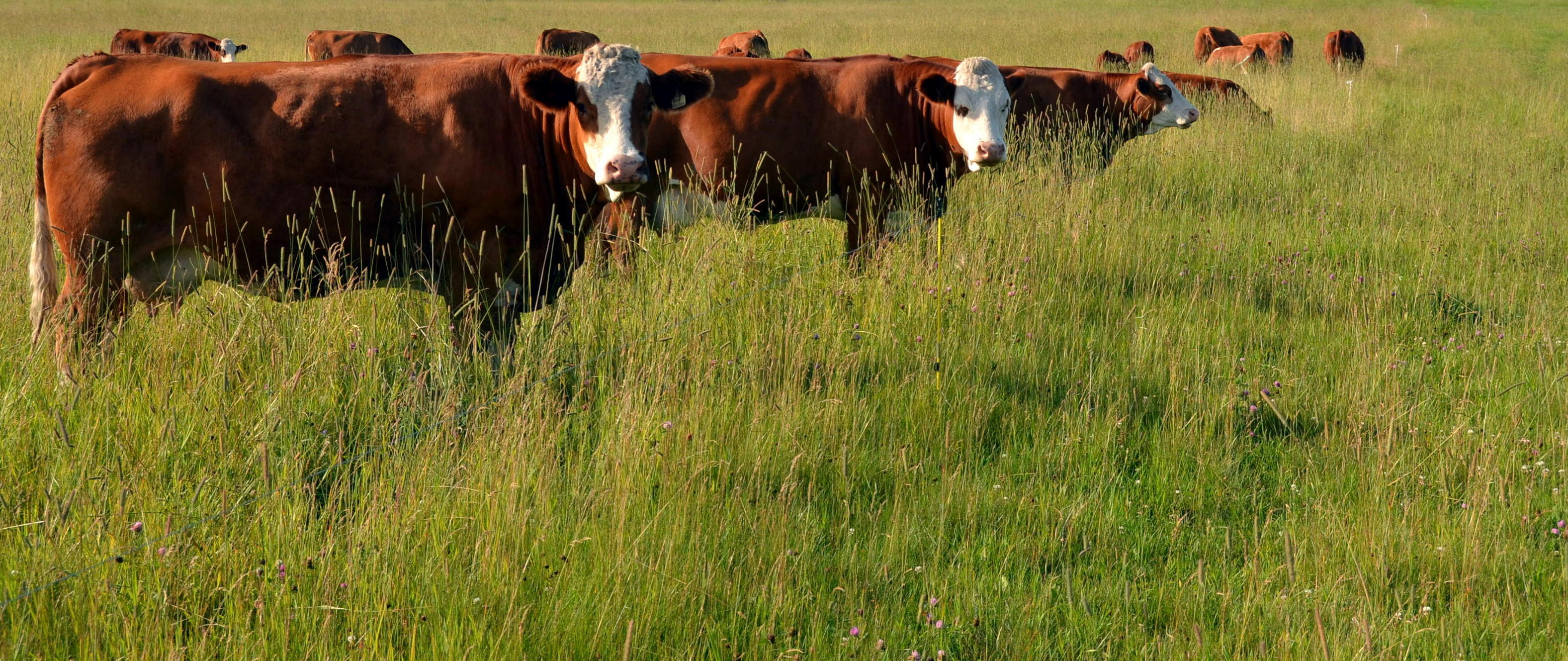
The grass is always greener on the other side.
Rotational Grazing
Rotational grazing is something we have been working with since the early 1990’s, when Dad purchased the farm next door. The new land had not been worked for a number of years, and everything on it was in a state of disrepair. The old barn was buried, the house cleaned up and refurbished, and new fences went up so that our Fleckvieh cattle could enjoy the extra space. We spent a lot of time together that summer – fencing and, in his words, ‘putting the land to work’.
Thanks to 40 acres of bush at Dora Lee, fencing started the hard way – we cut all of our cedar posts directly from the bush. Most trees had two or three 8ft posts in them, and Dad was always careful to only selectively cut the posts we needed from a number of different areas in order to keep the forest viable for future uses. We would log for a while, and then move the pile of fresh cut posts to the house, where an ‘after supper’ job for us kids would be stripping the bark from the green posts, getting them ready to be ‘planted’. We then moved on to the actual fencing – the perimeter was completed with 4 strand high-tensile electric wire (with cedar posts every 30 ft), while the cross fencing was single strand (and thankfully just plastic posts). Although it has been 20 years, the original electric fencing has remained in place, and dad continues to add additional cross-fences to improve the rotational grazing patterns. This summer alone, an additional 2 miles of interior fences were added.
Partly because of this background, one of our summer projects here at Applecross was to complete the first phase of our rotational grazing program. As I have previously discussed, our home quarter is solely a grass quarter, with three separate walking groups (bred heifers, cows w heifer calves, cows w bull calves). All three groups obviously need to have access to a clean water source, preferably in the yard. While well-water is more expensive than a dug-out or natural water source, I think the cattle just do better with quality water. We also like the fact that our groups then have to come up to the yard to drink. It gets them in a routine of coming up to buildings, and in turn locking them in for treatment, processing or sorting becomes very straightforward. It might mean a little extra fence to add alleys to all the rotations, but the management benefits more than offset the additional cost and time to put them up.
So during my August holidays, we finally finished phase one of our rotational grazing plan. Each of the three groups now have 3 paddocks they can rotate through, and an alley to get to the yard for water. The cows are rotated approximately every 10 days, giving each pasture a 20 day break. We also have 2 smaller ‘overflow’ fields which are not part of the rotation, but can be utilized should any of the groups get ahead of the re-growth. It is always great to have a little flexibility.
Our cross-fencing is simply single strand hot wire, and it does appear to be something that the cows respect. We have quiet cows, and that certainly helps with the hot wire (as they usually walk not run), but obviously if a cow feels cornered or threatened, they will still go through or over the fence. We are predominantly utilizing fiberglass ‘pigtail posts’ that can be easily removed/dropped if you need to drive over the fence with a tractor (or when spreading manure for that matter). We like that the ‘pigtails’ don’t have parts to break off like other posts, but they are a little tall at spring turn out, as the younger calves can still walk under them. We manage this by angling the posts, which drops the wire height slightly. Not only does this keep the calves in, but it also makes it a little easier for us to step over when walking between groups.
Phase 1 is now complete, so we will move on to phase 2 over the next few years. Our final goal is to have 6 paddocks for each group, allowing a 5 day rotation and 25 day rest – we think this will be the optimal balance between maximizing grass while keeping active management to a moderate level. While we are out to ‘visit’ our cows pretty much every day in the summer, moving them every 5 days feels like it will be the right amount that will allow the cattle to keep their routines, while keeping the grass re-growth high.
It may be early yet to see how successful our new fences have been in improving yield, however we have already been able to see visible improvement in the first fields that were cross fenced in 2010 and 2011. While the cows still have their favorite spots in each paddock, re-growth seems to be broader spread and more even. Different species seem to be thriving – as an early graze of quick growing spring grass appears to allow for clover and alfalfa to thrive more through the middle of the season. We look forward to seeing how the grass continues to evolve over the upcoming years.
Our goal is to be able to increase the yield of our pastures by upwards of 20%. Whether we utilize this gain by being able to graze longer into winter, or by pasturing more cattle, a 20% grass gain for a couple of hundred dollars of wire and posts seems like a pretty good investment.
We have been blessed this summer by lots of moisture through June and July, followed by plenty of heat this summer. The grass (as you can see in the picture), has been plentiful, and as a result, it hasn’t been nearly as stressed as a ‘normal’ year would be. Considering the wide-spread drought conditions in the US and Eastern Canada, we are very, very fortunate. With the weather and grass that we have, our efforts to improve our rotational grazing may not seem immediately beneficial, but over the longer term, less stress on each of the pastures should only be a good thing; regardless of the weather.
Introducing our 2012 Walking Bulls.
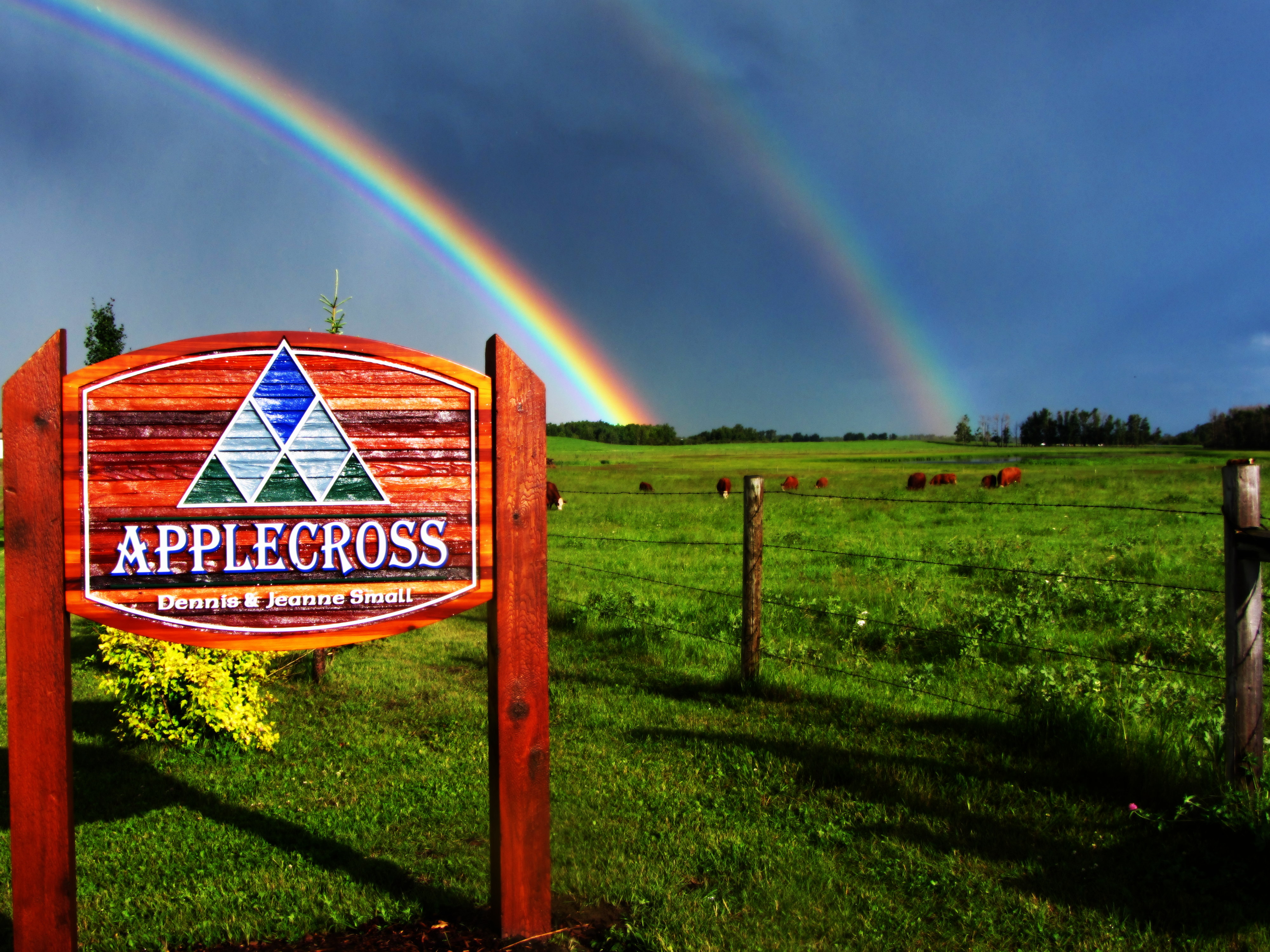
Introducing our 2012 Walking Bulls.
We finished breeding season on July 2nd when our walking bulls were pulled and moved to their own paddock. We managed to get a couple of pictures of them in their working condition, and have added new individual pages in our Herdbook / Reference Sire section for APLX Escalade 9Y and APLX Samson 10Y.
Our 2012 walking bulls both come from our own program, but are certainly different in their own right. Since arriving in February 2011 with an 80lb birth weight, we have always kept an eye on Escalade, hoping that he would develop into a bull that we could use on heifers while maintaining the performance we desire. With Escalade destined to be our ‘heifer bull,’ we then set out to hunt for an outcross herd bull to use on the balance of our cow herd. After an extensive search, we just kept coming back to an off-age bull in our own bull pen. Samson was too young to be a ‘sale’ bull, but too good not to keep an eye on. As winter turned to spring, he showcased the performance and style that suggested that he could be the performance herd bull we were looking for. Both bulls show a lot of promise, so we were quite pleased to have them available.
Both of these bulls have lived up to our expectations. Despite their relatively young ages, they both went out and went right to work in their first season. While we were very successful with our AI program, we expect to have a good sample of calves from each of our two new walking bulls starting next February. They will both winter here, and we anticipate using them both more extensively in 2013.
There are both advantages and disadvantages to walking bulls carrying your own prefix. I think that one of the benefits is that you know the cow families, and their respective backgrounds, a lot better. In the case of each of these bulls, I have had the privilege of watching their maternal lines develop and evolve over the past 20 years. It is perhaps unsurprising that both bulls can be traced back to SRN 2Y, the foundation cow at Dora Lee. (What WAS surprising is that Escalade can be traced back to 2Y on three of the four quarters of his pedigree).
The down side of walking your own bulls, of course, is that you can back yourself into a genetic corner a few years down the road, once they have daughters working. While AI can certainly mitigate part of this, the easiest way to add new genetics is via an outcross walking bull. With two herd bulls, and the capacity for three walking groups, we continue to search (365 Days of the Year) for those outcross genetics that will fit our myriad of criteria. In the interim, we are quite pleased with the job these two young bulls have done.
Our Story of ‘Hope’


Our Story of ‘Hope’
At 4+ weeks premature, and weighing only 60% of a ‘normal’ birth weight, this is our story of an incredible little calf with an amazing will to live.
It was during a midnight cow check that a problem was spotted. A solitary foot was protruding from a heifer who, earlier that evening had been acting close, but was not due for a month. Just the single, small foot could mean trouble, so I went and woke Jeanne (standing instructions: no matter what the hour – if there is ever anything ‘interesting’ happening – get me up!) and we got the heifer into the barn to take a closer look. As anticipated, there was only one leg in the birth canal. With it being a smaller calf, we were able to push it back in slightly and get the other foot forward. There appeared to be plenty of room for the calf, so we let the heifer out of the head gate and let things finish normally.
The good news was that it was a live calf, and she appeared to be breathing on her own. The difficult part was that she was obviously premature and was very weak. Nowhere was this more pronounced than in her neck, which she didn’t have the strength to lift. Her attentive dam would lick her off, but her head just kept flopping around, providing no resistance to her mom’s attention. Hoping that time would provide some energy, we went back to the house for a couple of hours sleep.
With both of us working off the farm, morning chores start at 5:30am. With the calf being a ‘preemie’, both Jeanne and I went out to figure out how to ensure the calf had a good drink of colostrum. The calf was still very weak, and did not appear to be much stronger, but at least she did not appear to be any weaker. After assessing the situation, we quickly realized that the only way to get some milk in her was to strip it from her mom, and tube feed the calf. Fortunately for us, the dam was fairly quiet and we were able to get her in the head gate and milk her by hand. Tube feeding always provides mixed emotions. On one hand it is extremely important to get that colostrum into the calf so they can turn it into energy – it is always amazing how the calf perks up after that first drink – the flip side is having to stick a tube down a calf’s throat so that the fluid doesn’t go into their lungs. It certainly doesn’t look comfortable, and I am sure glad humans get IV’s! We also took the opportunity to complete our regular post calving rituals of weighing her and giving her a shot of Selenium / Vitamin E. Hopeful that the combination of milk, nutrients and vitamins would give her some more strength, we headed off to work.
Working in Red Deer, I was able to slip back home at lunch time for a few minutes to check on our new addition. It is a tougher task with one, but I was able to get more milk from the cow and give the calf another drink. The calf seemed stronger, with a little more control over her neck, but was still unable to stand. After a fair bit of research, and a chat with some seasoned cattlemen, I also gave her a shot of Dexemethezone to help her lungs. From everything I could read on the internet, the biggest survivability issue was with her lungs. Premature calves don’t yet have the lubrication in their lungs to allow them to breath correctly, so they often live for a bit and then fade away. The ‘Dex’ would hopefully give her lungs a little boost, and prevent them from drying out.
With both of us home after work, we put some teamwork into action. I managed to hold the calf up to the cow, while Jeanne positioned her head to the teats. The calf was weak, but wasn’t stupid. Once she got a teat in her mouth, she certainly knew how they worked. While it was certainly tiring (and occasionally frustrating) trying to get the calf to drink, it was great to see her accomplish this important milestone. A second feeding followed before bed, and we were certainly happy things appeared to be progressing.
Wednesday morning began about the same, but we hit another milestone over the noon hour. With a lot of assistance helping her to her feet, the calf would stand on her own. My evening check brought a few steps of walking to her repertoire, and an attentively licking mom helped to toughen her up and gain the balance skills she needed to stay standing on her feet. As a precautionary measure, we also gave her a shot of antibiotics – born prematurely with an immune system that wasn’t yet functioning, we hoped to ensure she had as good a chance as possible to get stronger.
I think it was Wednesday that we decided on the name ‘Hope’. We always prefer to call a calf by a name, and by this time, spending so much time with her, it just seemed like ‘Hope’ was the right fit. We were still in the early stages of her life, but it was so difficult not to have hope that she would make it. For so many of our frequent trips to the barn over the previous couple of days, we had just hoped that when, we opened the door, she would still be breathing. We were hoping that these gradual stages of improvement wouldn’t be undone by some internal challenges that we had no idea existed.
As Thursday dawned and we moved towards Friday, there was steady improvement. With Hope now being able to stand, and her mother having decided that we were only there to help, what was previously a two-person job was compressed into just one. I could get Hope standing near the right spot and Hope would brace herself against her mother’s back leg on her own, while I just had to worry about ensuring her head got in the correct position to get a drink. She became more confident and sure of herself until, on Friday evening, all I had to do was get her up, and she knew where to go and what to do. The best part was Saturday morning, when we went to the barn and found her drinking on her own.
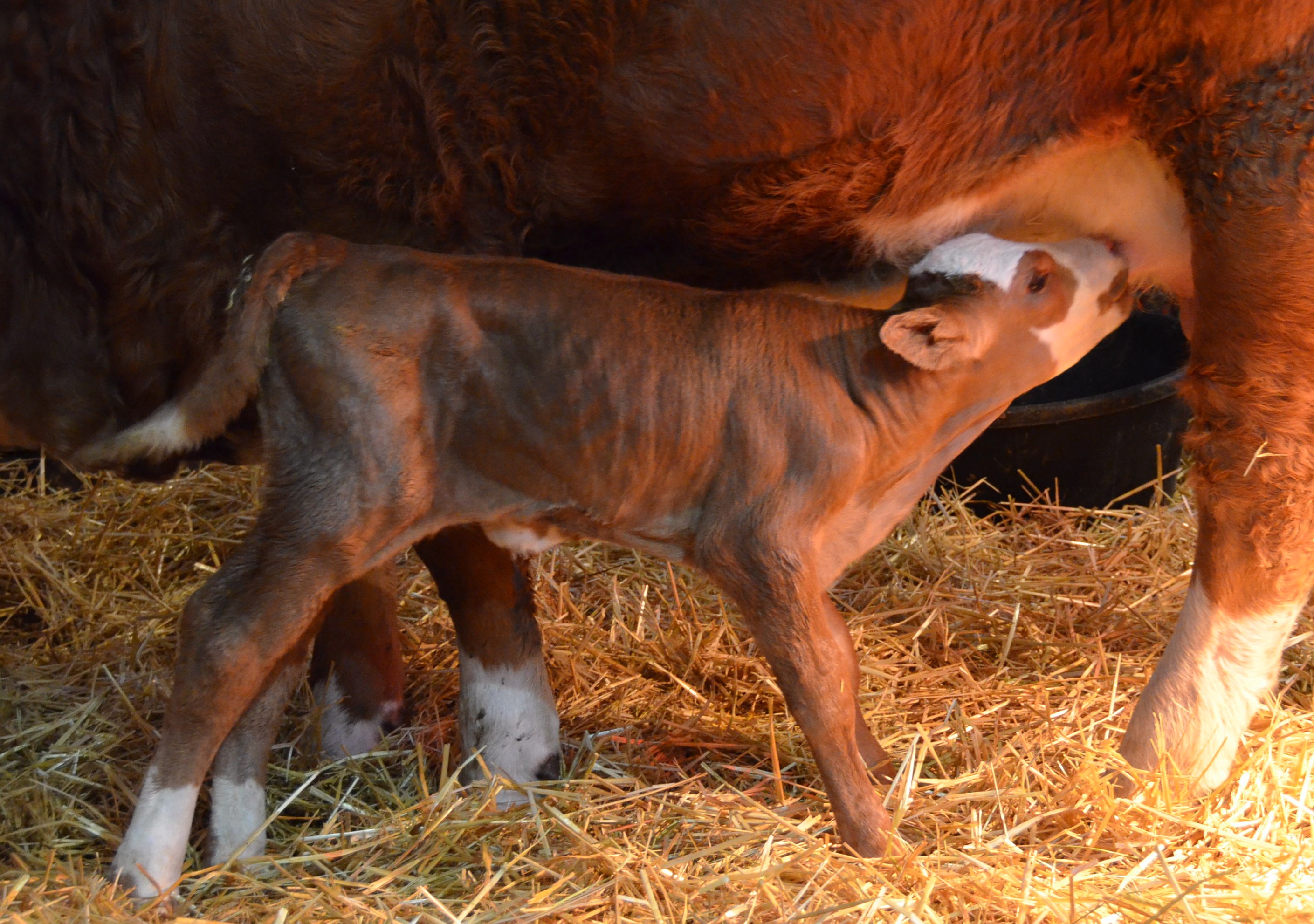
Hope @ 6 days
Hope stayed in the barn for almost a month, to grow her limited hair coat out to a more normal length, before we let her outside to join the other calves. After spending so much time with her, it was truly special to see her out ‘bouncing around’ and playing with the other calves; just like normal. From what we can determine from our breeding chart, Hope was born 29 days early. The odds of her survival were extremely low, but with some hard work and some faith, she has made it through the toughest part. We are cautiously optimistic that she will continue to progress, and keep up with the other calves. It is just an incredible sight to see her standing out in the pasture with her very attentive mom – drinking away – her tail still going like it did in those first days – just another sign that makes makes us optimistic. It is hard not to become attached to a calf that took so much time and energy, so we remain ever Hope-ful that everything turns out alright.

Hope – June 20
May Long Week-end: Bulls Out, Boots Up.
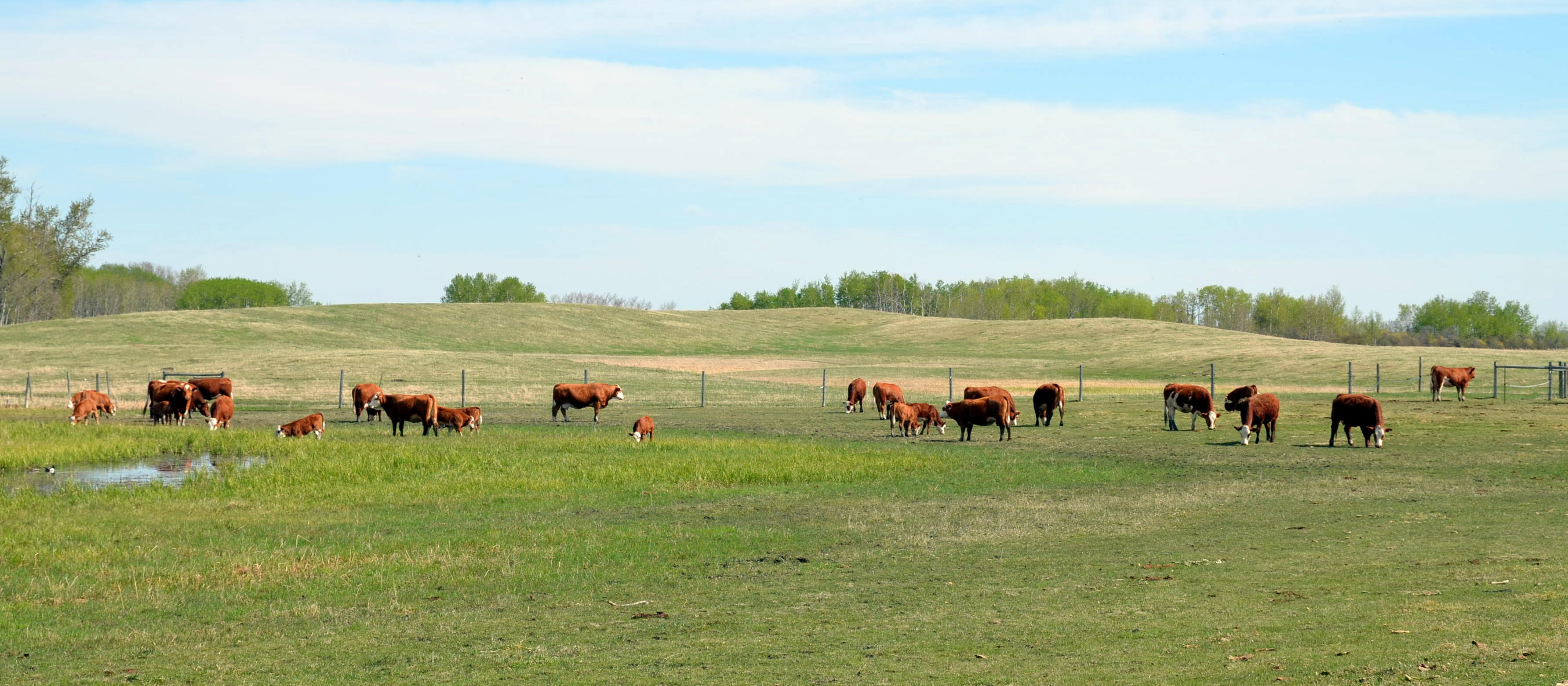
May Long Week-end: Bulls Out, Boots Up.
As I discussed last year, the May Victoria Day Week-End has always meant fencing in preparation for putting the cows to grass. Now that we are in Alberta, the grass isn’t quite ready (and from the picture, it may be a week or two yet), but that ‘extra’ work day is still spent fencing, getting heat on the hot wire, and taking care of a couple of trees that (of course) fell across the fence this winter.
‘May Long’ also marks the end of AI season, as the herd bulls are turned out and our feet go up – ‘active’ management of our cow herd turns to ‘passive’ management. Since AI has directly followed a busy calving season, it is nice to be able to relax a bit and just watch them work until fall. We still keep an eye on them to get dates for the cows that are still not bred, and there is the odd day spent dehorning and vaccinating but, for the most part, the intensive part of the year is finished. As we are purely a grass farm, there are also no crops to worry about putting in. Although there are still a lot of jobs on the to-do list, it is just nice to be back working on our own schedule, instead of being tied to the biological or reproductive clock of our cows.
We are really pleased with the success of our AI program, and how next years’ calf crop is shaping up. It appears as if we have pregnancies to eight different AI sires, in addition to our two walking bulls. I think AI can really improve the genetic diversity of the herd, and it will be very interesting to see calves from so many sires. We are also very excited to see what our two new walking bulls produce. They are both yearlings, but got things ‘figured out’ on a couple of introductory ‘dates’, so we are confident they will go right to work. We plan on sharing more about our two young bulls in the next few days as we get pictures of them in pasture condition.
In the mean time, we’ll enjoy taking a break during the sunny days of a gorgeous long week-end. The only decision is which group of cows we would like to watch, which dictates where to sit – Escalade’s group is at the back of the house, while Samson has his girls in the front field. After some difficult decisions during AI season, it is nice to have a choice where you win either way.
Mother’s Day
We are currently enjoying a gorgeous Mother’s Day here in Central Alberta. With that, I thought it would be great time to share some pictures of a few of our ‘moms’ with their 2012 calves.
It is that time of year when the calves seem to change almost daily, but that one constant is the attention and care that their mom’s pay to them – and that bond they form through the summer months.

Applecross Carly is our youngest calf of the year. By Starfire and Applecross Catrina (Eclipse), we hope she turns out just like her mama.

Applecross Cassie is very closely related to Carly, as both are by Starfire, and their dams – Dora Lee Caitlin and Applecross Catrina – are full sisters by Eclipse and Dora Lee Christina.

Applecross Iris is by Pharao and Imperia, the Sargeant heifer we selected as a calf from Beechinors at the 2010 Equation sale.

APLX Edge is our lone Dora Lee Equinox calf this year. By Brock Waterloo, he looks destined for the bull pen
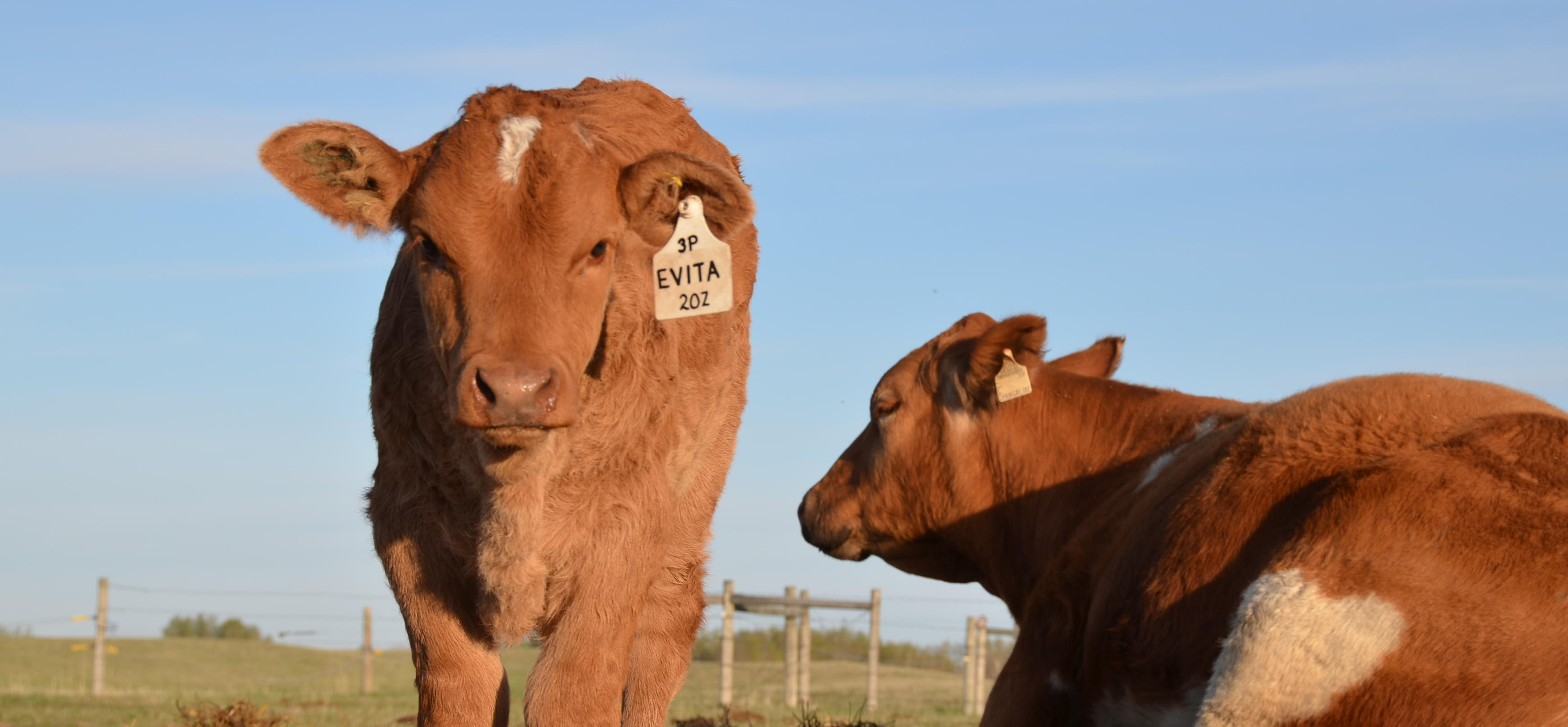
Applecross Evita (Starfire) is a real princess. Her dam is Dora Lee Evangaline (Sim Roc C&B Western). This mating has worked well for us, as we are walking a full brother in 2012

APLX Axel (Gidsco Appollo) will be one of our heavyweights this fall. By HEMR Tasha (Porterhouse Regent), we have an impressive full sister in our bred heifer pen that will be retained.
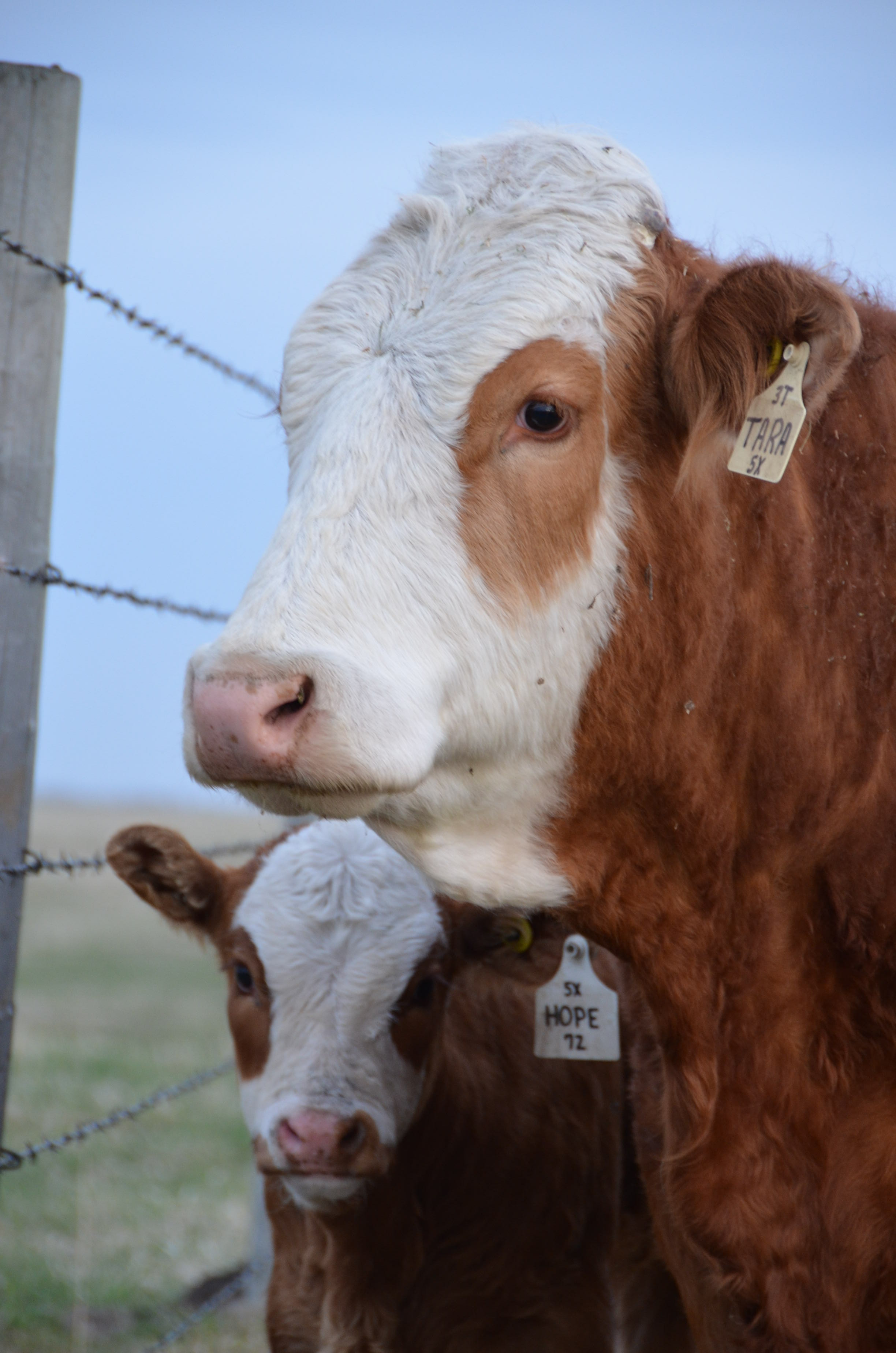
Applecross Hope is an Eli daughter by Applecross Tara (CEN Throttle) that was born 4+ weeks premature. We will tell her story in a future post, but she continues to progress after a rough start.

APLX Edison (by APLX Eli) and his dam Dora Lee Gretchen, an extremely feminine polled Arnold’s Image daughter.

Applecross Mariah is a standout Dora Lee Eclipse heifer from Delta Rho Miss Marnie (Wellhouse Kestrel), who we selected last fall in Ontario. The strength of Eclipse is evident through these pictures, so we are happy to be utilizing him again in 2012
>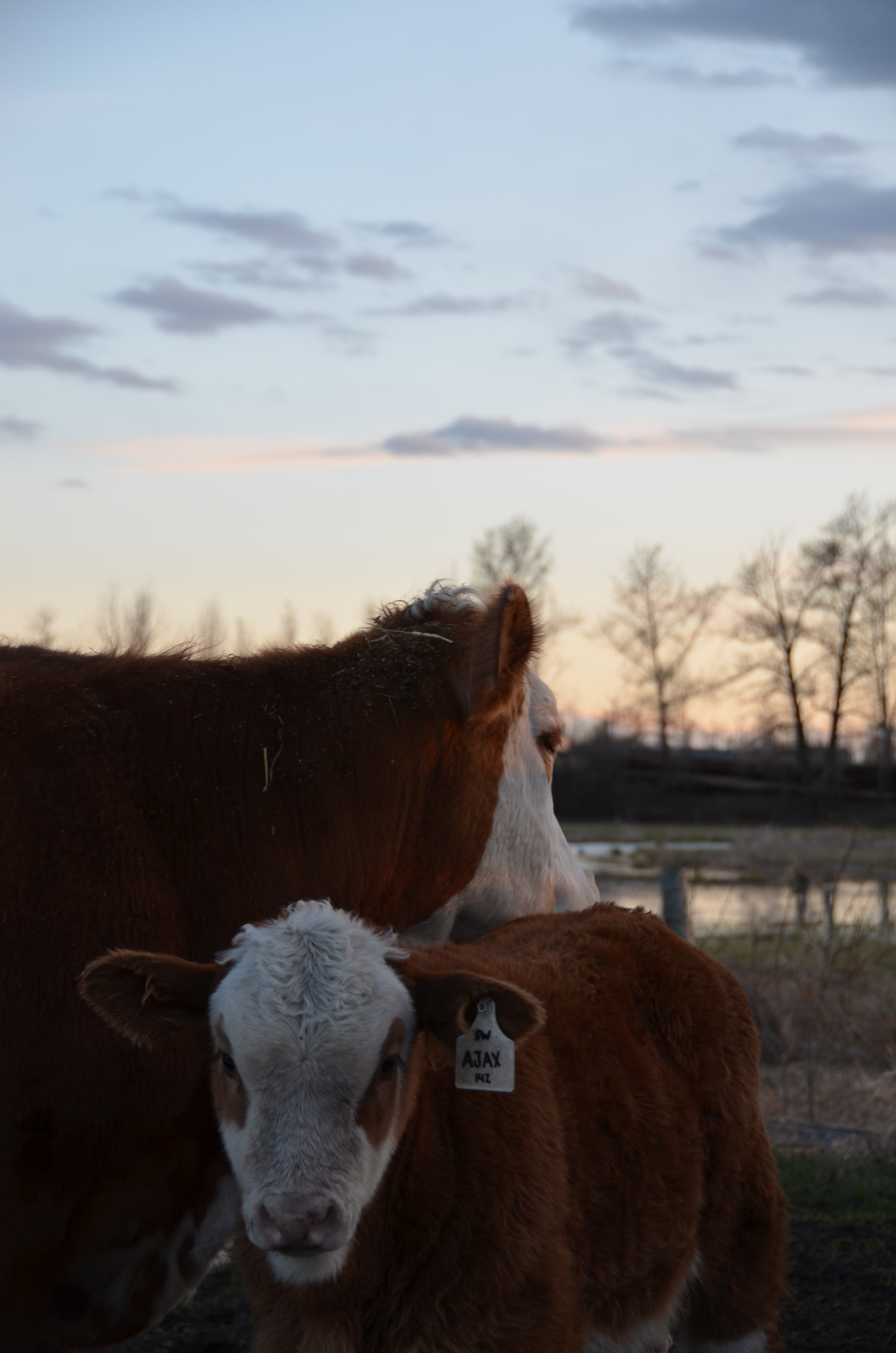
APLX Ajax is a really intriguing Gidsco Appollo son by LFS Pol Adara. Polled like his mama, we will be watching him closely as he develops this summer.
The Succession Plan

Part of our Succession Plan: Applecross Bella (by DDD Broadway) with dam Lady Western. Pictured at one week.
The Succession Plan
My day job as an Agricultural Finance Specialist has given me the opportunity to work with a number of clients on succession planning over the past few months. It tends to be one of those ‘winter tasks’ that people procrastinate about until time gets short and farmers start thinking of heading back out to work the land. Usually done in conjunction with that mandated annual trip to the accountant (I have to pay HOW much tax?), and a seminar put on by your local financial institution, it always seems like an important farm issue that is difficult to deal with.
I think ‘succession’ planning itself often gets confused with ‘estate’ planning. ‘Succession’ is the passing of a business on to the next generation. ‘Estate” encompasses all your assets. Farmers probably have the most difficulty differentiating between the two, as often the farm operation consists of the bulk of the farmers’ assets. It is not like too many farmers are complaining about sitting on piles of cash/stock/investments these days!
Maybe a better description of a succession plan is – do you want your farm to continue without you? If the answer is yes, then you need a successor (and a plan for them to take over). If the answer is no, then you will be selling / winding down your farm at some point, with the assets becoming part of your estate.
One of the tips I heard this week: Look for a successor that has a ‘fire in their belly’. The thought is, that if they are unsure/unclear/uncertain about whether they want to be involved in the family operation; maybe the time/fit just isn’t right. A successor should have a strong vision for where they want to go; and a drive to get there.
Probably the most important part of the succession plan of any farm is communication. Whether it is between spouses, generations, in-laws or non-farming family members, ensure everyone is on the same page; awareness of what the plan is, is essential for family harmony. Everyone may not necessarily get to have a say in the process, but the situations that tend to work out the best, are those in which all stakeholders are aware of the plan. This way, hopefully the number of misunderstandings can be reduced, and the thought process behind the decisions that are made can be shared.
I think succession planning can also relate back to the purebred herd. Having a plan in place to replace that elite cornerstone cow or walking herd bull, well before their time is up, can allow for an orderly transition. For females, it may mean retaining a top daughter (and passing up the publicity and prestige of having a possible high-seller), to eventually replace her dam. The other option would be to continue to sell that same daughter, but re-channel those funds into the purchase of another elite breeding line. Having different options (and, potentially, embryos in the bank) can form a sort of insurance policy, and ensure that the walking cow base stays strong. The idea though, is having a plan in place to ensure there is no ‘hole’ in the herd when that matriarch does move on.
Due to their major genetic impact, the herd bull side of the equation is probably even more important. A herd that doesn’t have enough bulls to cover the cow groups can find themselves in real trouble in a hurry. Generally for purebred herds, it is tough to find a replacement at the drop of a hat. Having a succession (or back-up) plan in place before you need it can diffuse the situation, and provide the time and space to fix it exactly how you would like it. For the second consecutive year, we are on ‘Plan C’ when it comes to our walking bulls (knock on wood, but we haven’t had to utilize Plans D or E yet).
I guess though, what it really comes down to, is that planning is great. But after you have a plan, it is ‘the doing’ that counts. Having a rough succession plan, whether it is the farm or with cattle, is important, but it needs to move forward.
Hope for the best. Plan for the worst. But make a decision. Make sure everyone knows about it. And move on.
Mid-April Update

Applecross Eleanor (Gidsco Appollo x Applecross Eva) - pictured @ 2 months
Mid-April Update
I was originally going to title this ‘Spring’ update but, while the snow has mostly gone, sub zero temperatures, random flurries and lots of wind hasn’t made this season feel too much like spring yet. Not that I am complaining. After the warm temperatures we enjoyed this winter I have nothing to complain about. It is truly special to walk out to the straw pack and see that a calf was born unassisted, and is up and drinking on their own, without having to worry about it freezing. While the mild winter can create its own set of challenges, we are truly thankful for the great calving season. The final tally has us with a 2 heifer to 1 bull ratio, which definitely means that the first Applecross females will be marketed this fall.
April brings ‘Spring Fever’ to our house (which is more than just me chasing Jeanne around the kitchen!). Perhaps cabin fever is a more apt description. Since the daylight hours are so long, and those pesky night checks are done for the season, there seems to be more time and energy to get those ‘after supper’ chores done in preparation for spring. Those ‘to-do’ lists that were made during the winter months get transferred into action. It is also great just to be outside more, without the heavy clothing, working away at those endless number of things that need done around the farm.
We have been able to get the cows out of the corrals behind the barn and onto our ‘shoulder season’ pasture that we use for December and April-May. It is a three acre paddock, complete with an old horse ‘round pen’ they can utilize for shelter. It is great to see them more relaxed; out of the mud and using their feet and legs more. I think the exercise is good for the calves too – they sure change in the few months since birth. It doesn’t take long for the bulls to start looking like bulls, and the heifers to start ‘princessing’ around the yard.
Speaking of ‘Princesses’; that is a great word to describe our Anchor D Viper calves. We only got heifers, but they sure are easy to pick out. They all seem to have the certain intangible ‘sass’ about them that is really neat to see. If there is going to be a calf to follow you around when you’re checking cows, looking for some attention, it will be a Viper heifer.
Dad has always said that the key to a successful breeding season is to make more ‘good decisions’ than ‘bad ones’. Sometimes a genetic combination works out; other times it does not. Hopefully each calf crop yields more of the ‘good’, and fewer ‘bads’. For the 2012 edition, I think I am firmly on the ‘good’ side of the ledger, though there are a few matings that didn’t work out quite the way I hoped. I always try to treat mistakes as something to learn from, instead of constantly second guessing myself. That is one of the great things about the cattle business: there is always next year to plan for.
To help me plan, I really try to keep detailed notes; some days those notes morph into a journal. It really helps the memory, and can be referred back to; little details can be remembered. Everything from calving tendencies and gestations, to a genetic cross that worked (and those that don’t). We live in such an information society, being able to go back and refer to notes – and have an accurate record of what you were thinking at the time, instead of relying on an increasingly bad memory (or just whatever you have heard recently) – is a great help when making decisions.
We are thick into AI season. I have a detailed chart of who should be bred, and to what; but that doesn’t always stop me from changing my mind when Donna McMurtry drives in the lane to breed them. Having Donna available is a great resource. As she has bred thousands of cows over the years, her level of expertise is tremendous. Having been around the breed for 35+ years, she also has an interesting perspective on what genetics work.
The biggest addition to our 2012 AI line-up is IPU Bronson. I really admire the Bronson females that Harry and Michelle Satchwell have working down at Virginia Ranch. They really are a sight – I think at one point they had something like 17 daughters working there – and they are all tremendous big volume cows. As we didn’t manage to get any daughters bought, we are excited to hopefully develop some for our own over the next few years.
We will also be AI’ing more to Dora Lee Eclipse this year; specifically on our heifers. His first daughters that I have working (now aged 4) are really impressive – and I have a really nice heifer calf this year too. There is a lot to like about Eclipse – he has both calving and maternal calving (a Fleckvieh rarity), he is coloured right, puts square udders on his females, and he can take the horns off. There is something to be said about keeping a semen bank around to re-visit 5 years down the road after you know a genetic combination works.
Spring is also when our bulls are introduced to their new homes. One of the great things about delivering bulls is the opportunity to tour the operation, and see what management techniques and genetic direction different herds are taking. I haven’t toured a herd yet where I haven’t learned something. This held true when we had the opportunity to tour the Langer and Wa-Na-La-Pa herds when delivering APLX Santana in a mid-March snow storm. One of the many things that stood out for us on this visit, was the work they had done with their new panel set-up that replaced old wooden corrals. The panels provide lots of flexibility and allowed multiple confined breeding and AI groups, all close together without the bulls seeming to bother each other; despite several cows being in heat that day. I see more panels in my future!
We also quite enjoyed our visit to Lone Stone Farms in February. One of our conditions in selling Envoy at the 2011 National Trust in November, was that we wanted to winter him prior to delivering him to Lonnie & Karen. So, on another snowy winter day, we travelled to Westlock to enjoy a wonderful lunch and most of an afternoon visiting. Even though it was only 4 days prior to their annual bull sale (and with plenty of jobs still yet to get done), they were more than happy to spend a lot of time with us showing us their program. One of the things that stood out for us on the visit, was the uniformity of the cattle. For the past 30 years they have developed a clear vision of what they want their cattle to look like, and that was clearly evident by how consistent their cow groups were. The success of their approach was clearly proven in the success of their Friday Bull Sale. Improving the uniformity of our cow herd is something that I look forward to, now that our herd numbers are almost to where we want them to be.
A last closing comment on bull season: while it has been a great year for bull sales overall, I would also suggest that it has been an amazing year for the ‘best of the best’. I don’t recall another spring where I have seen or heard of more bulls sell for $10,000+, $20,000+ or $40,000+. In some ways, it is not surprising; a rising industry should lead to reinvestment by both commercial cattlemen and by breeders. It is just great to see so much dedication / enthusiasm throughout the entire industry again in 2012. Here is hoping it continues on for the next few years.
2012 Red Deer Simmental Bull Sale Report

2012 Red Deer Simmental Bull Sale Report
With a winter storm blowing into the eastern part of the province, we were pleased to see sunny skies and a capacity crowd in Red Deer to watch 94 bulls sell on Monday, March 19th. First into the ring was ‘Beech Bro Booster 52Y’ an impressive Upgrade son, who created lots of excitement and ended up topping the sale for $25,000 to Kopp Farms Simmentals in Manitoba.
Our very own APLX Jackson 3Y was the 5th bull in the second group of Fullbloods. After strong interest from some fellow purebred breeders, Jackson was purchased by West Gold Simmentals of Minburn, AB for $12,000. We were both humbled and honoured with the result, and look forward to Jackson getting to work with the fine herd that Ken Gilbert has developed over the years. We would also like to thank Keato Meadows, Little Willow Creek and Big Sky Simmentals for all showing interest in Jackson on sale day. We have added Jackson to our ‘Applecross @ Work’ section, and look forward to providing updates on his development.
Other sale highlights include: Lot 20 ‘Beech Bros Anarchy 604Y’ – a nice red IPU Revlolution son that sold to DGR Cattle Co. for $14,500 and Lot 1 ‘Beech Bros Cobra 69Y’ an impressive Anchor D Viper son that sold to Champ Simmentals for $12,000. As you can see from the high seller list, the Beechinor cattle were extremely well received. Overall the sale grossed $455,000 on 94 lots, for an average of $4,840. Bulls sold to all the Western Provinces, with 6 bulls topping the $10,000 threshold; emphasizing the deep pool of breeder quality bulls that were available in Red Deer.
Once again, we were pleased to be a part of this great showcase of the Simmental breed.
Our Entries to the 2012 Red Deer Simmental Bull Sale
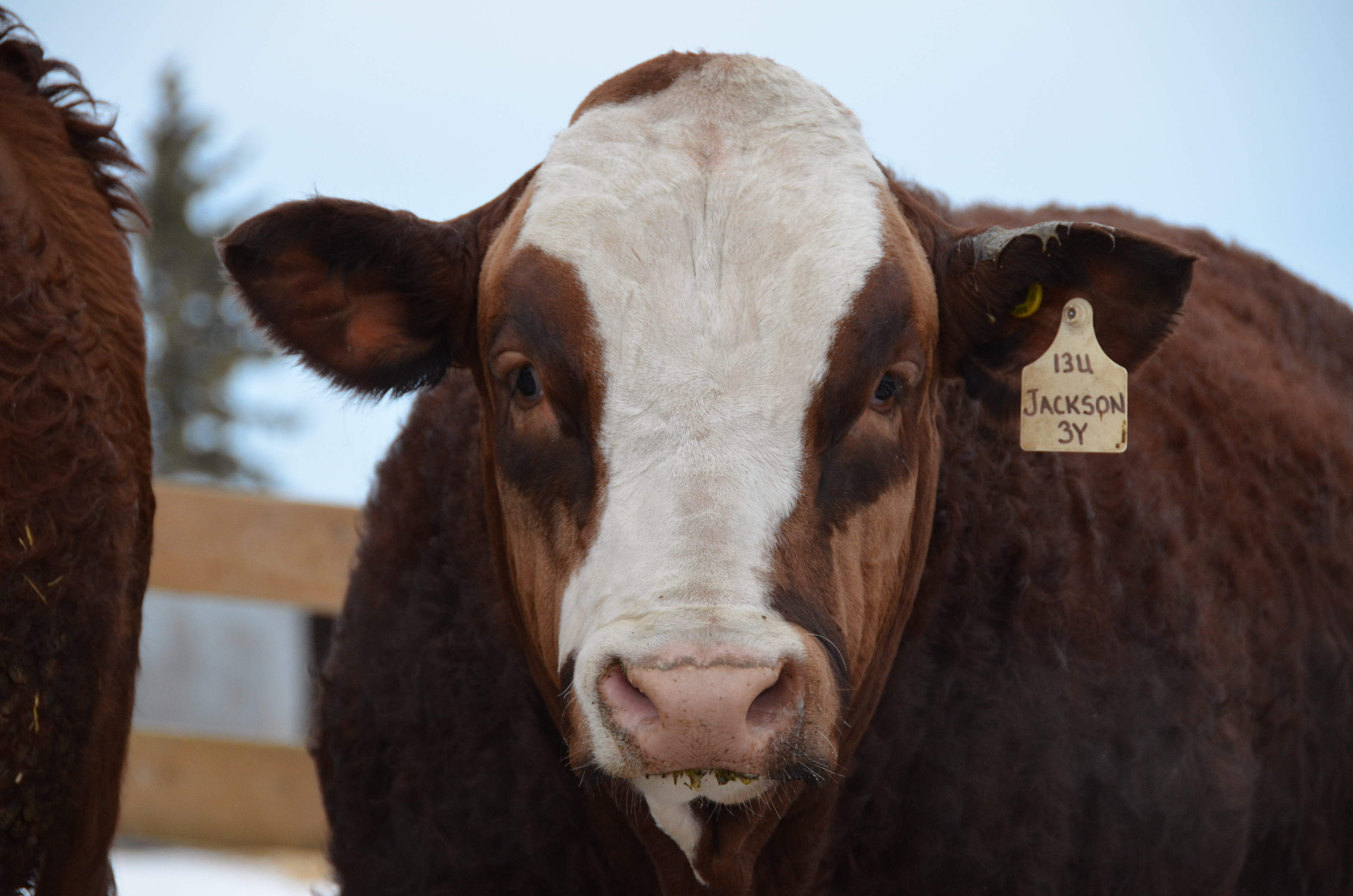
We are pleased to present two herd bull prospects at Transcon’s 2012 Red Deer Simmental Bull Sale on March 19th at 1:00pm at Westerner Park, Red Deer, Alberta. This is our second year at this event, and we are proud to be included in the strong offering that is always presented by this progressive group of breeders.
Both of this year’s entries are sired by Dora Lee Jake. I was with Dad when he purchased Jake’s dam, MRLN Josette, as an open heifer from the 1995 Fleck Select sale. We were incredibly happy when the legendary Bob Gordon selected Jake, her first son, to go to stud at ALTA in 1998; and now, 12 years later, we are able to tap into these proven Fleckvieh genetics in our own herd here at Applecross. While Jake may be better known for his daughters (Dora Lee Amelia – a flush cow at Wa-Na-La-Pa, and Dora Lee Elexis – dam of Dora Lee Eclipse and donor in the Anchor D program), we are quite impressed with how these two sons have developed. Both bulls balance the performance of their sire with strong maternal traits from their young dams.
Individual pages (short-cut links are located in the right-hand column) have been created for both ‘Joshua’ and ‘Jackson’. Both bulls are heavily pigmented, have moderate (90-100 lb) birth weights, show lots of muscling, and have tremendous hair coats. The bulls have been developed on a ration of free-choice quality first cut hay, combined with a forage based pellet by Country Junction. The bulls are housed in a 5 acre paddock to ensure lots of exercise, have been tie-broke, and have quiet temperaments.
On the individual pages, we have also pictured the dams. Maternal lines are very important to us, and we feel that behind every great bull is an outstanding mother. We also have additional information and pictures available about the maternal grand dams; should it be of interest. As some people prefer paper copies, we also have individual bull profiles available in PDF format that can be e-mailed and printed, or sent by regular mail. Please let us know if you would like any additional information on any of our animals.
The 2012 Red Deer Simmental Bull Sale promises to be another exciting event. We look forward to a great day on March 19th at Westerner Park.
Applecross @ Work

APLX Santana 11Y - pictured at 7 months
We have added a new section to the website entitled ‘Applecross @ Work’. Featured in individual pages located under this tab, the section highlights some of the growing number of animals we have sold that we believe will leave their mark on the industry. We hope to be able to add pictures of their progeny in the future. The first two bull to be featured are of course, the full brothers, Ensign 2X and Envoy 2Y.
We are also very pleased to add APLX Santana 11Y to the list. Santana (pictured above), is an exciting young herd bull purchased by Wayne Falardeau / Wa-Na-La-Pa Simmentals. Solid red except for that small spot on his forehead, Santana will add some really unique outcross genetics to Wayne’s diamond headed/solid red full Fleckvieh Program.
The 365 Day Search
The 365 Day Search
We are always thinking cattle. Dad and I had a joke growing up that mom would let us talk cattle 364 days a year (every day but Christmas), but we’d be in real trouble if we started talking cattle Christmas day. As I got older, moved away from home and then started our own herd, NOT talking cattle on Christmas became even more difficult; with calving starting and that urge to get caught up on what is happening around the farm. Cattle is in our blood, and an important part of our livelihood, so it is hard not to talk about them. Indeed, the seasons can be measured by what is going on with the cattle. New Years means calving, ‘May long’ is fencing, ‘Labour Day’ equates to weaning and Thanksgiving to a pasture tour.
And as I enjoy the challenge so much, we are always evaluating – our herd compared to AI bulls and sale cattle. We are always on the look-out for new or different outcross genetics that have the potential to improve our herd. Growing up, the Simmental Country and sales catalogues combined to form piles – one at the kitchen table (for coffee breaks) and one on the side table in the family room, for reading when the Leafs and Jays were (often) getting beat. They combined to form a great resource. Cattle and breeders advertisements from years gone by could be studied. Evaluating genetics that way allowed you to see what sires stood the test of time, and follow some of the bloodlines that were interesting.
A great example of this are the Alberta Fleckvieh week-end sales. Mom and Dad were at the first one in 1988, and I think Dad has only missed 2 sales in 24 years. Having all the back catalogues has provided an invaluable resource for studying pedigrees and noticing which genetics continue to work. Sometimes there was an outstanding female identified in a sale one year, that you could track and see her sons and daughters in turn make an appearance, and maybe have a crack at purchasing them. It was also a great way to evaluate bulls; especially AI sires. You can’t always get to all the sales you wanted to, so the catalogue at least gave some idea as to how the animals looked both phenotypically and in colouring; and which breeders were using a bull, so you could follow up with them for more information surrounding feet, temperament and calving ease.
Probably the biggest advancement in helping research genetics was the introduction of CSA’s online database. The ability to chase pedigrees back to the original imports is essential when you have a 100% Fleckvieh cow base and wish to keep it that way. When evaluating dams or sires, the ability to view all registered progeny from each individual animal is an incredible tool. It is also awesome (if you are impatient like me), to have the ability to search by breeder prefix and sort by date of birth to get an early preview of fellow breeders’ upcoming bullpen before the catalogue arrives. Searching can be a time sink, but mining the database for information has become an essential part of researching genetics. It has also led to a third pile of magazines; this one by the computer. Maybe the advent of tablet computers will allow me to consolidate the stack of magazines down to one, but I am somewhat doubtful that a computer will be any more welcome at the kitchen table than the magazines are!
As we evolve, I do find I am spending more and more time online. Individual breeder web-sites and videos have provided additional information to supplement the catalogues. The Transcon database of catalogues and sales results has provided an important link to some of the sales you can’t get to (or a electronic version of a catalogue that might have had coffee spilled on it). The AI websites tend to offer more bulls than their printed catalogue, including some of the older bulls that you may not have realized were still available at a reasonable price, so that is also great information. Not that it is ever a substitute for a good phone call, but communication by e-mail is also increasing; great for eliminating time zone differences, and for those of us who think up odd questions at odd hours that just need answering (since nobody really cares if they get an e-mail at 2am!).
All in all, a back inventory of catalogues combined with the advances in technology has certainly made research that much easier. It is never a complete substitute to viewing the actual animals themselves, but for when you can’t get to a sale, or for during those cold days (-35 like today) when touring cattle just isn’t an option, they create a great resource for those 365 days a year that we are thinking cattle.
First Calf of 2012
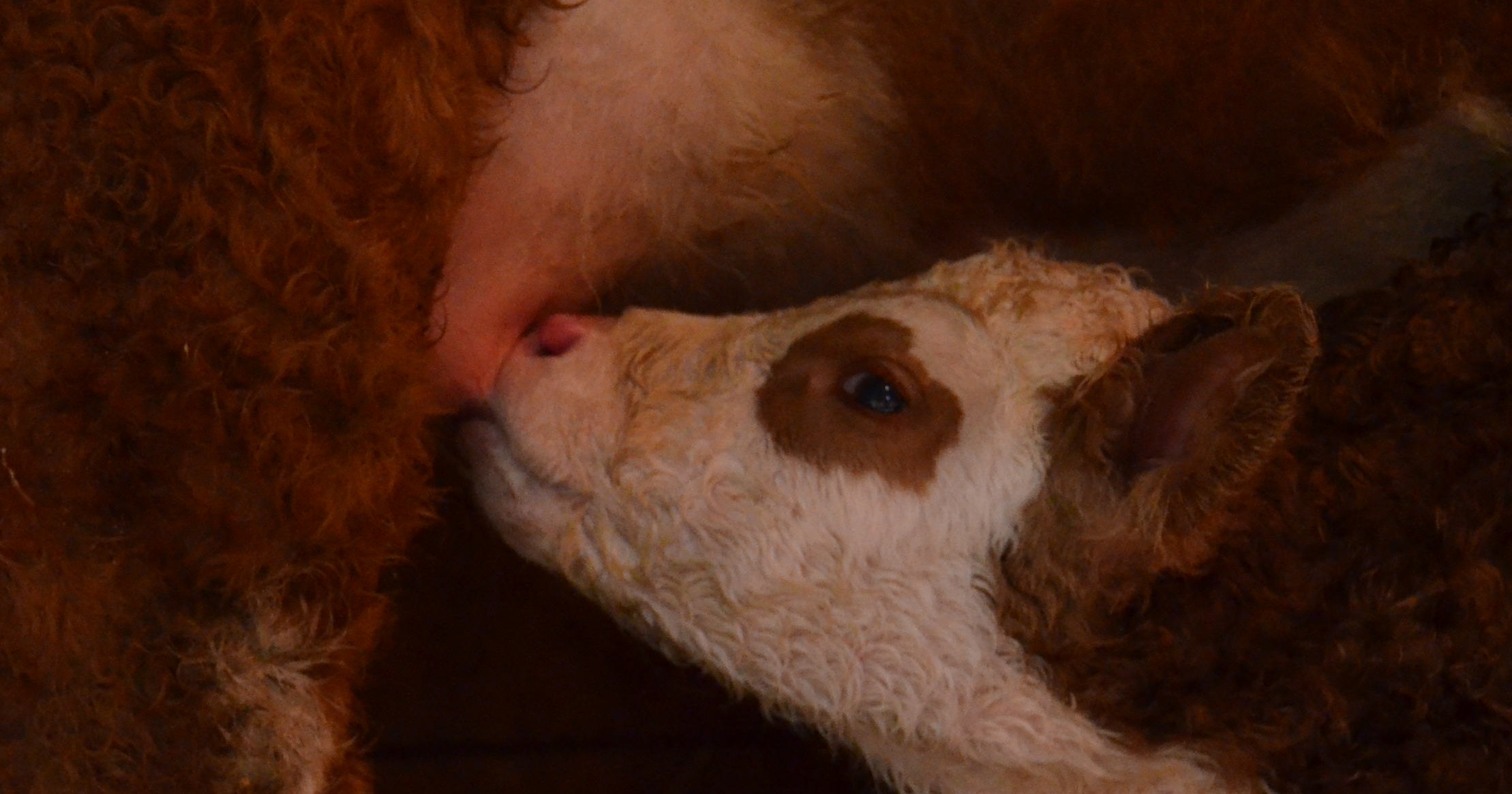
'Mariah' - Our Newest Addition
We started off the 2012 calving season today, just the way you want to – an unassisted heifer calf that was up and drinking on her own. The calf itself is a daughter of our newest edition – Delta-Rho Miss Marnie sired by Dora Lee Eclipse. What a great way for Marnie to start off here at Applecross. We think baby (already named ‘Mariah’) should fit right in to our program.
 Applecross Cattle